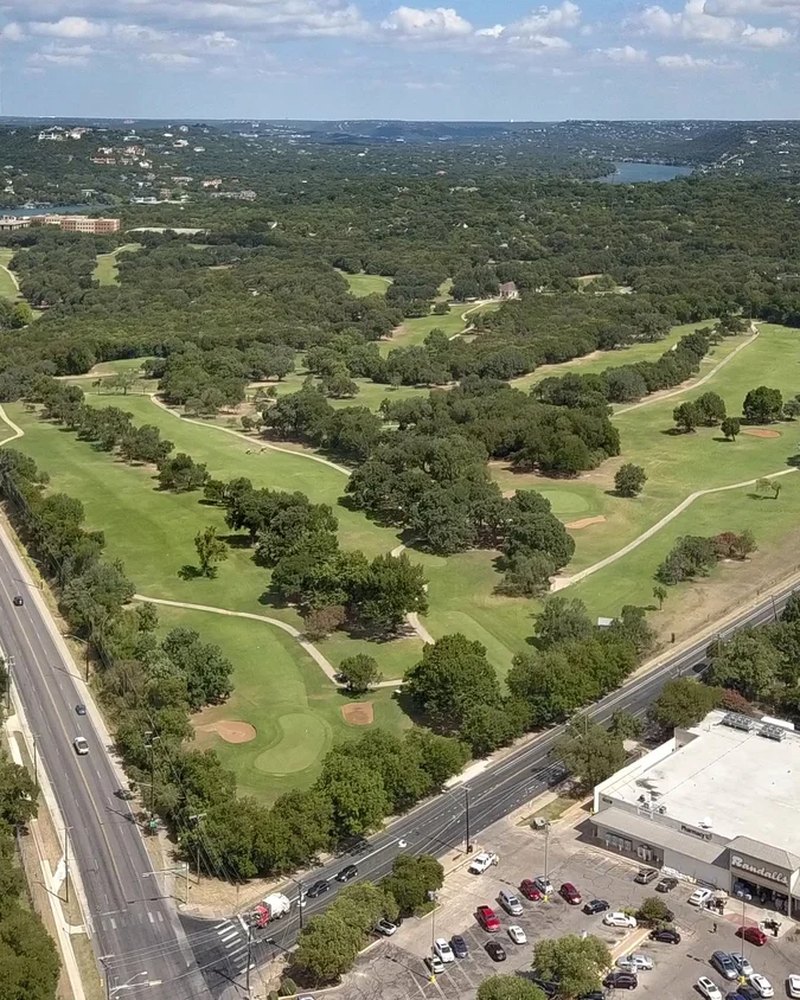
Two miles from the Capitol, on the west side where the streets go quiet and the live oaks close over the road, there are 141 acres that never got built on. Everyone in Austin calls it Muny. The scorecard says Lions Municipal, established 1924, and the practice green has a stone lion in the middle of it that kids climb while their parents putt.
It is the city’s oldest public course — more than 75,000 rounds a year, $35 on a weekday, dogs welcome. Hogan played here. So did Byron Nelson, Sandra Haynie and Betsy Rawls. Tom Kite and Ben Crenshaw grew up on it. Texas’ oldest amateur tournament, the Firecracker Open, still runs here every Fourth of July weekend.
And for most of the last decade, nobody knew how long any of that would get to continue. The land belongs to the University of Texas, the long-term lease ran out in 2019, and the course lived on short extensions after that — a strange way to treat the site of one of the quietest, earliest civil rights victories in the South. On October 14, 2026, that finally changed: the City of Austin and UT announced a proposed deal to hand Muny to the city for good (city announcement).
That story is below. First, the course.
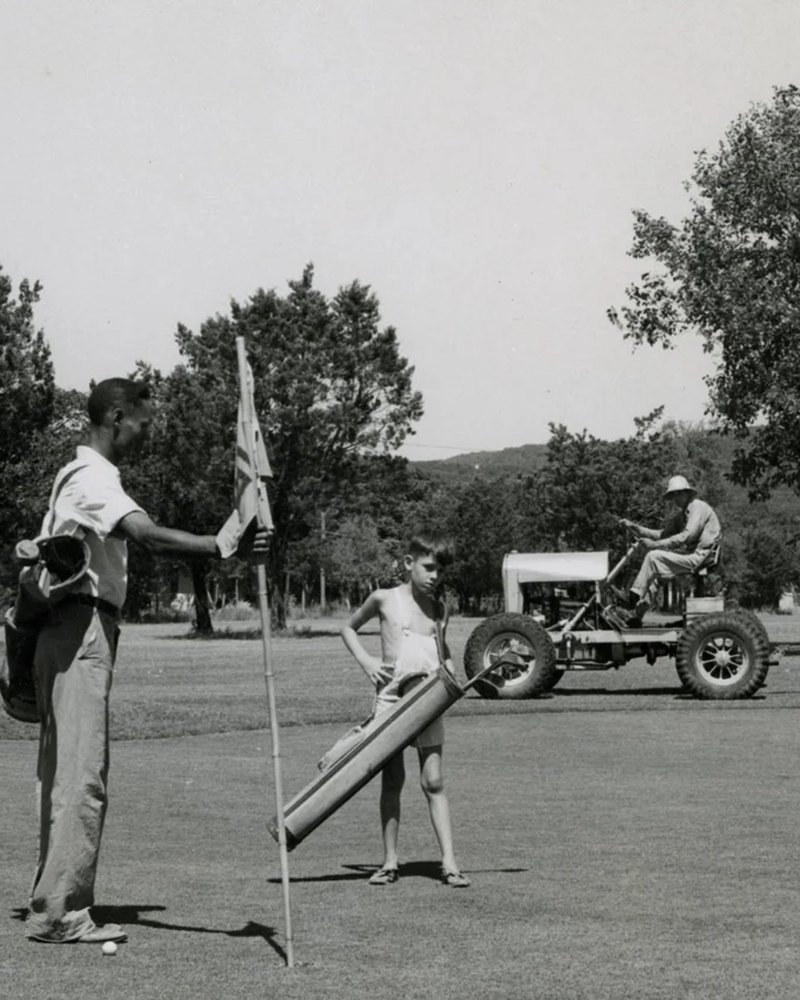
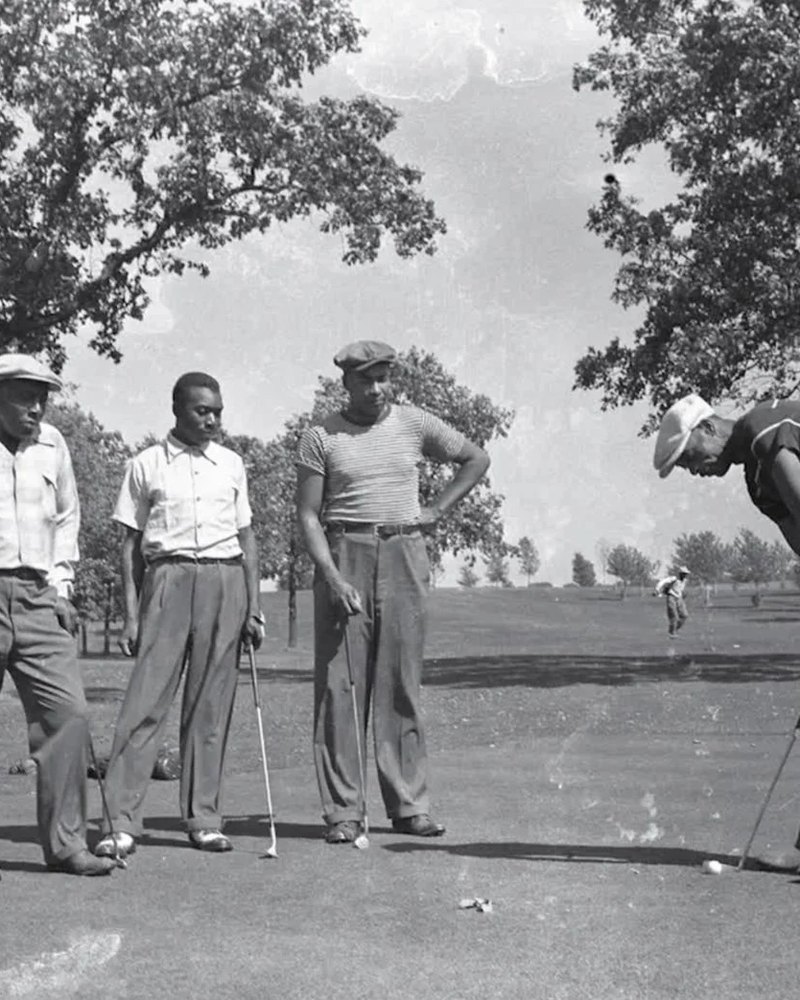
In the latter half of 1950, a nine-year-old Black caddie named Alvin Propps and another Black youth walked onto the course and played it, in open defiance of the Jim Crow laws of the era. They were detained. Mayor Taylor Glass conferred with council members and made a decision that took five words: let them play. The two finished their round. Rather than build a separate course, the council opened Muny to every golfer in Austin.
That made Lions the first integrated municipal course south of the Mason-Dixon Line — in 1950, four years before Brown v. Board of Education, at a time when the schools two miles away were still segregated. Word traveled. Through the fifties and sixties, Black golfers came from all over Texas to play here; buses shuttled players in from other parts of the state, and Joe Louis — the heavyweight champion, and a tireless advocate for Black golfers — held clinics at Lions that drew thousands.
General Marshall, who caddied at Lions from 1946 to 1950, put it this way to the USGA: “I wish I could express how good I felt. When they integrated this course, black golfers from all over the state of Texas would come here to play golf.”
This is why the course is on the National Register of Historic Places, and why the National Trust for Historic Preservation put it on its list of America’s most endangered historic places. Not the architecture. The afternoon in 1950.
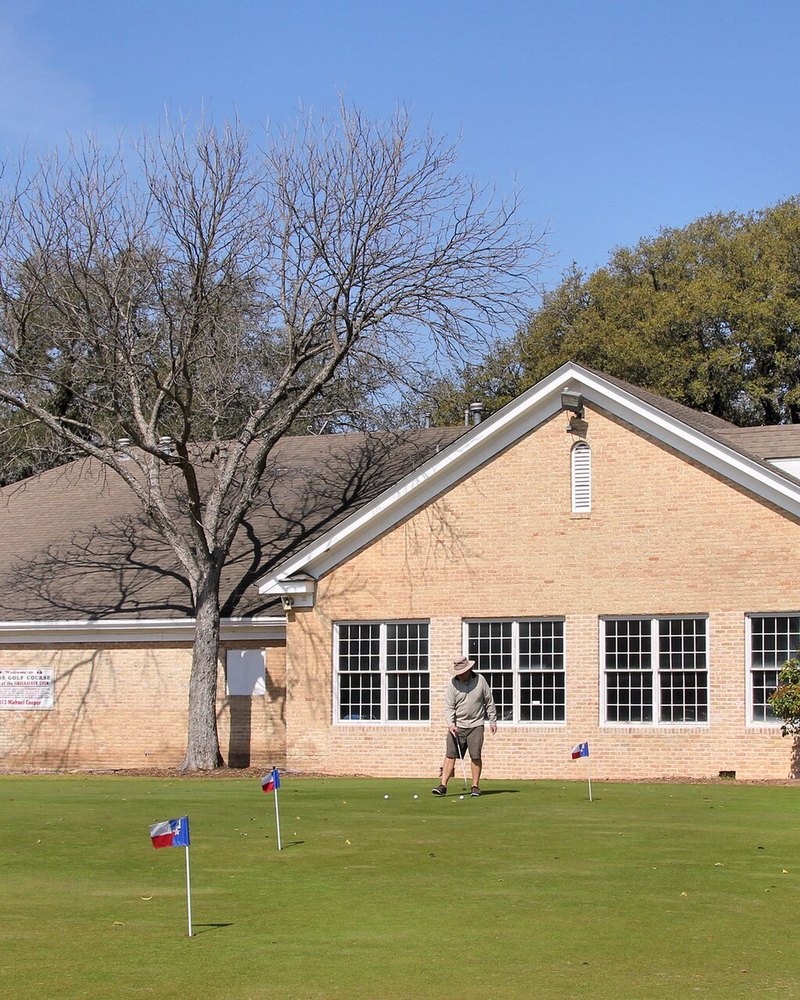
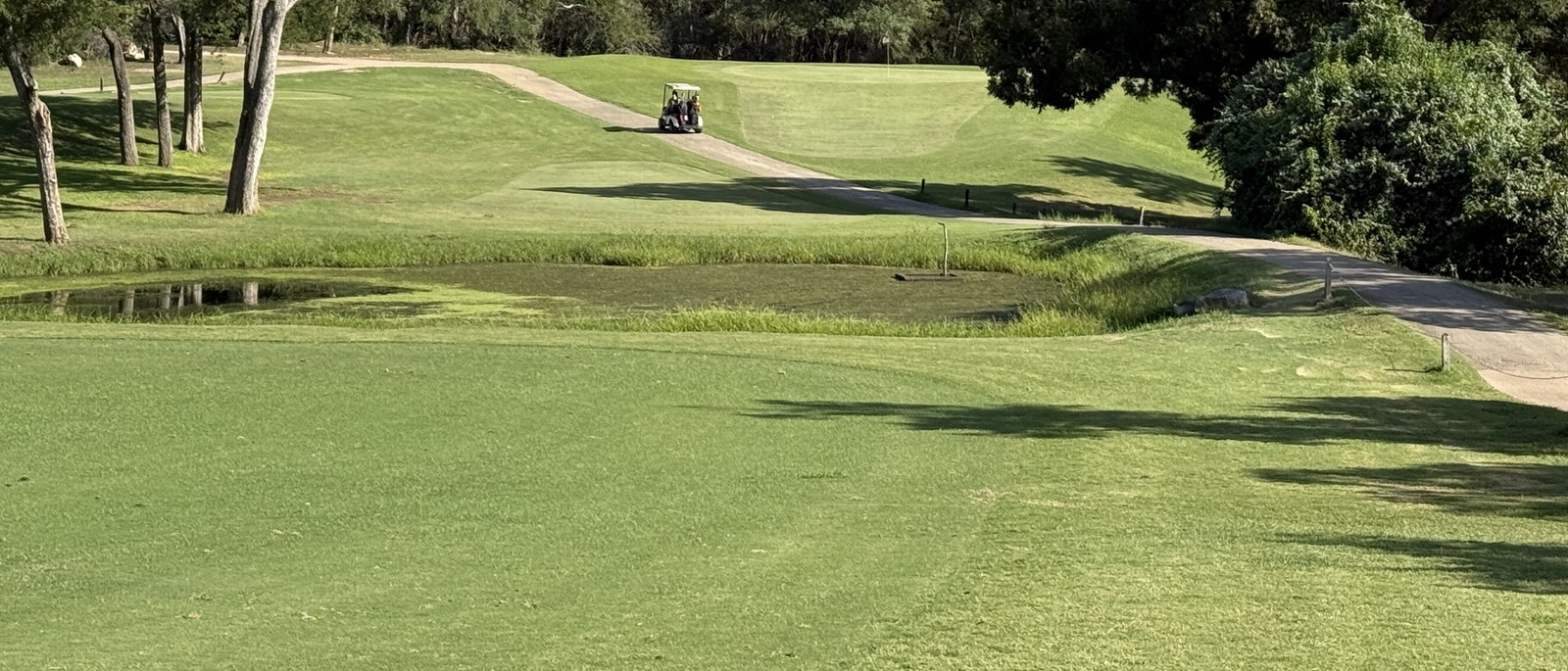
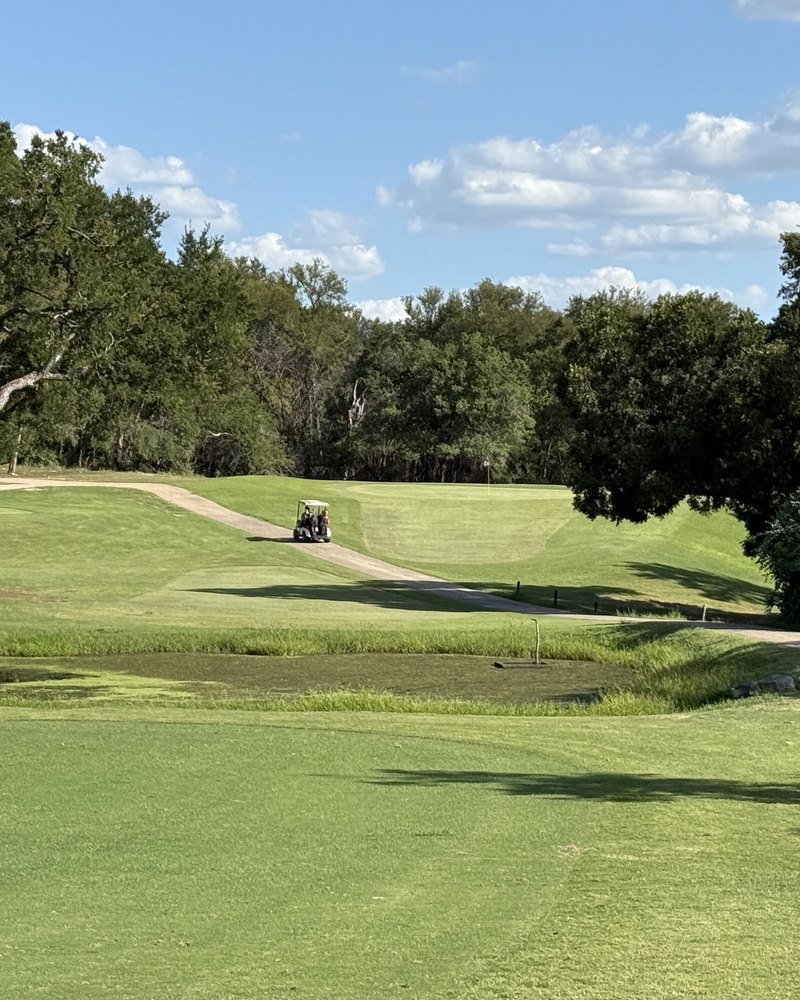
On the card it looks gentle: par 71, 5,825 from the tips, rating 69.8. It is not a bomber’s course and it doesn’t pretend to be. What it is, is a placement exam. The front nine turns hard — the doglegs at 1, 3 and 6 all punish the corner-cutter — and the water waits until the back, where it decides both par 5s and the best hole on the property.
The ground is the other half of it. Muny sits on limestone, and when Austin is dry — which is most of the time it’s golf weather — the fairways run like cart paths. Land a ball on the front of these greens and let it release; fly it to the pin and you’ll be putting from the collar behind. The course record is 60, so the scoring is there. The 123 slope says it still collects from anyone playing careless.
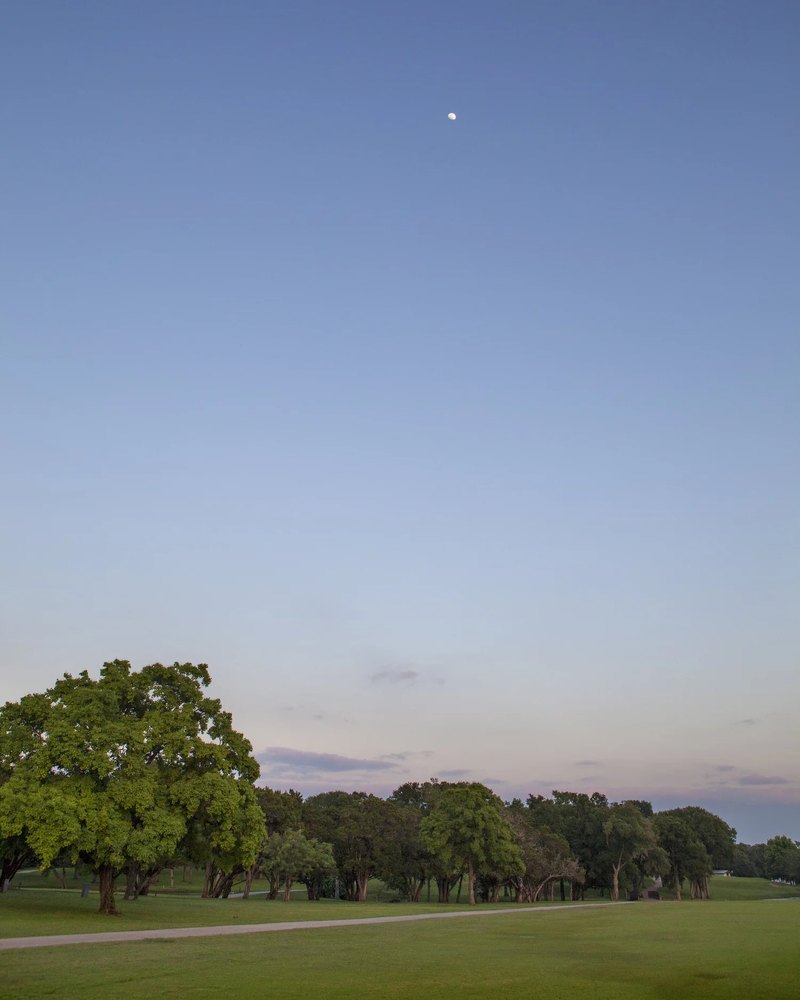
The rest of the round: short par 3s at 13 and 15 that lull you and small greens that punish it, a comfortable walk under the best trees on any course in town, and dogs trotting alongside push carts, which is allowed. Leave the driver home, bring a fairway wood and your patience, and remember why golf in the middle of a city is a different sport from golf behind a gate.
Crenshaw’s middle school, O. Henry, sits directly across the street. He walked over nearly every day to practice and play. He won his first trophy at Muny as a fourth grader, shot 74 here at ten, made his first hole-in-one at eleven, and won the Firecracker Open twice before going on to three straight NCAA titles at Texas, nineteen PGA Tour wins and two green jackets.
He never really left. When the course’s future came into question, Crenshaw and his design partner Bill Coore — the firm behind Sand Valley, Friar’s Head and the Kapalua Plantation Course — offered to restore Muny for free, aiming the course back toward its pre-1974 bones, with the old clubhouse reimagined as an education center and museum for the 1950 story. He helped found the Muny Conservancy to get it funded and has spent years lobbying his own alma mater for a permanent lease.
Standing in the clubhouse in 2019, he told the USGA: “As someone for whom golf has been my whole life, I see what this course means to people. It would be a horror show if Muny went away. It gives them a reason for being, a reason for friendship and fellowship in a beautiful place. And not just golfers’ lives.”
And then, plainly: “I am going to put up whatever reputation I have to save this course.”
The numbers underneath the standoff are simple. The city has paid roughly $500,000 a year to lease the land; UT has valued its use at something closer to $6 million a year. The 1910 deed says the tract exists to advance university education, and what that means in 2026 — student housing, labs, a land-lease income stream, or a historic greenspace two miles from campus that teaches something no classroom can — is the whole argument. Since the lease lapsed in 2019, the course has run on rolling extensions, at one point month to month with five months’ notice of termination.
Now it may finally be over. On October 14, 2026, the City of Austin said it was close to an agreement with UT to convey ownership of the course to the city, preserving it as a public course and open green space, as part of amendments to the 1989 Brackenridge Development Agreement (city announcement). The Austin American-Statesman reported that anonymous donors would help the city buy the 141 acres, and that the deal still needs city and university approval (Statesman); Golfweek reported that the Muny Conservancy brokered it (Golfweek). City Council is scheduled to vote on the amended agreement on November 19, with the remaining pieces of the deal returning to Council in spring 2027. Mayor Kirk Watson called it “a great day for Austin.”
Meanwhile the machinery to save it keeps building: the Conservancy’s fundraising, the legislature’s Save Historic Muny District, the National Register listing, a centennial, a sold-out Muny Cup. Mary Arnold, who has advocated for the course for decades, made the case to the USGA in a sentence: “Lions has always been accessible to all people since it opened in 1924. It’s a beautiful walk, there are many wildlife habitats and it has some of the most gorgeous trees in all of Texas.”
We’re not neutral on this one. A city gets a very small number of places where its whole history is still playable for the price of a nice lunch. The best thing you can do for Muny is the same thing we said about Hancock: show up, pay the green fee, and be one more number on the tee sheet that makes the course impossible to argue away.
In 1950, two Black youths — one of them Alvin Propps, a nine-year-old caddie at the course — played Muny in defiance of Jim Crow laws. Instead of prosecuting them, the city let them finish, and the council opened the course to all golfers. That made Lions the first integrated municipal course south of the Mason-Dixon Line, four years before Brown v. Board of Education. The course was listed on the National Register of Historic Places in 2016 as a civil rights landmark.
As of October 2025, a regular round is $35 Monday through Thursday, $41 on Friday and $44 on weekends and holidays. Evening rounds run $29 to $34, sunset is $28, juniors pay $20 and seniors $27 on weekdays. Nine holes is $28 any day. Carts are $18 per person. The pro shop takes cards only, no cash.
It is an 18-hole, par-71 layout at 5,825 yards from the back tees — short on the card, but the sharp doglegs ask for placement over distance, and the limestone ground runs the ball out when it's dry. The front nine leans on doglegs, bunkers and elevation; the water shows up on the back.
Very likely not. The course sits on 141 acres of the Brackenridge Tract, land deeded to the University of Texas in 1910, and it ran on short lease extensions after the city's long-term lease expired in 2019. On October 14, 2026, the City of Austin and UT announced a proposed deal that would give the city ownership of the course and preserve it as a public course. City Council is scheduled to vote on November 19, 2026.
Bill Coore and Ben Crenshaw — the firm behind Sand Valley and Friar's Head — proposed a restoration of Muny in 2017 and have offered their design services at no cost. The plan restores the course toward its pre-1974 layout and turns the old clubhouse into an education center and golf museum honoring the course's civil rights history.
Online tee times for Monday through Thursday open at 9 a.m. seven days in advance. Weekend times drop the preceding Monday at 8 p.m., online only, and you need a user account. The pro shop answers the phone 30 minutes before the first tee time at (512) 978-6869 — that spells MUNY.