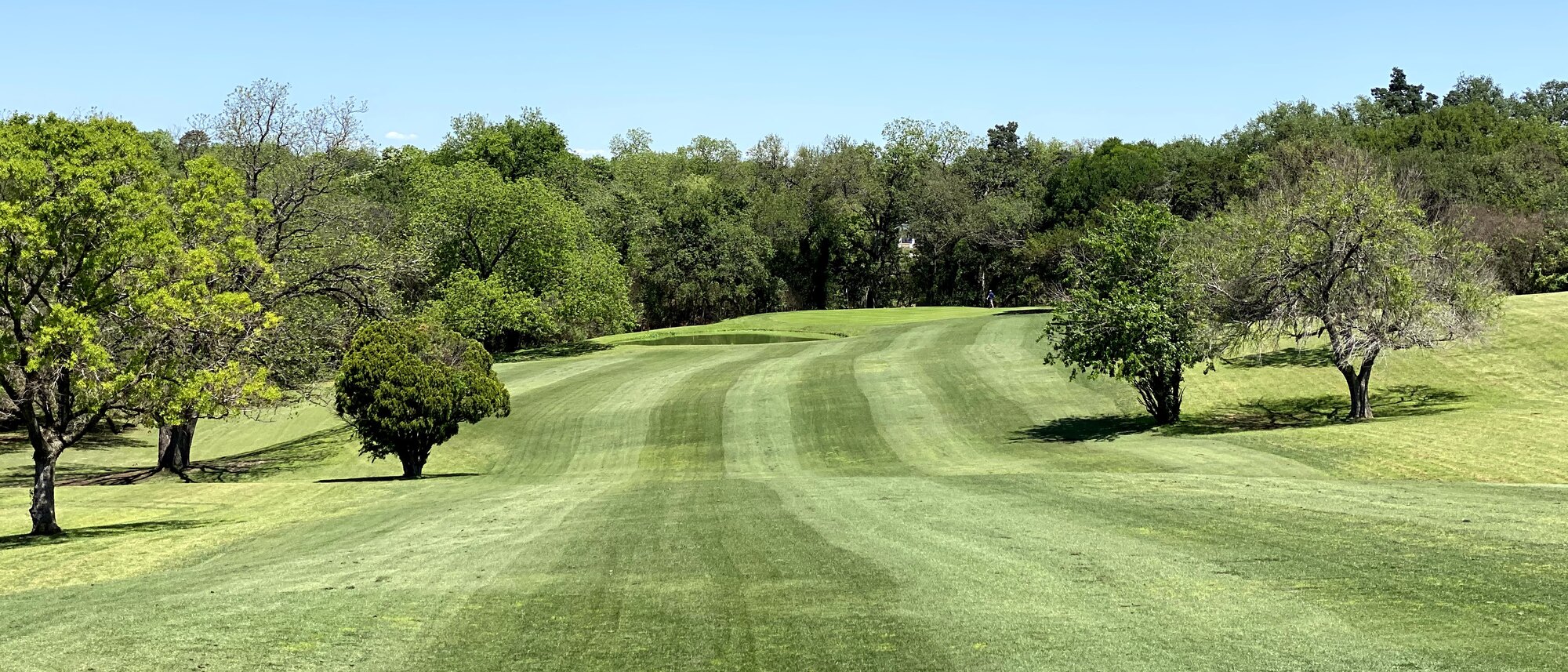
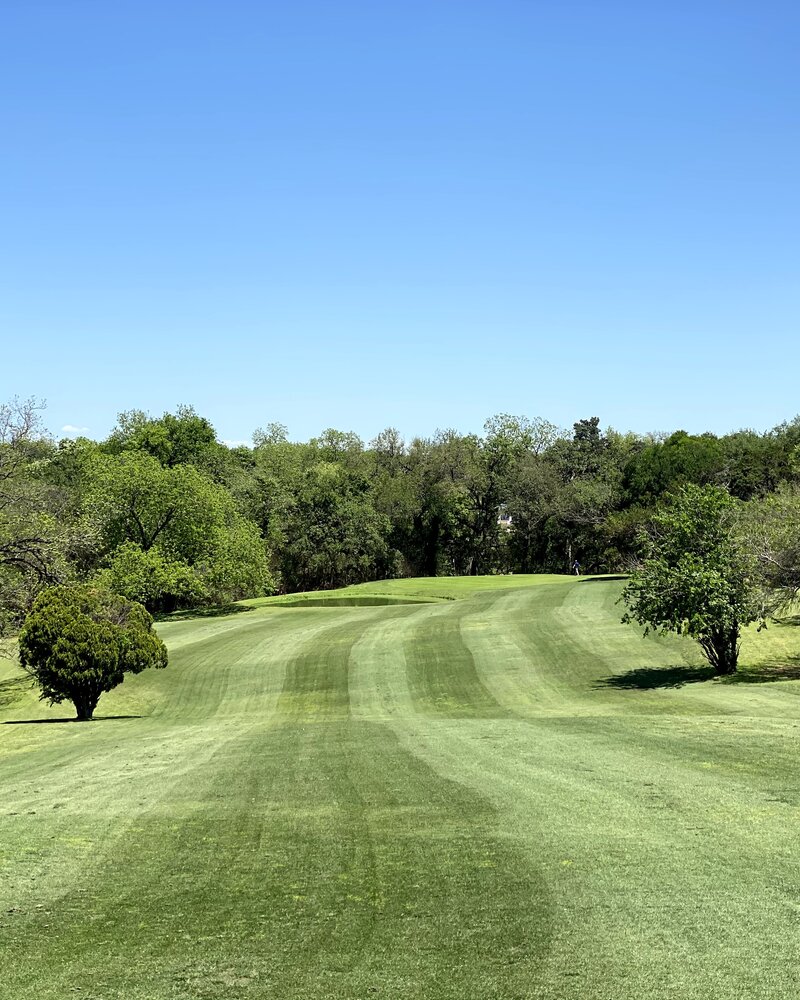
Drive up 41st Street and you’ll miss it. There’s a shopping center on one side, Hyde Park bungalows on the other, and somewhere in between the buildings stop and there’s just… grass. Old oaks. A creek. Nine holes that have been sitting there since 1899.
That’s Hancock. It’s the oldest golf course in Texas, it costs twenty bucks, and it’s a few minutes north of downtown.
We love it for reasons that have almost nothing to do with golf. Cities are supposed to fill in their soft spots. That’s what cities do. Land in the middle of Austin costs what it costs now, and here is a chunk of it growing grass for people who want to walk around hitting a ball. It shouldn’t still be here. It is.
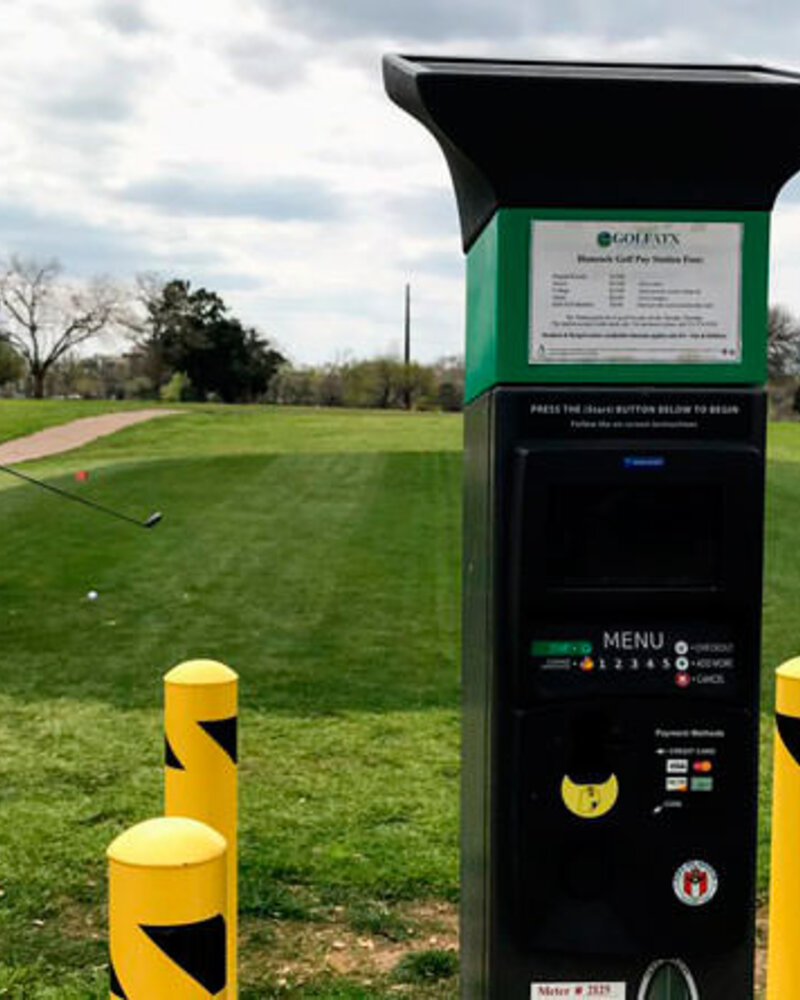
And it’s not precious about itself, which is the best part. There’s no pro shop. Nobody greets you. You walk up to a machine, tap a card, take your stub, and go — first come, first served, starting on the first tee like everyone else. No carts, no tee times, no starter telling you your group is late. Just a course, and you, and whoever else showed up.

Austin is not sentimental about its greenspace. In 1962 the city voted to sell Hancock’s back nine and it became a shopping center — nine holes of a 63-year-old golf course, traded for parking. In 1980 Parks and Rec looked at the deficit and floated closing what was left. The neighborhood showed up and said no, and that is the only reason there’s a course there today.
You can still feel that fight in the place. The walking trail that rings the course exists because Parks and Rec and the Hancock Neighborhood Association built it together in 2008 and agreed to share the upkeep. Golfers and dog walkers and strollers, all sharing the same patch of ground, mostly getting along. The Lions Muni fight has been the loud version of this argument for years. Hancock had its version quietly, decades earlier, and won.
So go play it. Not because it’s a great test of golf — it isn’t, and it doesn’t care. Go because you can leave work at six, walk nine holes under trees that were here before the highway, and be home for dinner having spent less than you would on two beers downtown. Go because the same ground taught Harvey Penick the game, and nobody charges extra for that.
A course this old, this cheap, this close in, still open to anyone who walks up with a debit card — that’s not nostalgia. That’s a city deciding, over and over for 127 years, to keep something instead of selling it. We’d like it to keep deciding that. The Hancock Golf Course Conservancy is working on exactly that, and the National Register listing in 2014 gave them something to point at.
The best thing you can do for it is show up and pay the twenty dollars.
Everybody in Austin knows the name. Fewer people know he learned all of it on this nine.
Penick was born here in 1904, the youngest of five boys. In 1912, at eight years old, he started caddying at the Austin Country Club — which was, at the time, this golf course. He was an assistant pro at thirteen. Weekends, summers, after school. The club liked him enough to offer him the head professional job while he was still in high school, and he had to say no, because his family made him finish. So the club held the job open. He graduated Austin High in May 1923 and took it that month, at eighteen.
He stayed until 1950, when the club moved out to Riverside Drive. Thirty-eight years on this ground. Every bit of the foundation — the caddie years, the apprenticeship, the first two decades of teaching — happened on the holes you can play this afternoon for twenty dollars.
Somewhere in the 1930s, while he was working here, he started keeping notes in a red Scribbletex notebook, tabbed by subject: hooks, slices, putting. It was just a teaching aid. Sixty years later Bud Shrake talked him into publishing it and Harvey Penick’s Little Red Book became the best-selling sports book ever written.
He coached Texas from 1931 to 1963, mostly for free. His students included Ben Crenshaw, Tom Kite, Betsy Rawls, Mickey Wright, Kathy Whitworth, and Sandra Palmer — six of the thirteen women in the LPGA Hall of Fame came through him. Another was Morris Williams Jr., who has a muni of his own on the other side of town. Tommy Armour, the man most people called the best teacher alive, gave Penick the title instead. The PGA named him its first National Teacher of the Year in 1989. He died in Austin in 1995.
Eighty-two years with that club. Roughly half of them right here, on a course that now asks nothing of you but a debit card and comfortable shoes.
Hancock Golf Course in Austin, founded in 1899 by former mayor Lewis Hancock. It stands today as the oldest golf course in Texas and is still open to the public as a nine-hole municipal course.
A regular round is $20, sunset is $16, seniors 60 and older pay $18, college students with ID pay $18, and juniors pay $16. Rates are the same seven days a week and the green fee is good for play all day. The pay station takes credit and debit cards only.
No. Hancock is walking only, with no cart rental and no pull cart rental. There is also no pro shop — it runs as a pay station operation seven days a week, and play starts on the first hole on a first-come, first-served basis.
Harvey Penick began caddying at this site in 1912 at age eight, when it was the original Austin Country Club. He became assistant professional at thirteen and head professional in May 1923, and remained at this location until the club moved to Riverside Drive in 1950. His association with the club spanned 82 years. He coached the University of Texas from 1931 to 1963, mostly without pay, and started the notebook that became Harvey Penick's Little Red Book while working here in the 1930s.
It is a nine-hole, par 35 layout that plays up and down hills and across Waller Creek. It is short by modern standards with small greens typical of the era it was built in, and it once had 18 holes and sand greens.
The golf course was listed on the National Register of Historic Places in 2014, and the adjacent recreation center is a Recorded Texas Historic Landmark. The Hancock Golf Course Conservancy advocates for preserving the greenspace.