Mind, Body, Spirit: 15 Public Golf Trips, and Why You Should Take Them Alone

By · Updated October 27, 2026

Field Note15 public courses · fees checked October 27, 2026
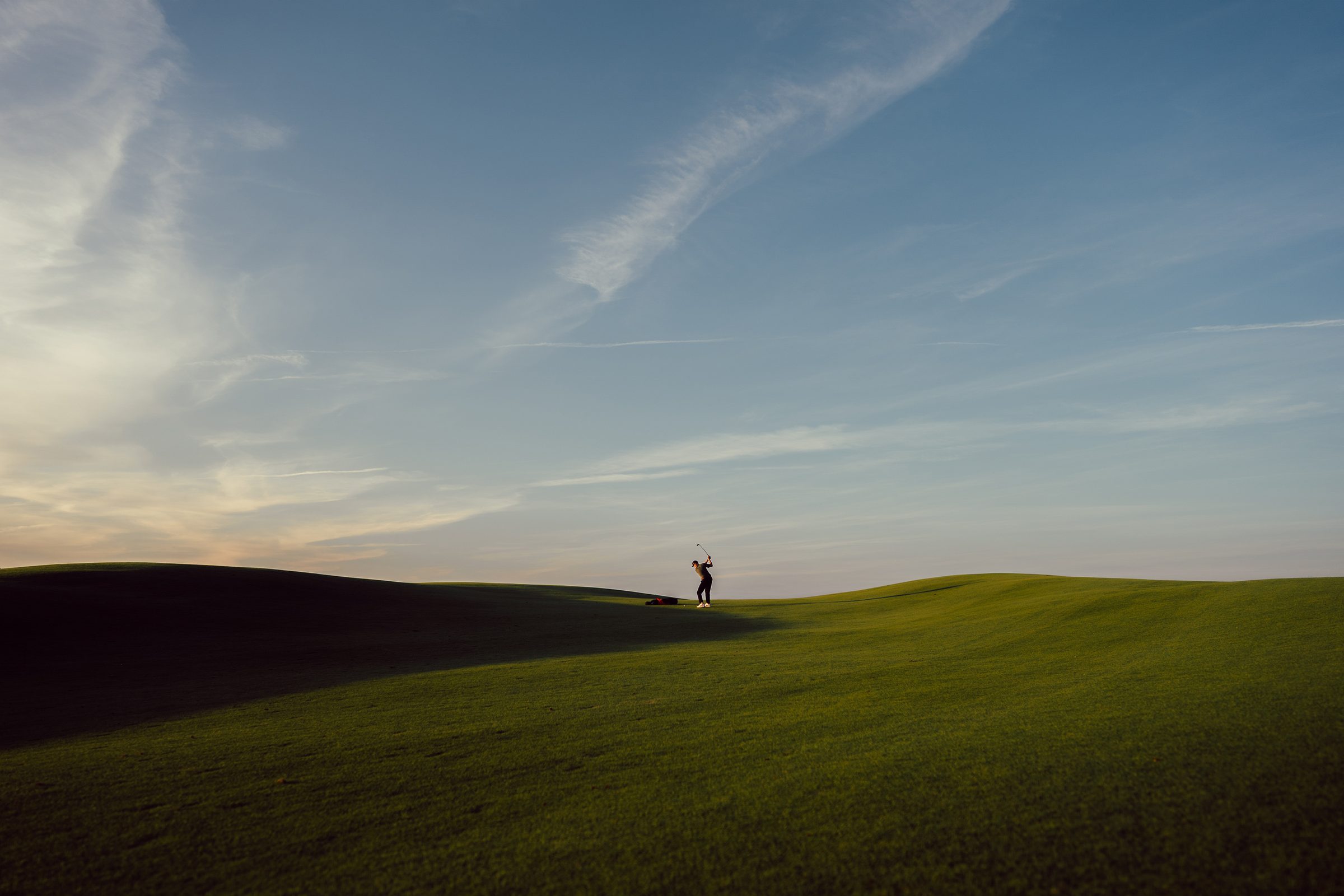
A lone golfer mid-backswing on a crest of fairway at dusk at Sand Valley, Wisconsin, under a wide pale sky
A late round, alone, at Sand Valley in Wisconsin. Photo: Sand Valley

“A great course tests both the mind and the body.”— Baxter Spann, architect of Black Mesa

Most golf trips get planned around a list: the famous courses, the rankings, the places your friends have been. This one is planned around what you need. Some trips are for your head, a course that makes you rethink how the game is supposed to be played. Some are for your body, a walk long and hard enough that the score stops mattering. And some are for something quieter, a place so beautiful and so empty that you forget to check your phone.

Every course here is open to the public, either fully public or a resort that lets day guests book a tee time. Each one is good enough to build a trip around. We’ve sorted fifteen of them into Mind, Body and Spirit, with the fee, the walking rules, the nearest airport and what to watch out for.

We’d also make the case for going alone. A solo trip means you set the pace, play when the light is best and get paired with strangers who often turn out to be the best part of the day. Several of these courses are built for it: Sweetens Cove sells passes one person at a time, Landmand pairs singles with singles, and Erin Hills and Silvies keep single rooms. For every course we’ve noted how it works if you show up by yourself.

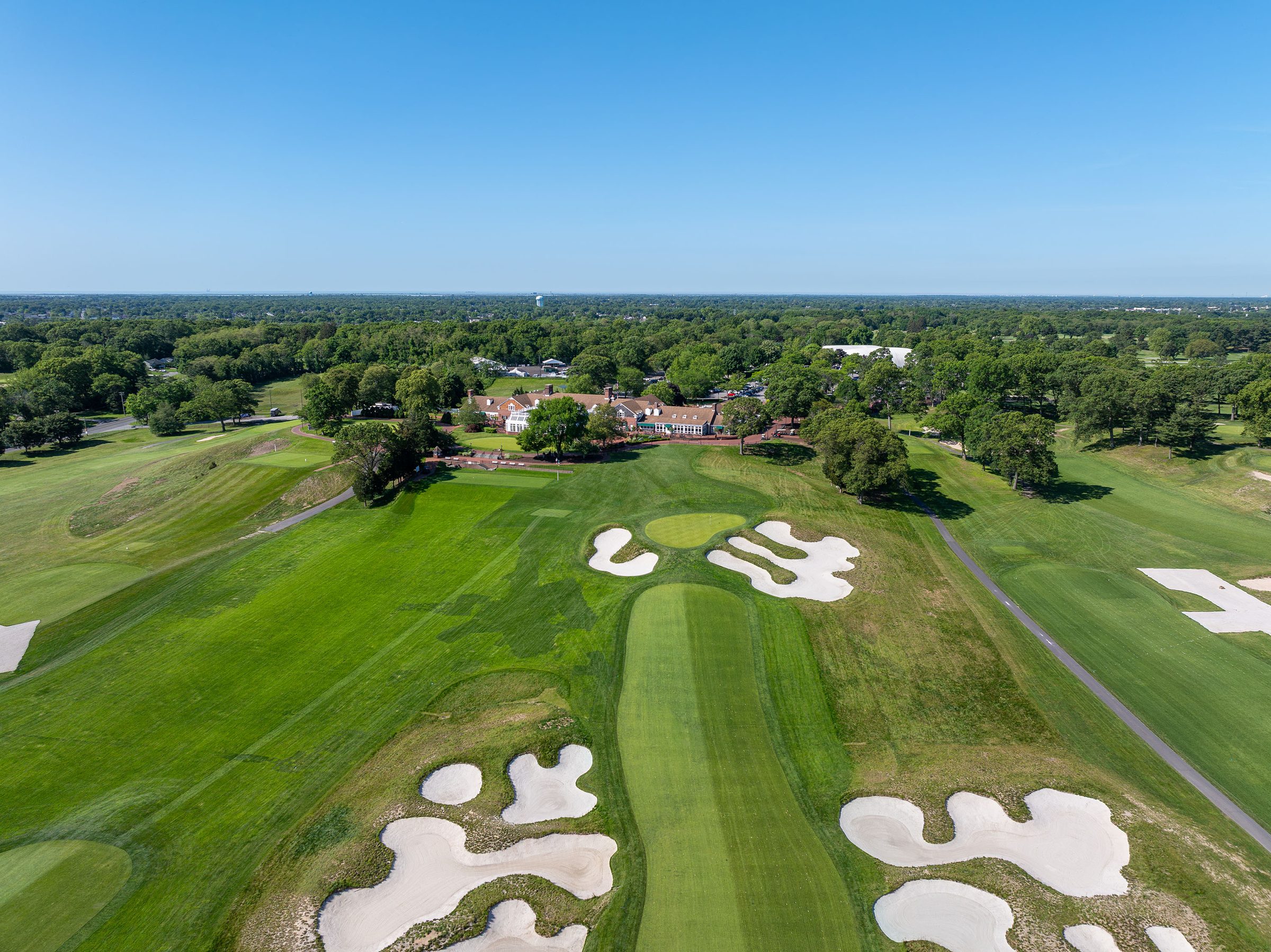
Drone view over Bethpage fairway bunkers toward the clubhouse
Part I · 5 courses

Mind

Courses that make you think about the game differently.

Blind shots, no out of bounds, template holes, fairways a hundred yards wide. These five courses are puzzles more than tests, and each one makes you decide what you’re looking at before you decide what to hit.

01

Tobacco Road

Sanford, North Carolina · Mike Strantz · 1998
Low sun through pines onto the 11th green at Tobacco Road, sandy waste ground and wire grass in front
The 11th, one of two mirror-image cape holes, carved out of an old sand quarry. Photo: Tobacco Road

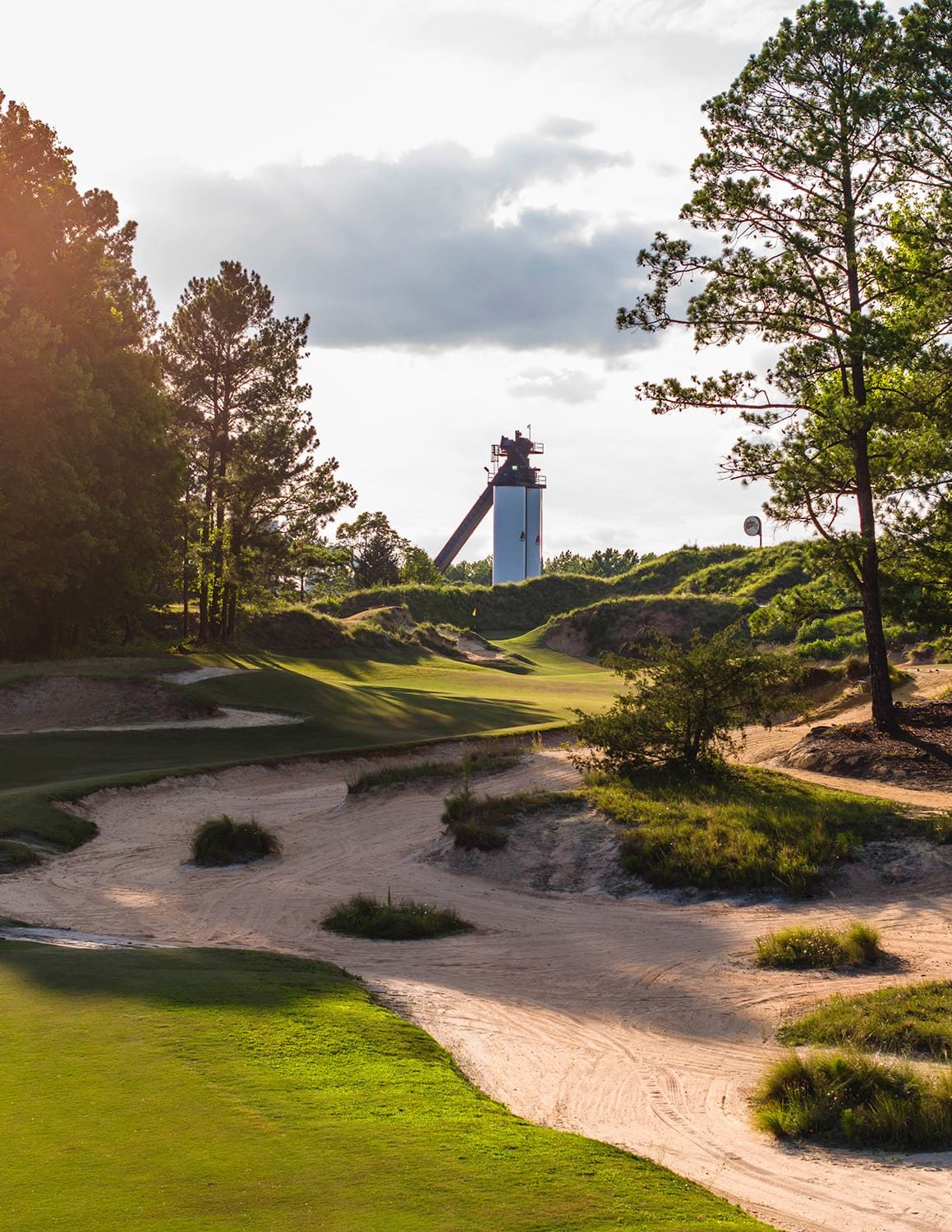
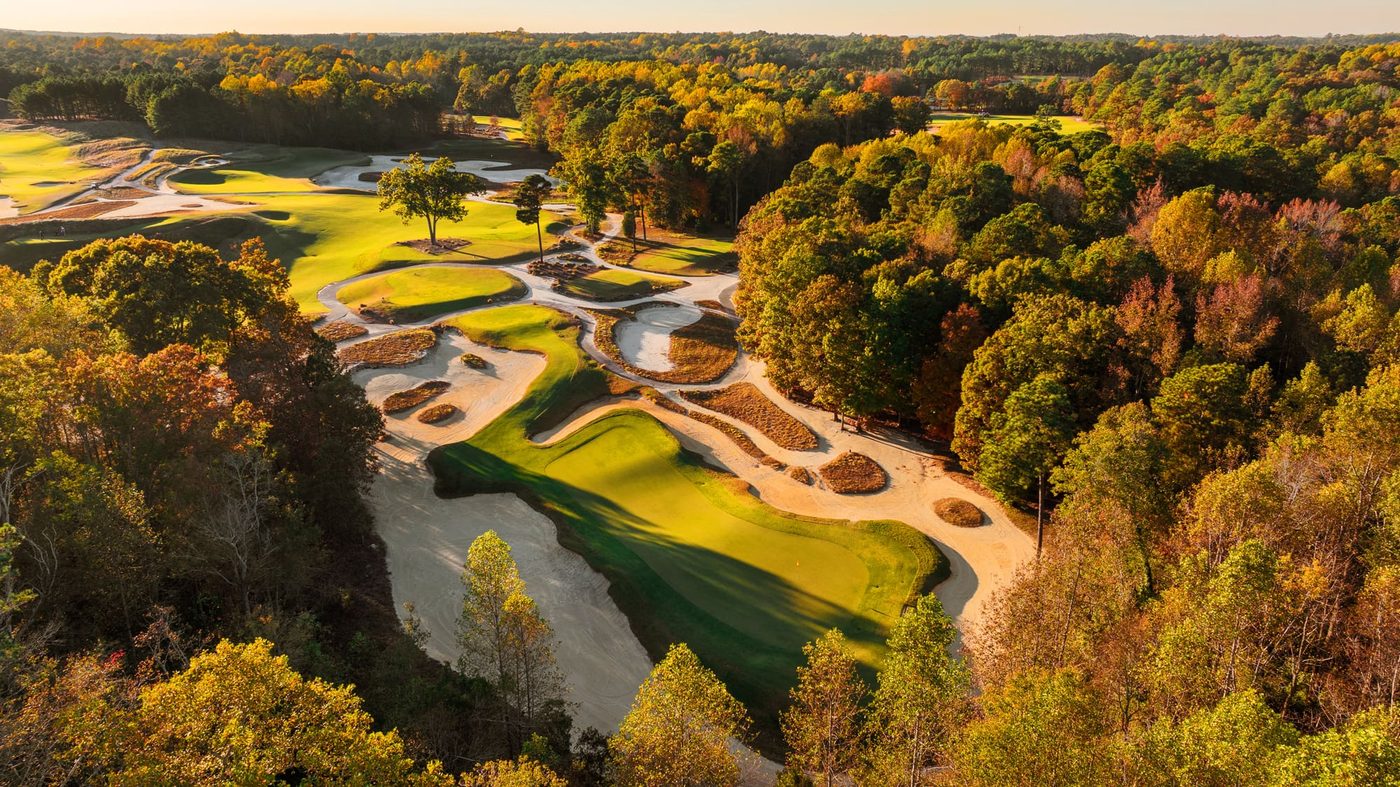
Tobacco Road looks like nothing else in North Carolina golf. The course is cut from the orange sand of a former quarry, and the club’s own pitch is blunt: “Some golf courses ask you to follow the rules. Tobacco Road asks you to think differently.”

It means it. There is no out of bounds anywhere on the property, and Local Rule No. 1 says every bunker is a waste area, so you can ground your club in all of it. The approach to the 9th is blind to a plateau green. The par-5 13th, the club’s own Road hole, finishes at what it calls a “blind bathtub green.” The 4th and 11th are mirror-image cape holes, the 16th green has three tiers, and the 18th asks for a blind drive. You spend the whole round deciding what you are looking at before you decide what to hit.

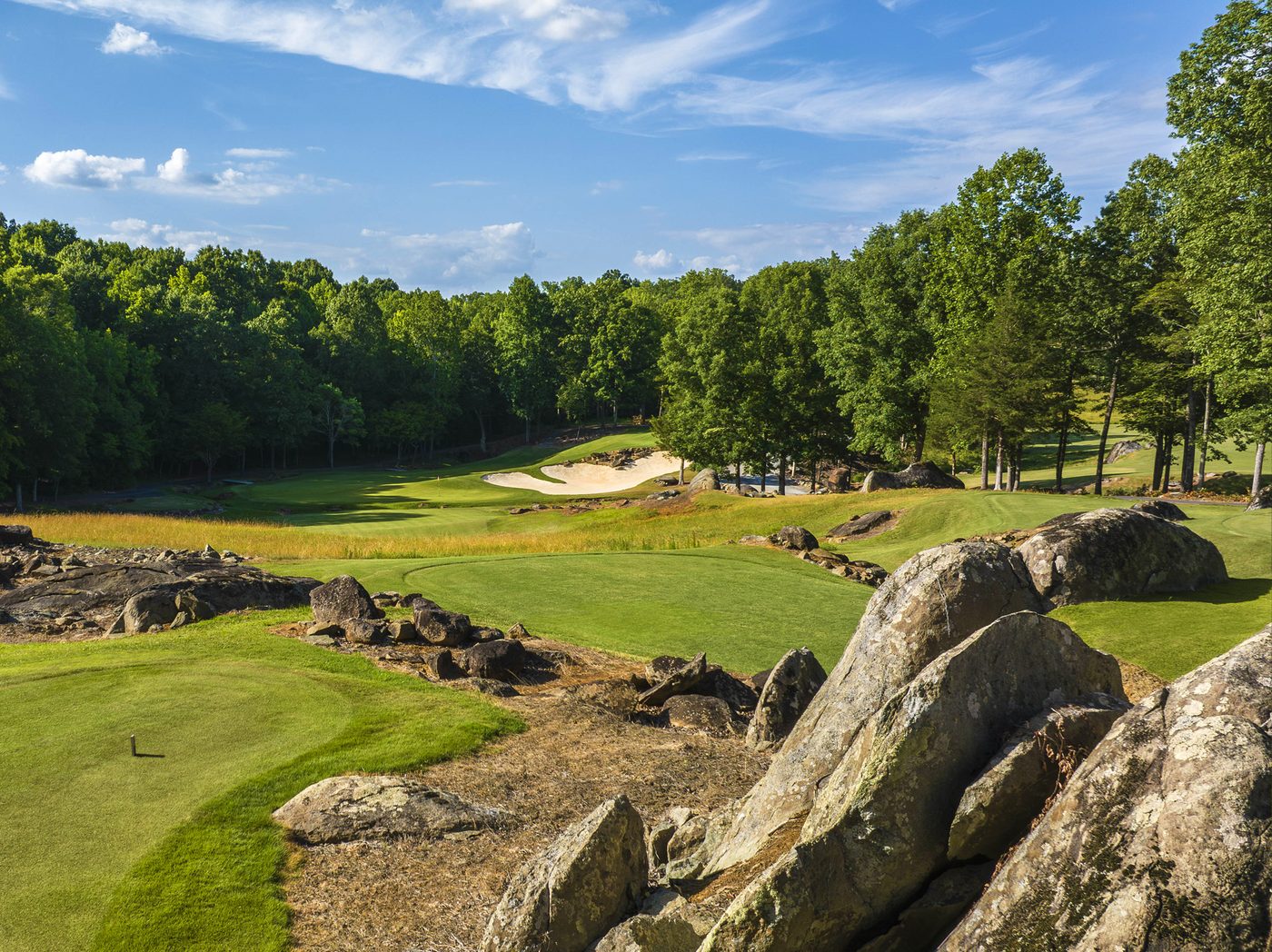
Make it a Strantz trip. Tot Hill Farm, about 50 minutes away, is the course he built on horseback, riding his horse Scout with his dogs following along. Between the two you get the purest dose of one architect’s imagination available to the public.
The par-5 13th at Tobacco Road, a river of sand and grass islands leading toward the blind green
No. 13, the Road hole, with its blind bathtub green.
Autumn drone view of Tobacco Road's 3rd green cut into a hillside of orange and gold hardwoods
The par-3 3rd in October.
Tot Hill Farm's 2nd hole seen past a cluster of huge granite boulders
Tot Hill Farm, the Strantz course built on horseback.
“Some courses start off with a handshake; Mike Strantz gives you a stiff upper-cut.”— Tobacco Road hole guide, on the 1st
02

Bethpage Black

Farmingdale, New York · A.W. Tillinghast · 1930s
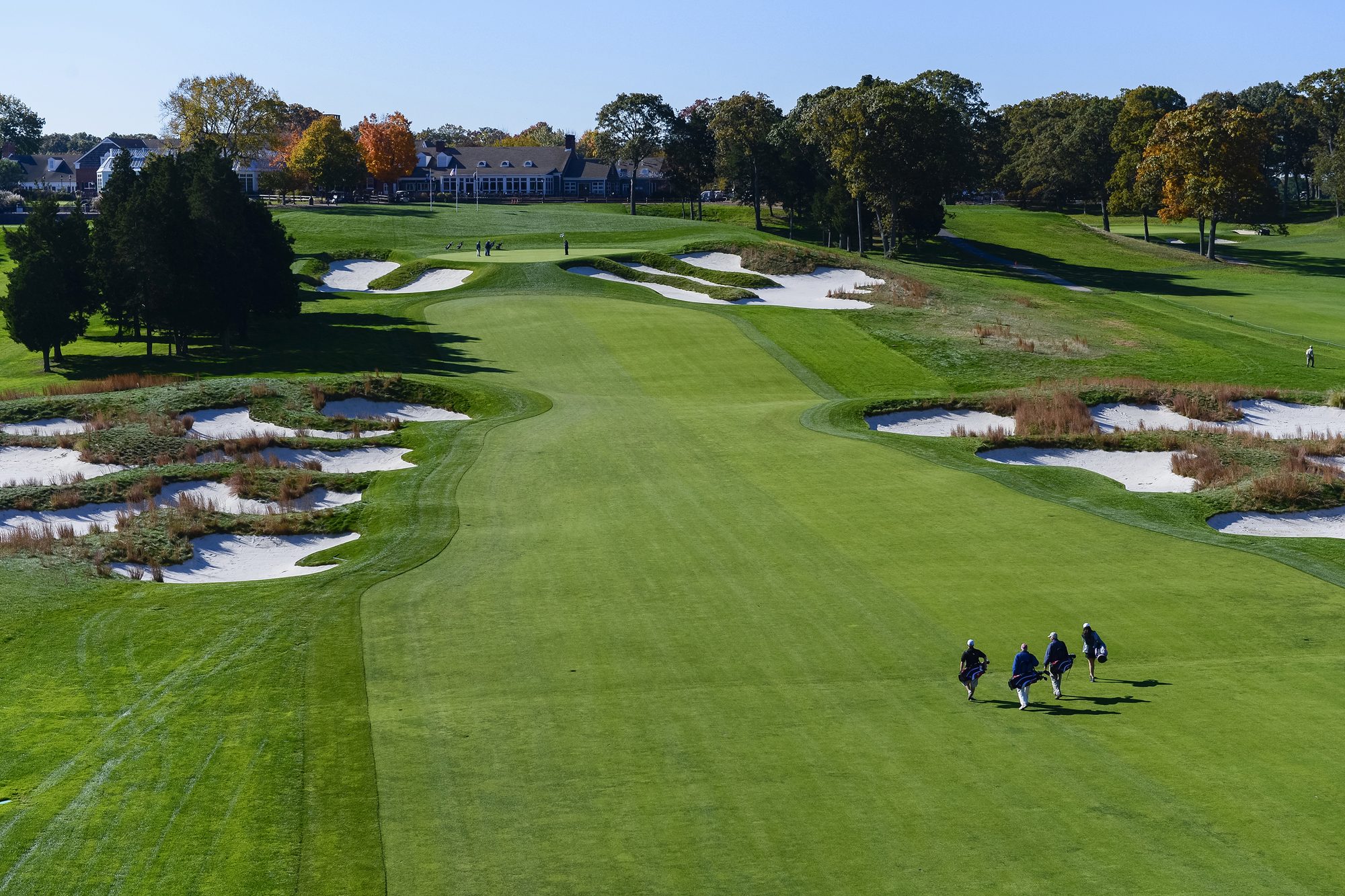
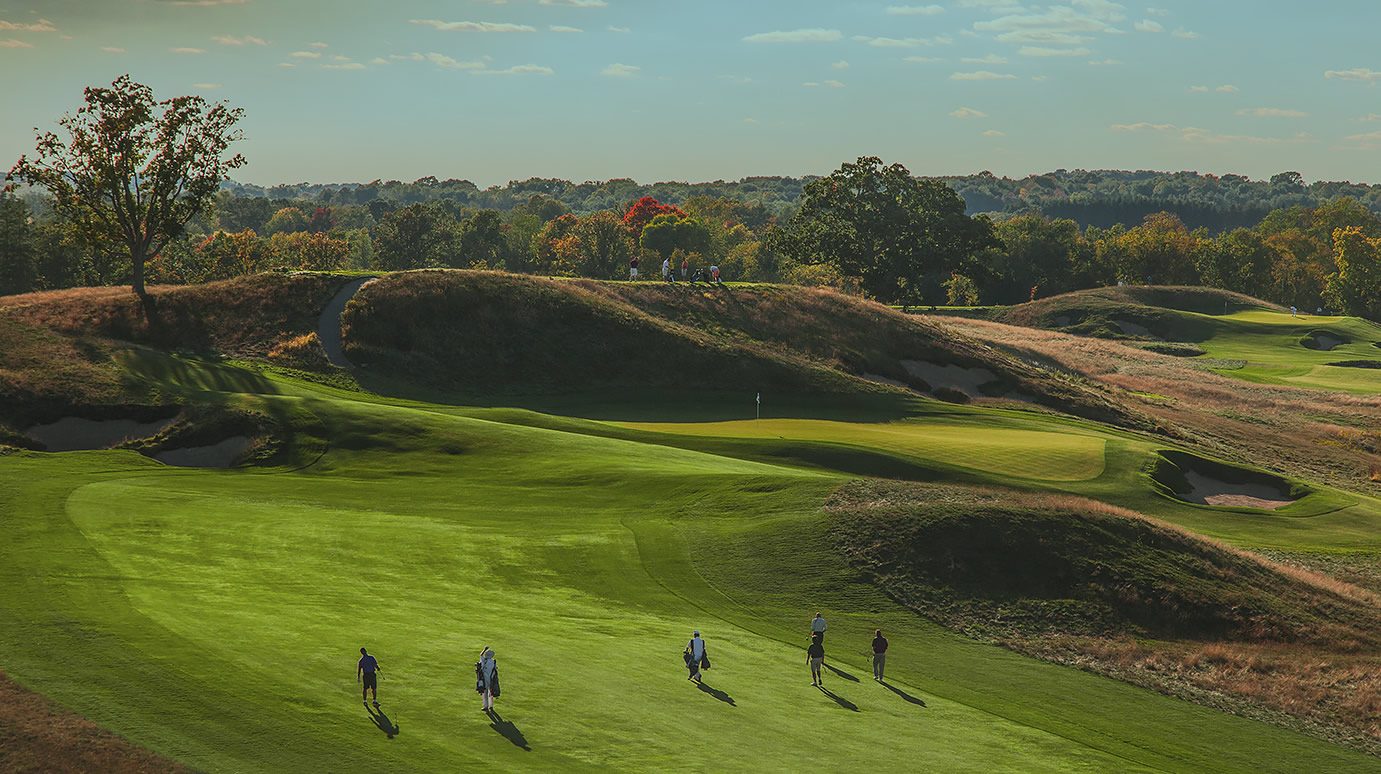
A foursome walking up a broad Bethpage fairway lined with ragged bunkers toward the clubhouse
On foot, the only way the Black is played. Photo: Bethpage Black

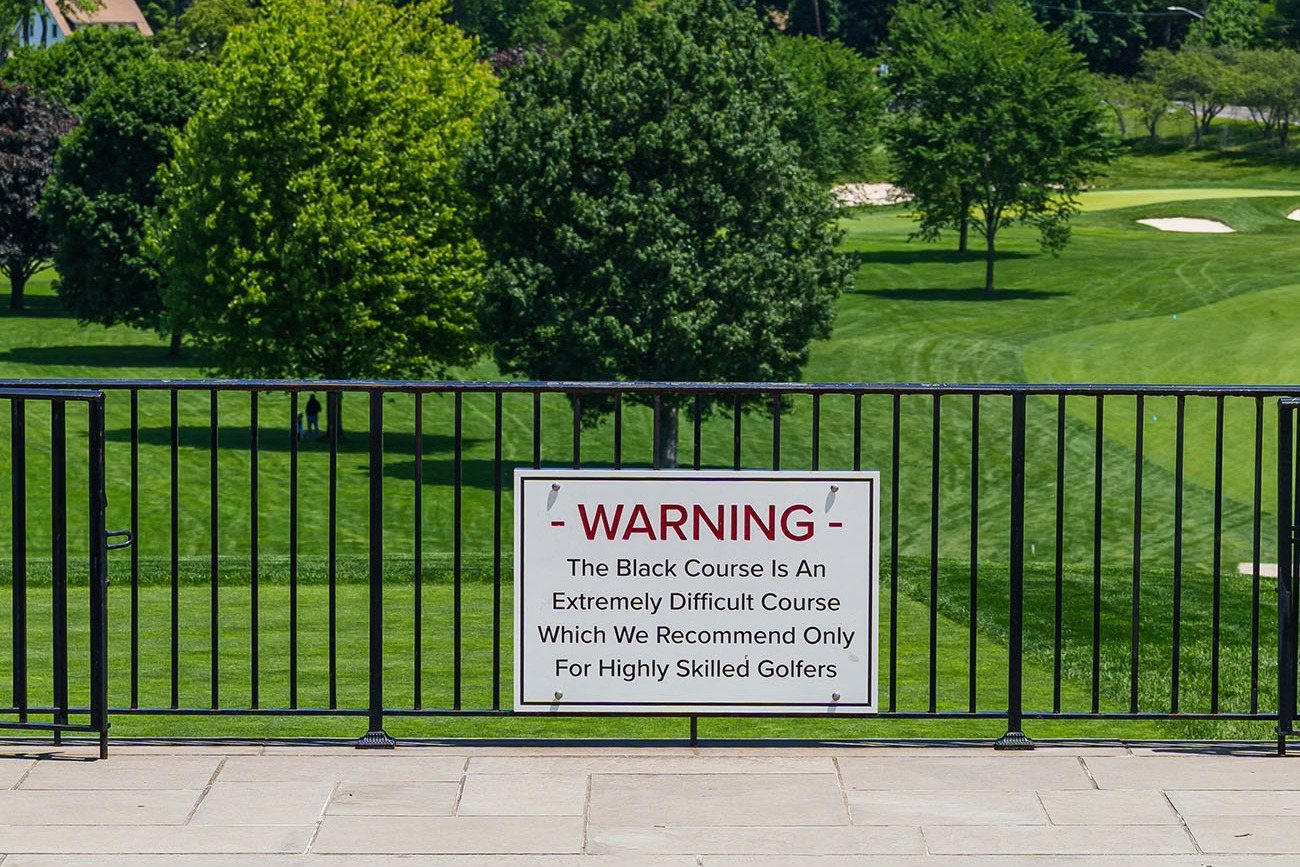
Bethpage is the head game. It is a state park course that has hosted two U.S. Opens, a PGA Championship and the 2025 Ryder Cup, and before you hit a shot the state tells you, on a sign by the first tee, that you probably shouldn’t: “The Black Course Is An Extremely Difficult Course Which We Recommend Only For Highly Skilled Golfers.”

What makes it a Mind trip is managing yourself for four-plus hours on a major-championship course, on foot, with no cart to rest in and big bunkers waiting on every miss. Getting there is part of it too. Non-New Yorkers book five days out at 7 p.m., one Black round per 28 days, and the most dedicated still sleep in the parking lot for a walk-up time. GOLF.com’s Josh Sens described golfers “willing to spend the night in their cars.”

We wrote up our own trip in our New York golf trip. The short version: the green fee is the bargain of the list, and the course makes you earn every bit of it.

The warning sign on a railing by Bethpage Black's first tee
The sign.
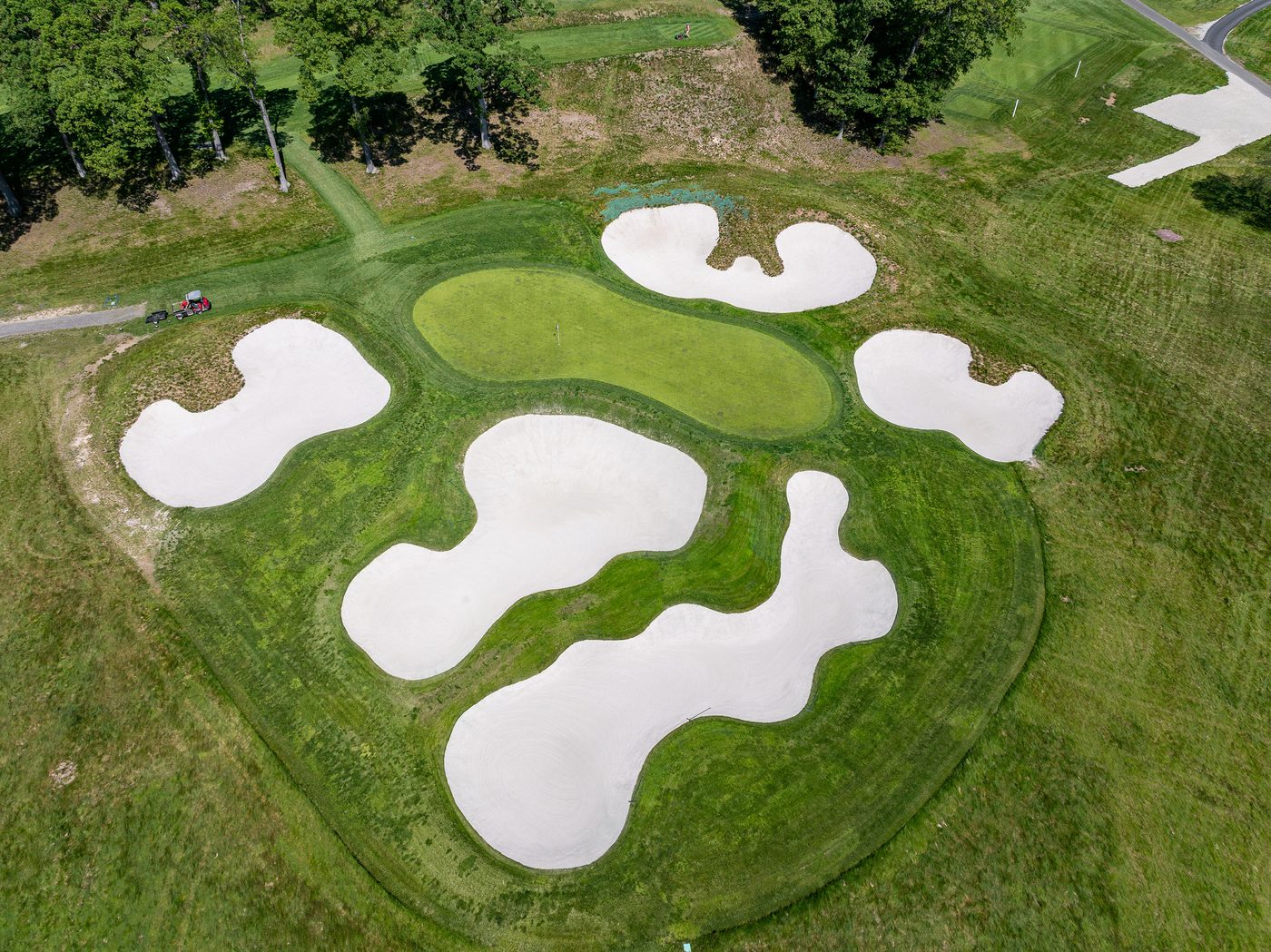
Drone view of a Bethpage green ringed by five big white-sand bunkers
The island-in-sand greens.
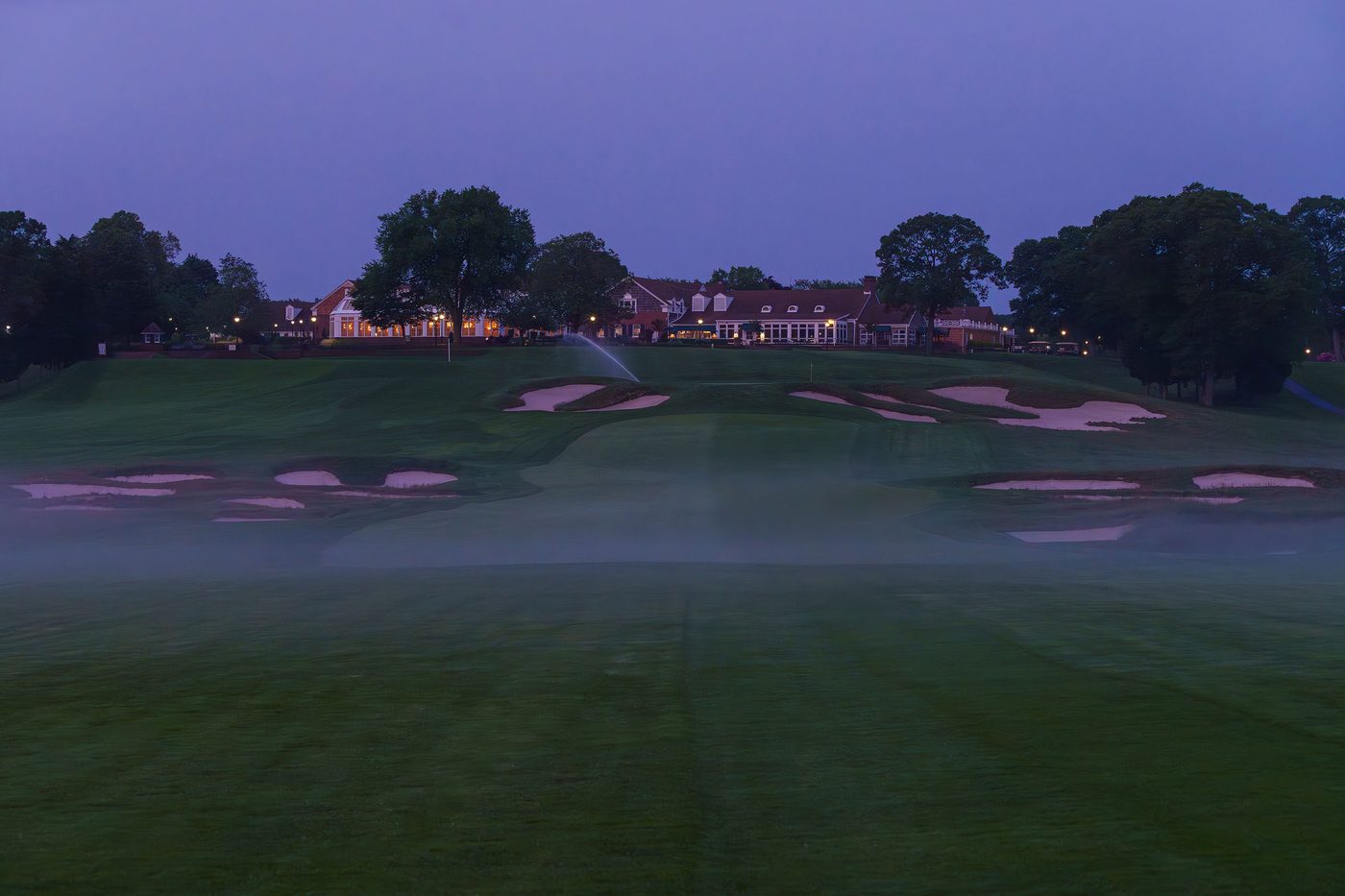
Fog over a bunkered Bethpage fairway at blue hour with the clubhouse lit on the ridge
Blue hour from the fairway.
03

Old Macdonald

Bandon Dunes, Oregon · Tom Doak & Jim Urbina · 2010
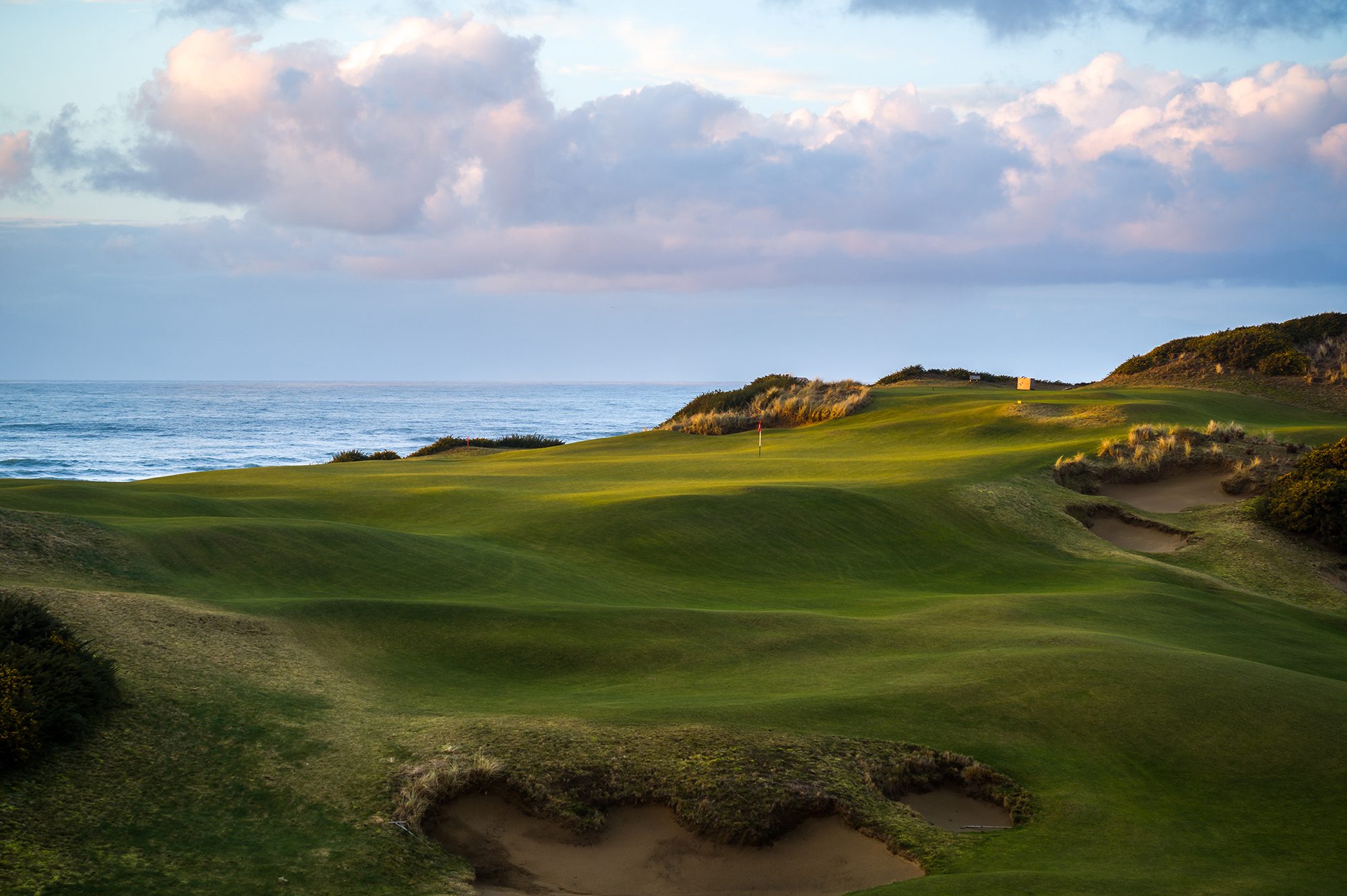
A green perched above the Pacific under big clouds at Old Macdonald, ragged bunker and dune grass in front
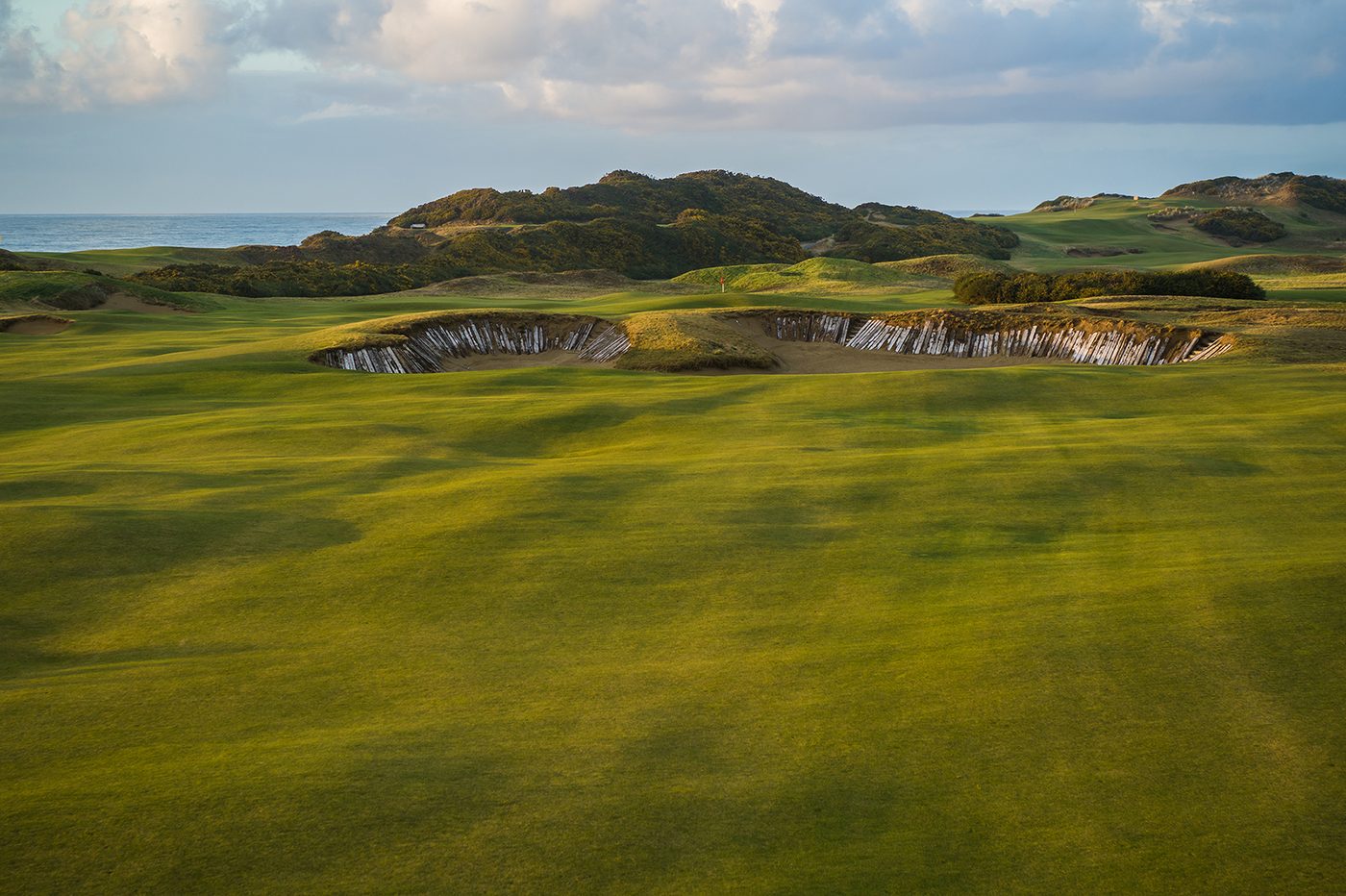
Old Macdonald, above the Pacific. Photo: Old Macdonald
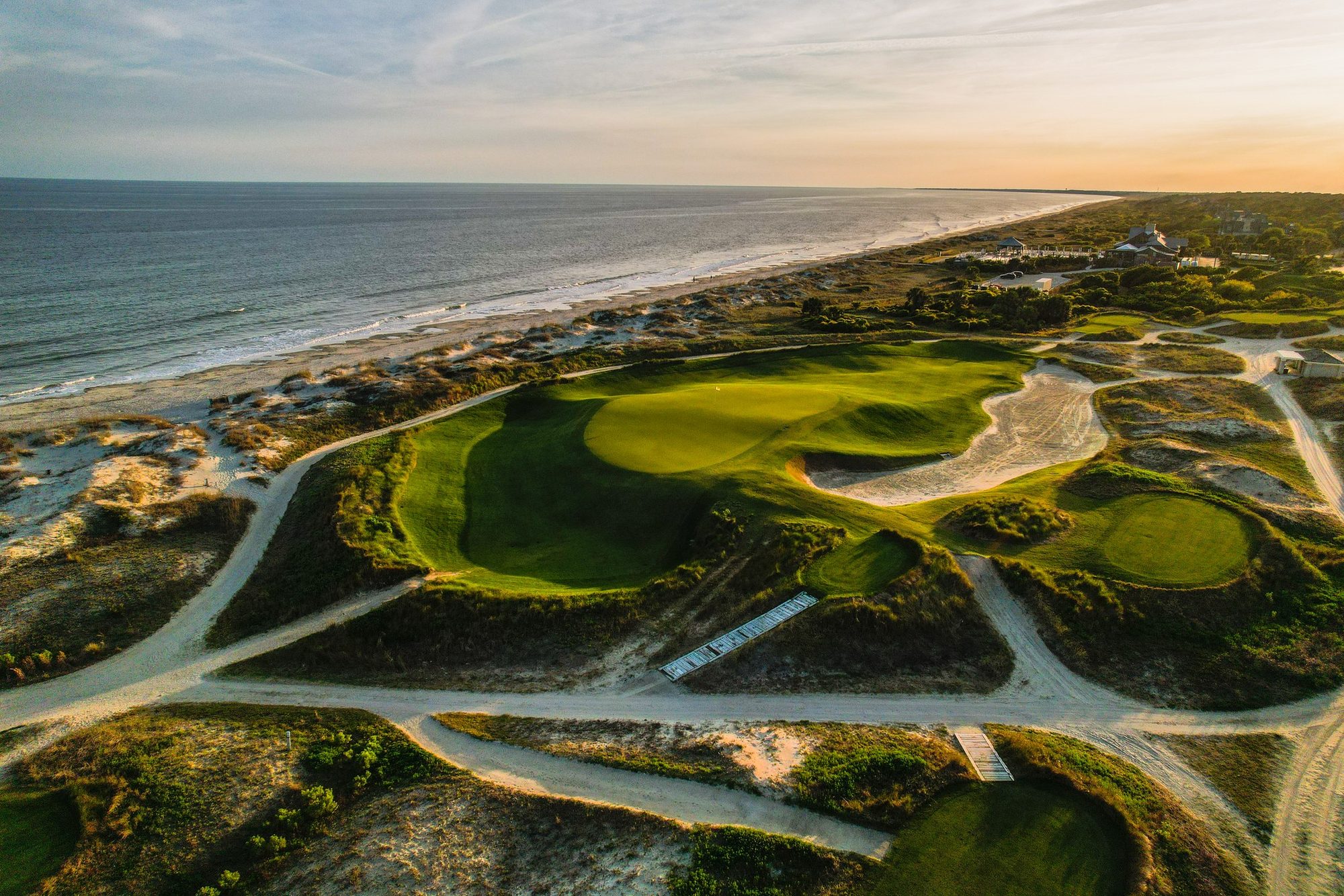
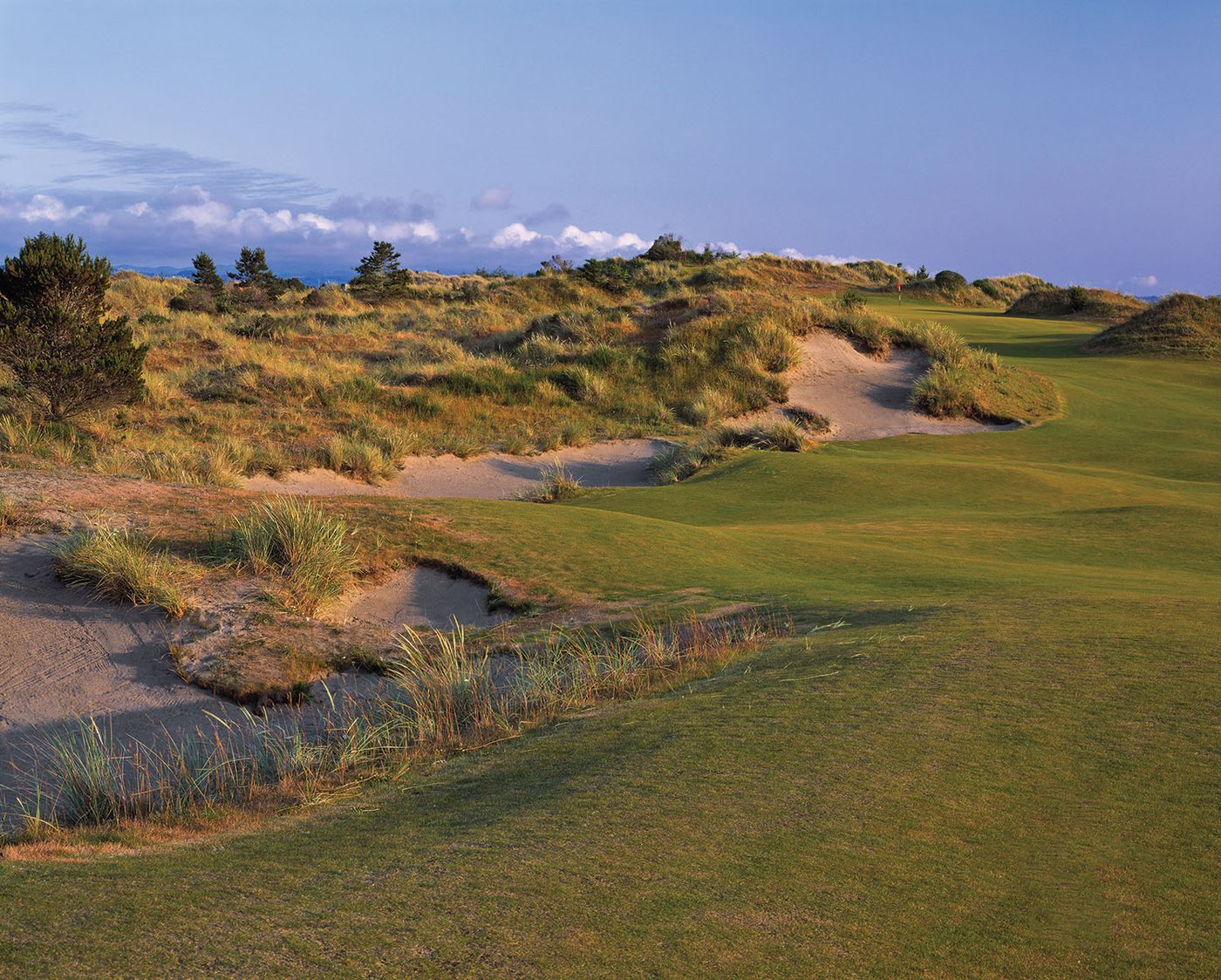
If you want a course that teaches you golf architecture while you play it, this is the one. Old Macdonald is Tom Doak and Jim Urbina’s tribute to C.B. Macdonald, and it is built from the template holes he brought to America: Sahara, Biarritz, Redan, Alps, Punchbowl and more, each one a classic idea about how to defend a green.
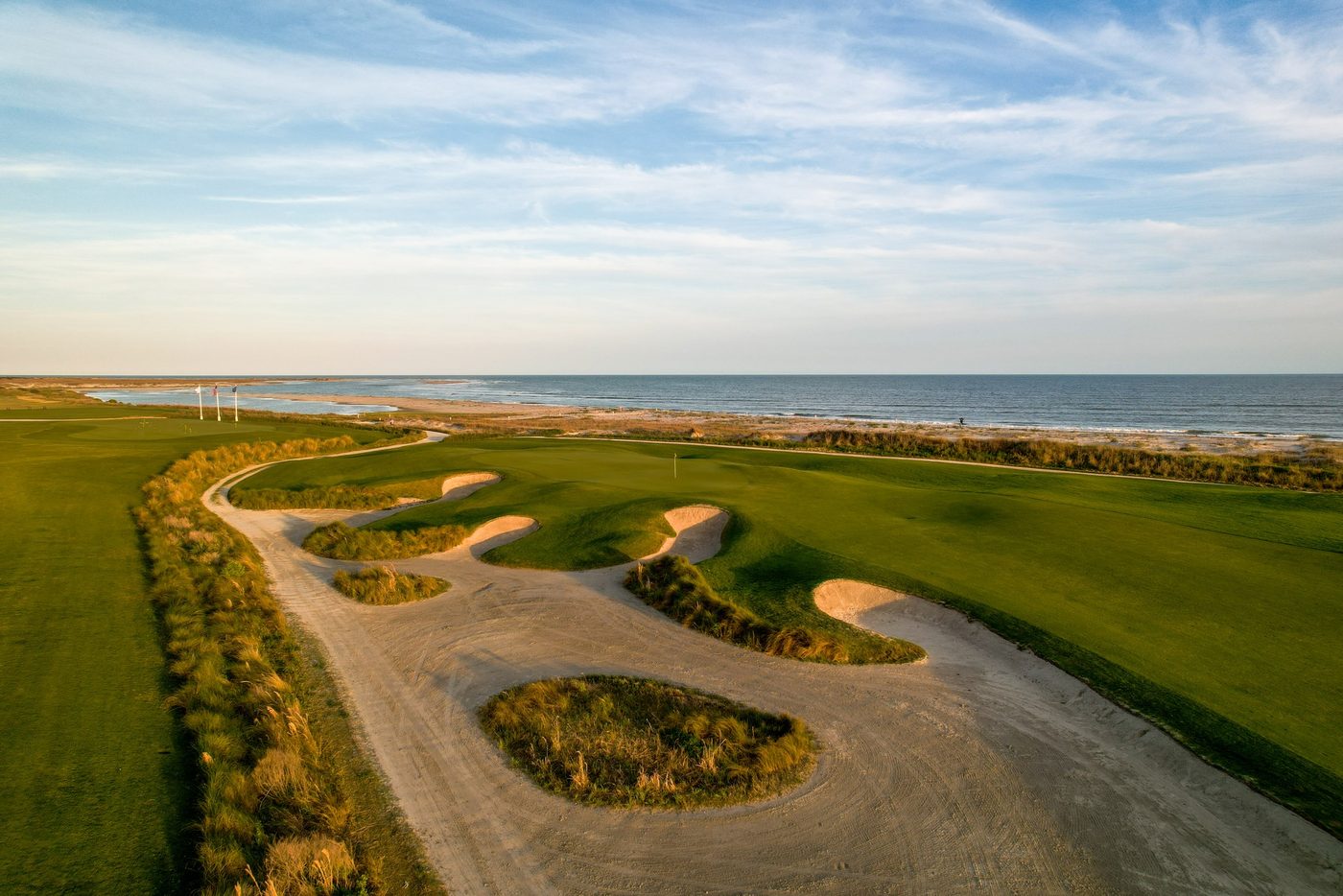
The resort’s hole guide names them all. The 3rd, Sahara, is a blind tee shot over a dune. The 8th, Biarritz, has a green split by a deep swale (“A two-putt on this hole is a feat of its own”). The 12th is a 237-yard Redan. At the 16th, Alps, you play blind over a hill and ring a bell when you’ve putted out so the group behind knows it’s clear. The greens are huge, so the thinking doesn’t stop when you reach them.

Bandon is walking only, with caddies who know every template by heart. We footnoted the resort in our PNW trip; Old Mac is the course we’d build a whole Bandon trip around.

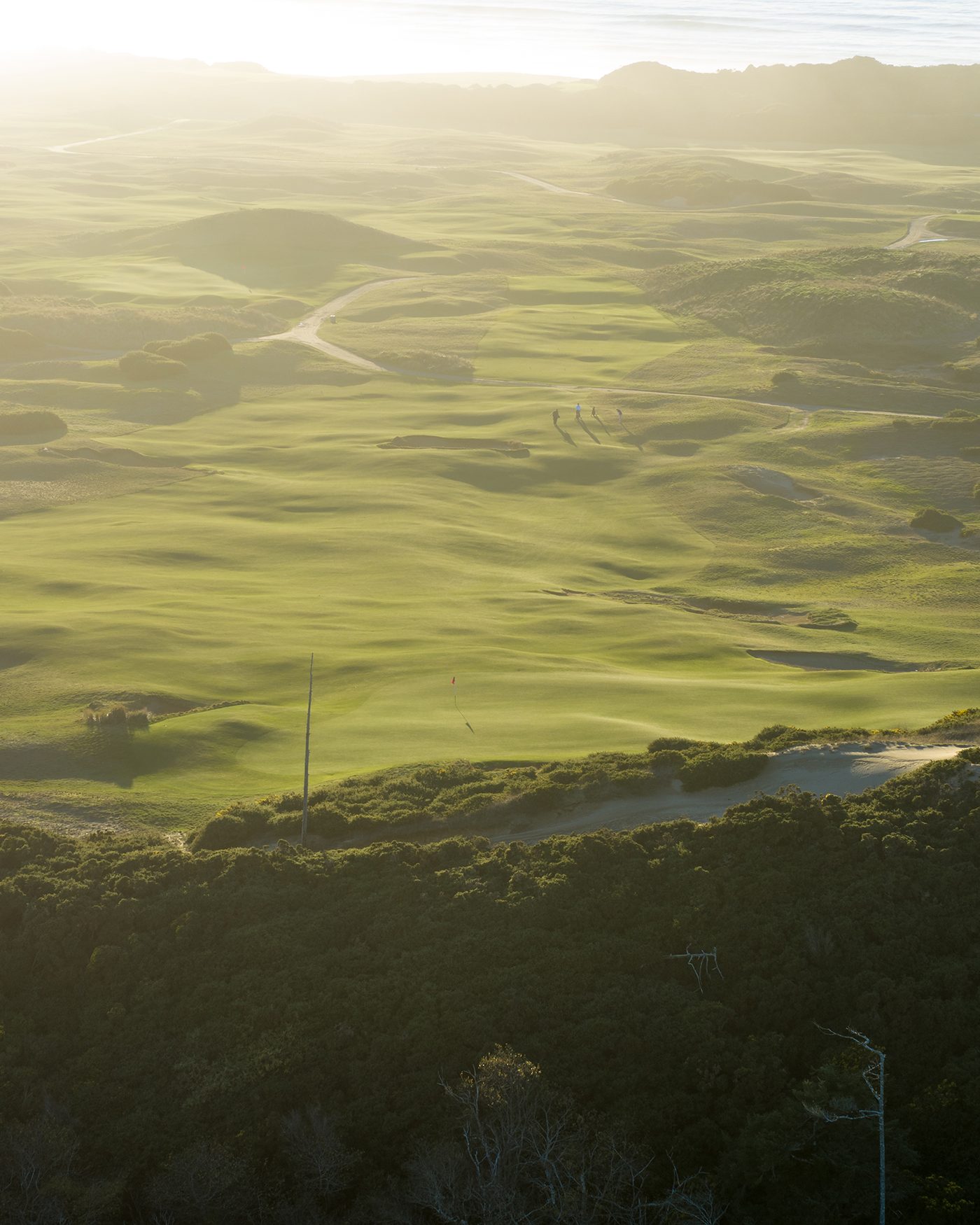
View from a high dune over hazy, sunlit links ground at Old Macdonald
Dune country.
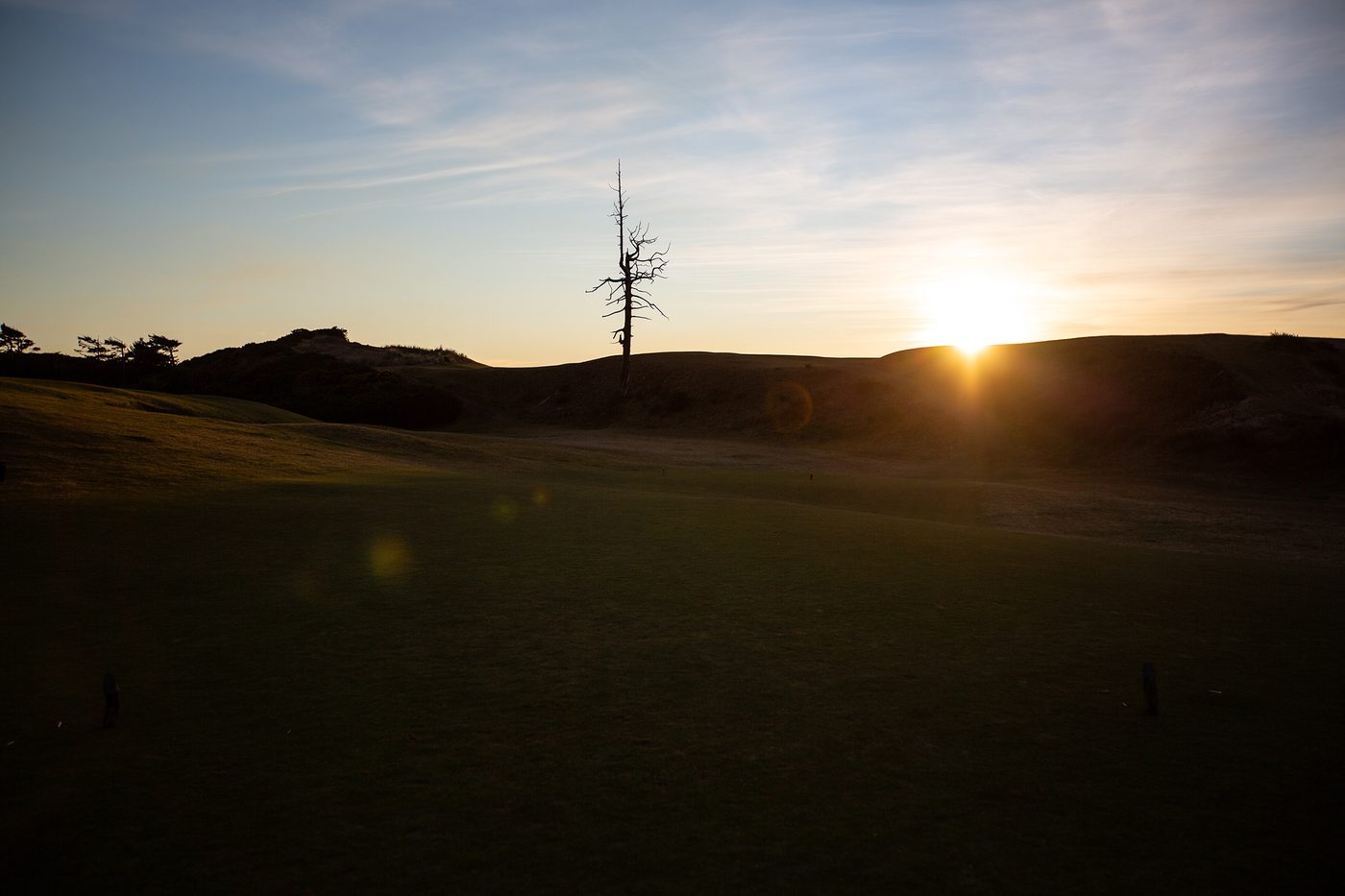
Sunset behind a dune ridge and Old Macdonald's bleached ghost tree
The ghost tree at sunset.
A huge sleeper-faced cross bunker across a wide rolling fairway with the Pacific beyond
Width, and then a bunker you have to deal with.
04

Sweetens Cove

South Pittsburg, Tennessee · King-Collins · nine holes
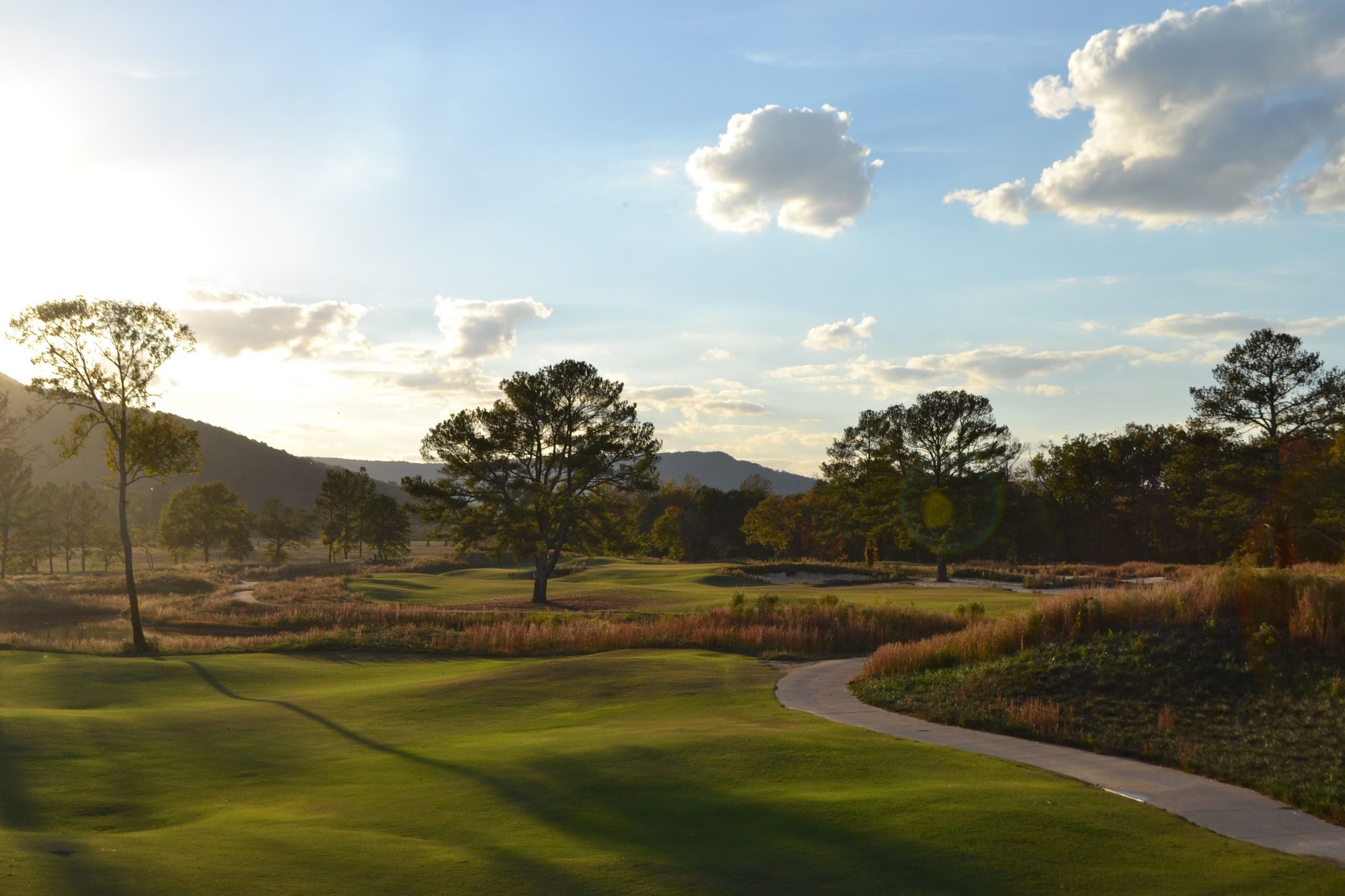
October view across Sweetens Cove's 5th with oaks and the Cumberland Plateau behind
The 5th, seen from the 4th, in October. Photo: Sweetens Cove

Nine holes in a Tennessee valley, a shed for a clubhouse, and some of the boldest green contours in American golf. Rob Collins and Tad King built Sweetens Cove on the site of an old course, and the ground does things you don’t expect. Holes 3 and 6 share one huge green that rises about 20 feet from end to end.

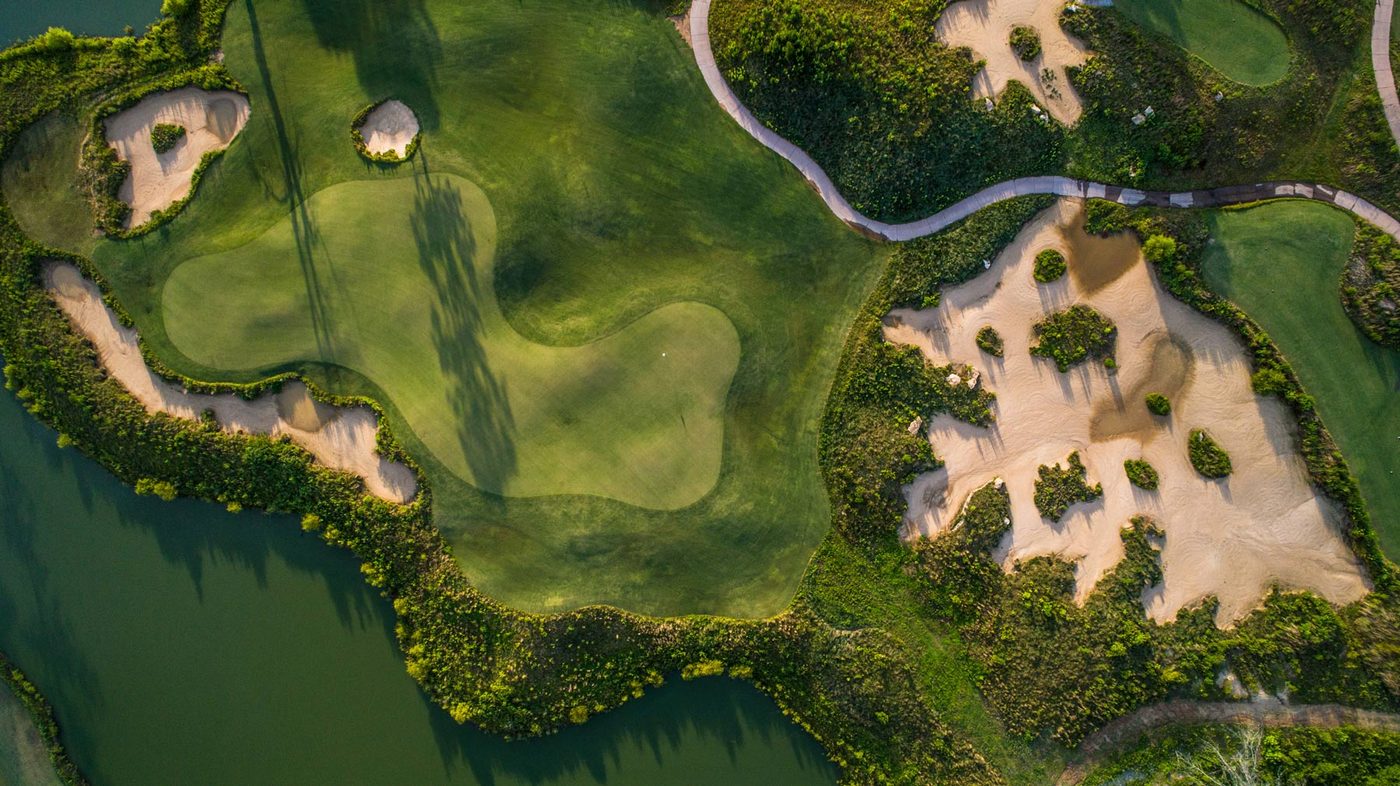
The 4th is called King, after the late local golfer King Oehmig (no relation to Tad), who suggested a Himalayas hole. It plays anywhere from 90 to more than 200 yards off two huge tees set sideways to the line of play, into a 20,000-square-foot green. Play the nine again and it’s a different course, which is the point of the all-day pass.

The house rules are the best on this list: “Wear whatever you want and bring your dog if you want to.” Ran Morrissett, quoted by the club, put it best: “If you leave [Sweetens Cove] smiling, don’t panic, golf is supposed to be fun.”

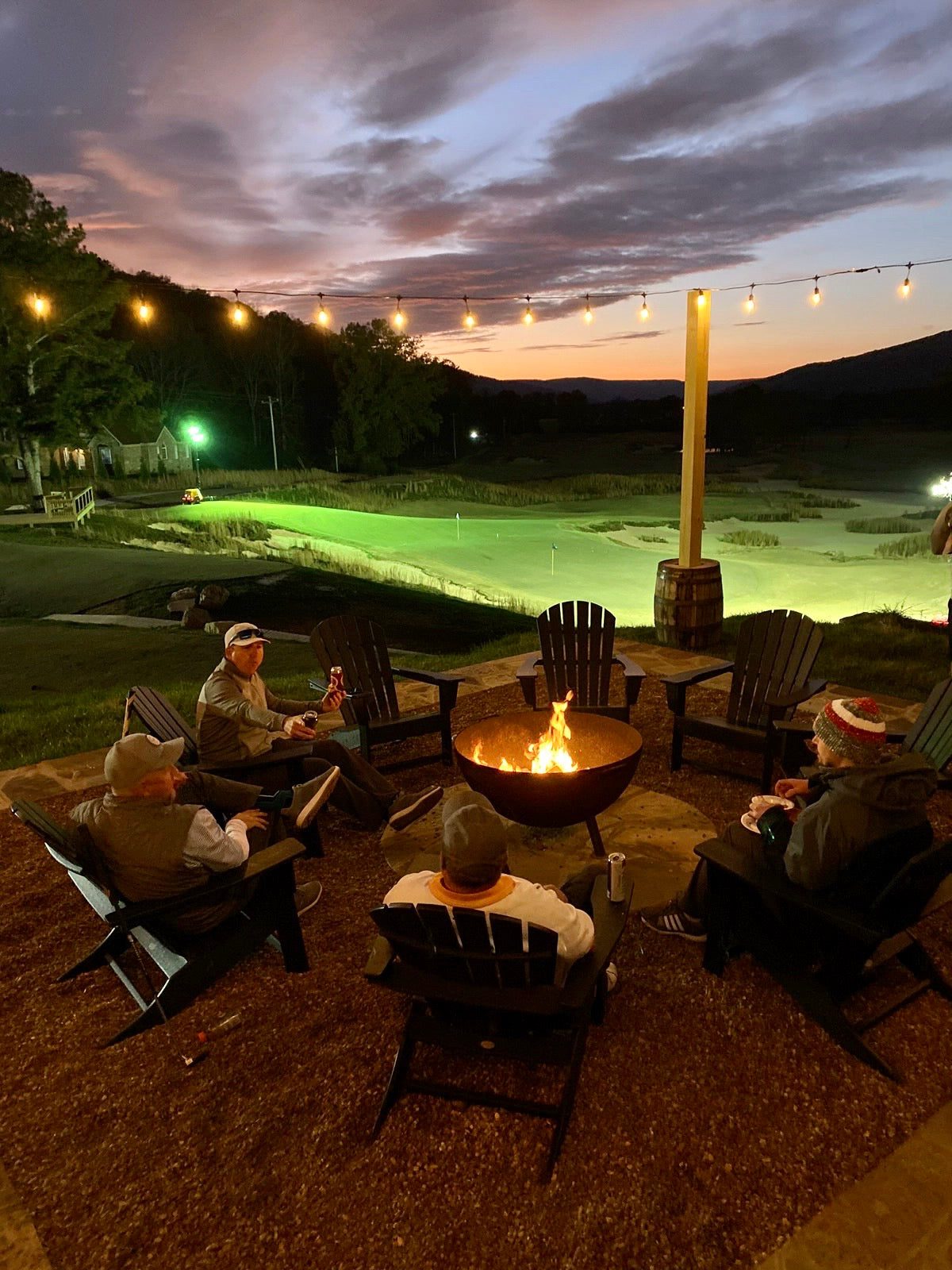
Golfers in Adirondack chairs around a fire pit under string lights at Sweetens Cove
After the round.
Top-down drone shot of Sweetens Cove's 4th green
The 20,000-square-foot green at King.
A shaggy-lipped bunker with a flag and green mountain ridges behind at Sweetens Cove
Bunkers with the Cumberland Plateau behind.
05

Landmand

Homer, Nebraska · King-Collins · 2022
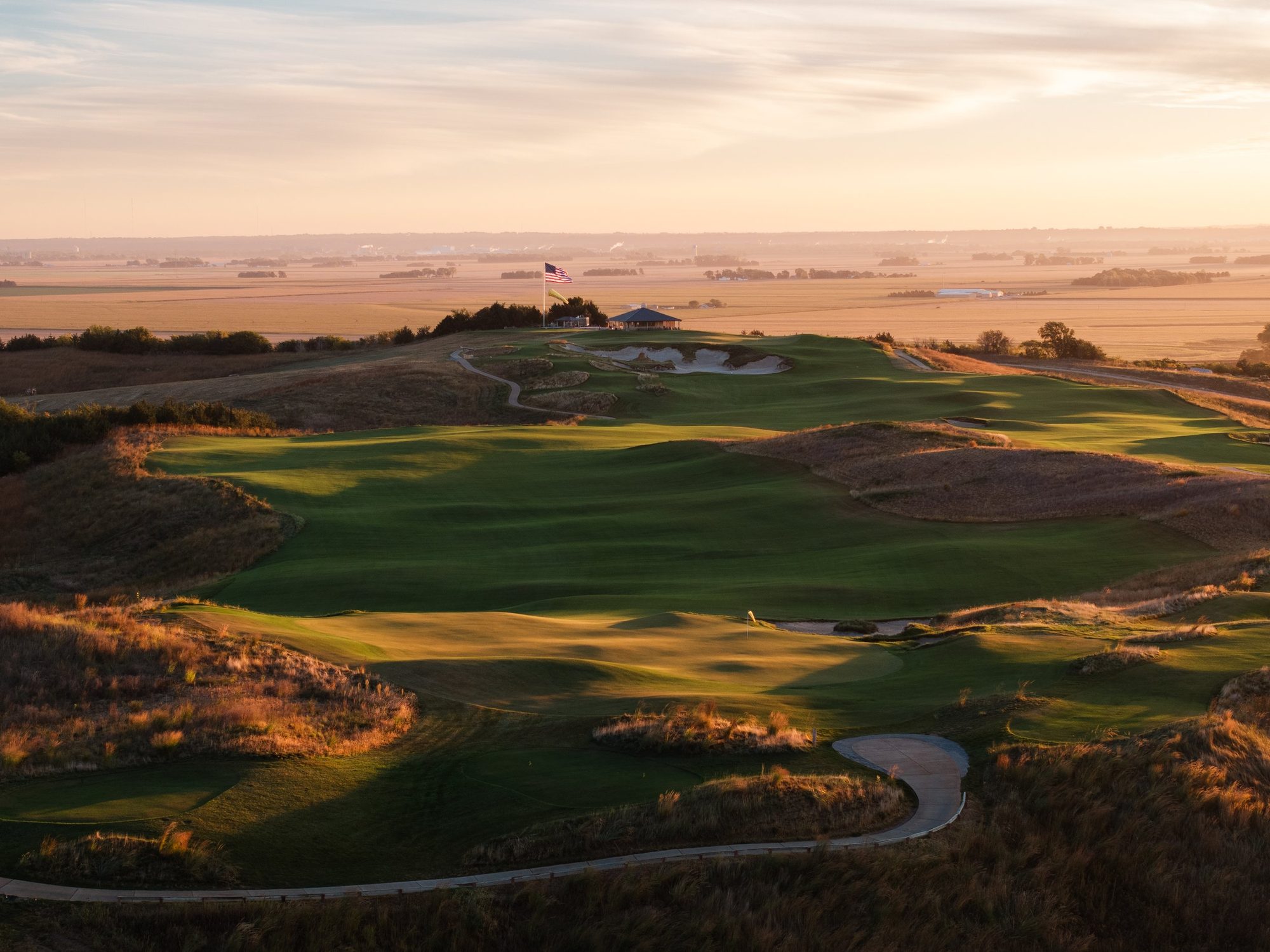
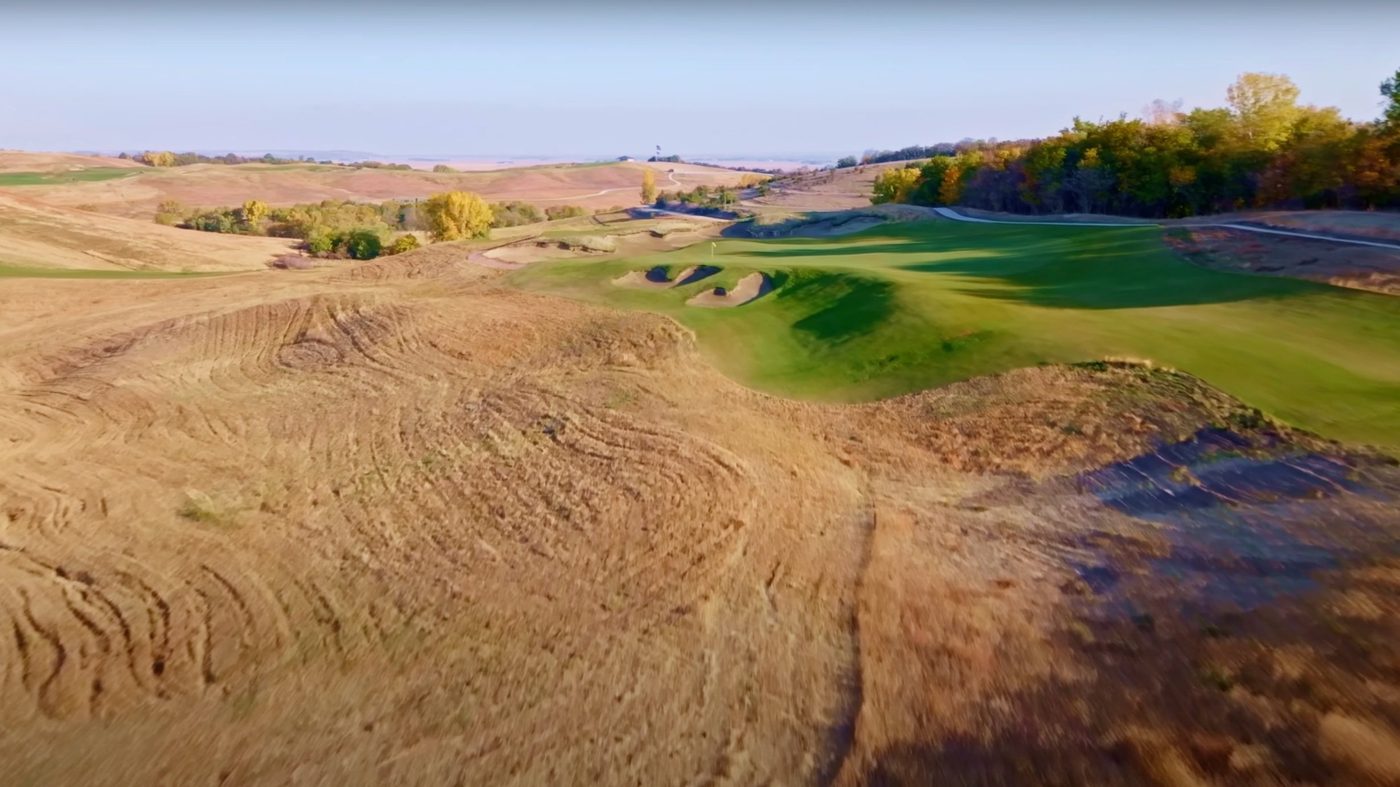
Golden-hour drone view over Landmand's rumpled fairways to the clubhouse on the ridge
Loess Hills farmland that hadn’t been farmed in more than 30 years. Photo: Landmand

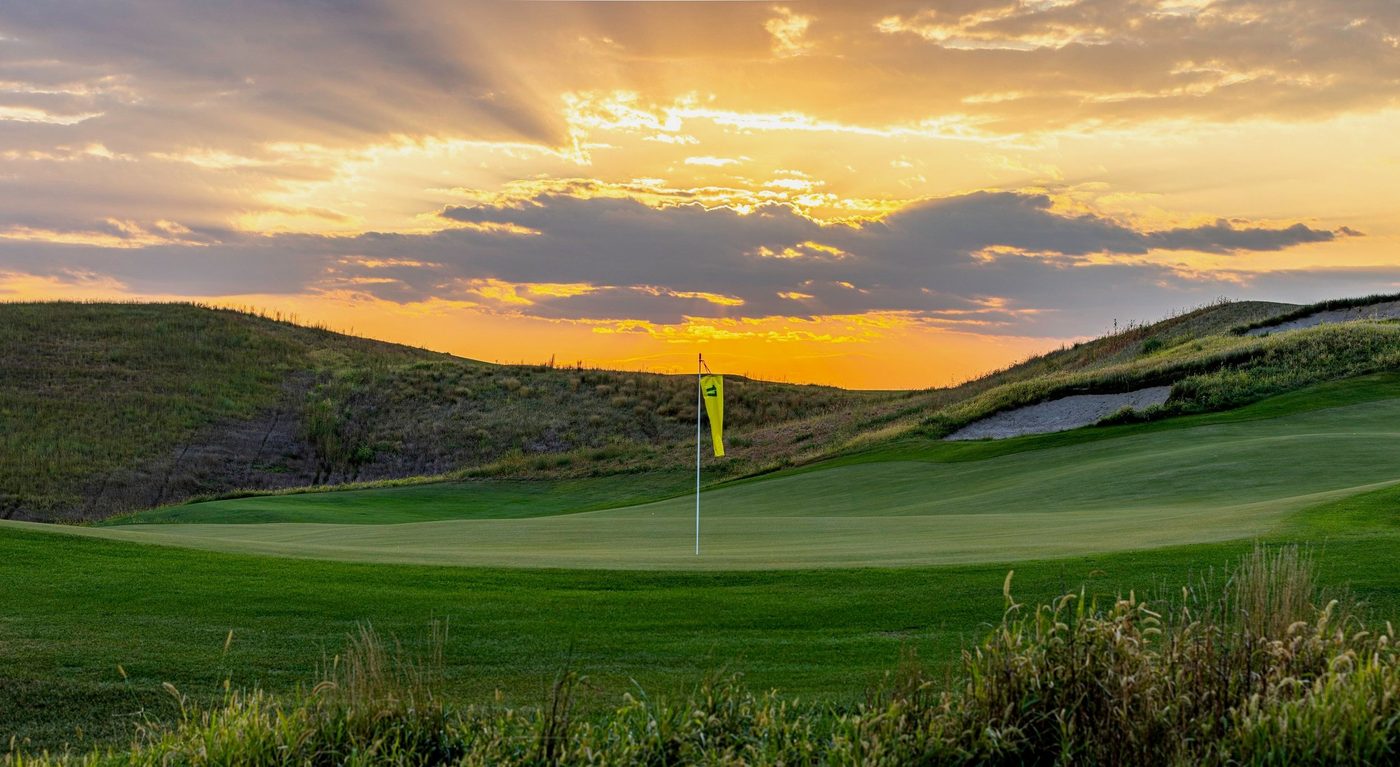
Landmand is Danish for farmer, and the course sits on 588 acres of the Andersen family’s Nebraska land in the Loess Hills. There are almost no trees and no water. What there is, is width: fairways more than 100 yards across and greens averaging more than 14,000 square feet, with windsocks instead of flags.

That width is the puzzle. With that much room, nothing tells you where to aim, so every shot is a choice of angle into greens with enormous slopes. Rob Collins described the site as “this very raw, natural, tumbling landscape,” and from the 12th tee you can see eight to ten other holes at once.

Getting on is its own test. The Wall Street Journal called it America’s toughest tee time, and all 11,000 tee times for 2026 sold out in 45 minutes. It’s also fully public, with no members and no corporate outings. Its FAQ has the best line on this list: “Walk 18? We’ll buy your first beer.”

A yellow windsock flag on a Landmand green at sunset
Windsocks instead of flags.
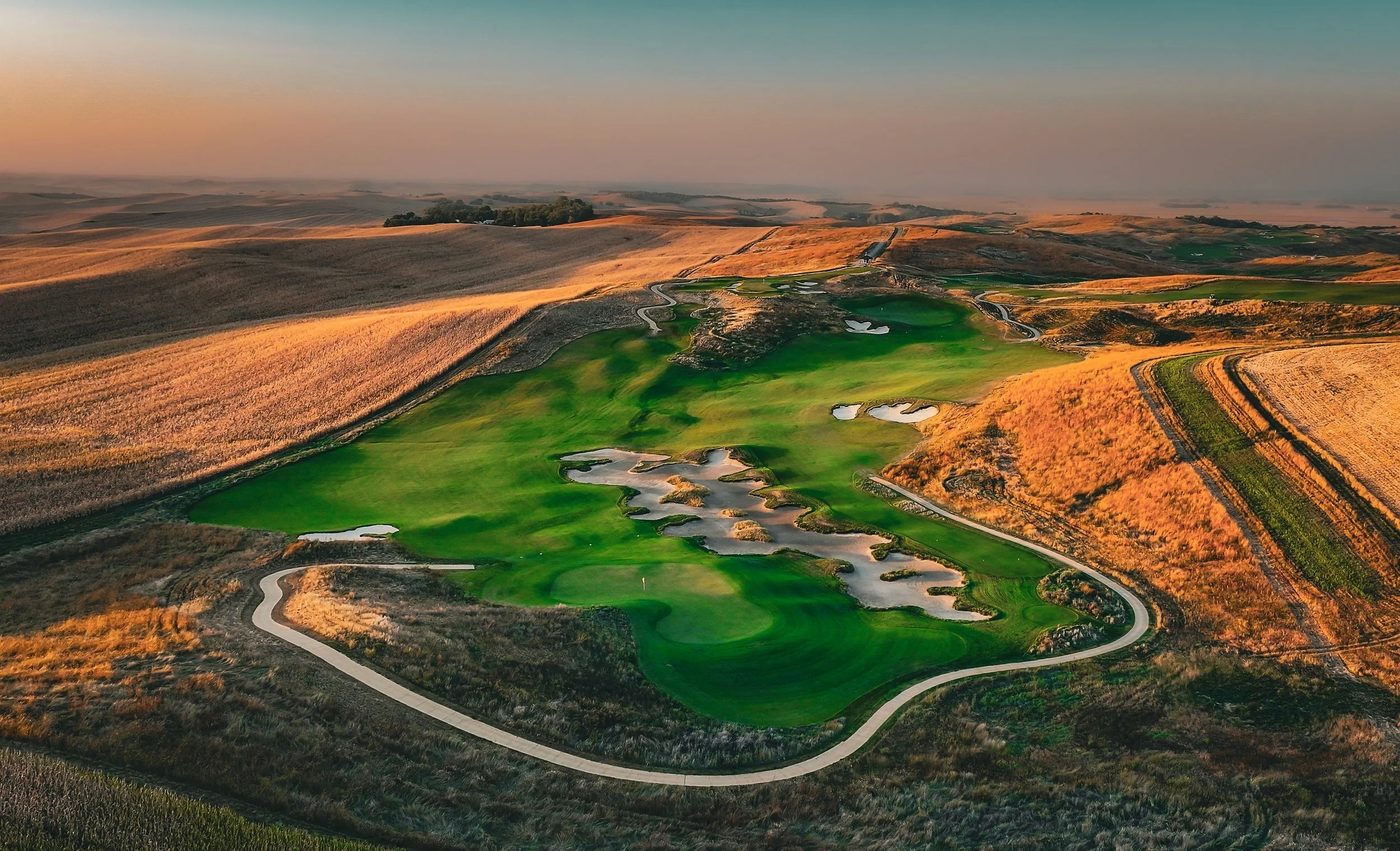
Aerial of a huge bunker-studded green complex at Landmand
Greens average more than 14,000 square feet.
Low pass over native rough toward Landmand's 14th green
The 14th.
Sunrise over the Cape Breton highlands and a forested valley above the shore
Part II · 5 courses

Body

Courses that test you physically.

Long walks with no carts, climbs from dunes into forest, cliffs, bluffs and wind. You’ll feel these five the next morning.

06

Erin Hills

Erin, Wisconsin · Hurdzan, Fry & Whitten · 2006
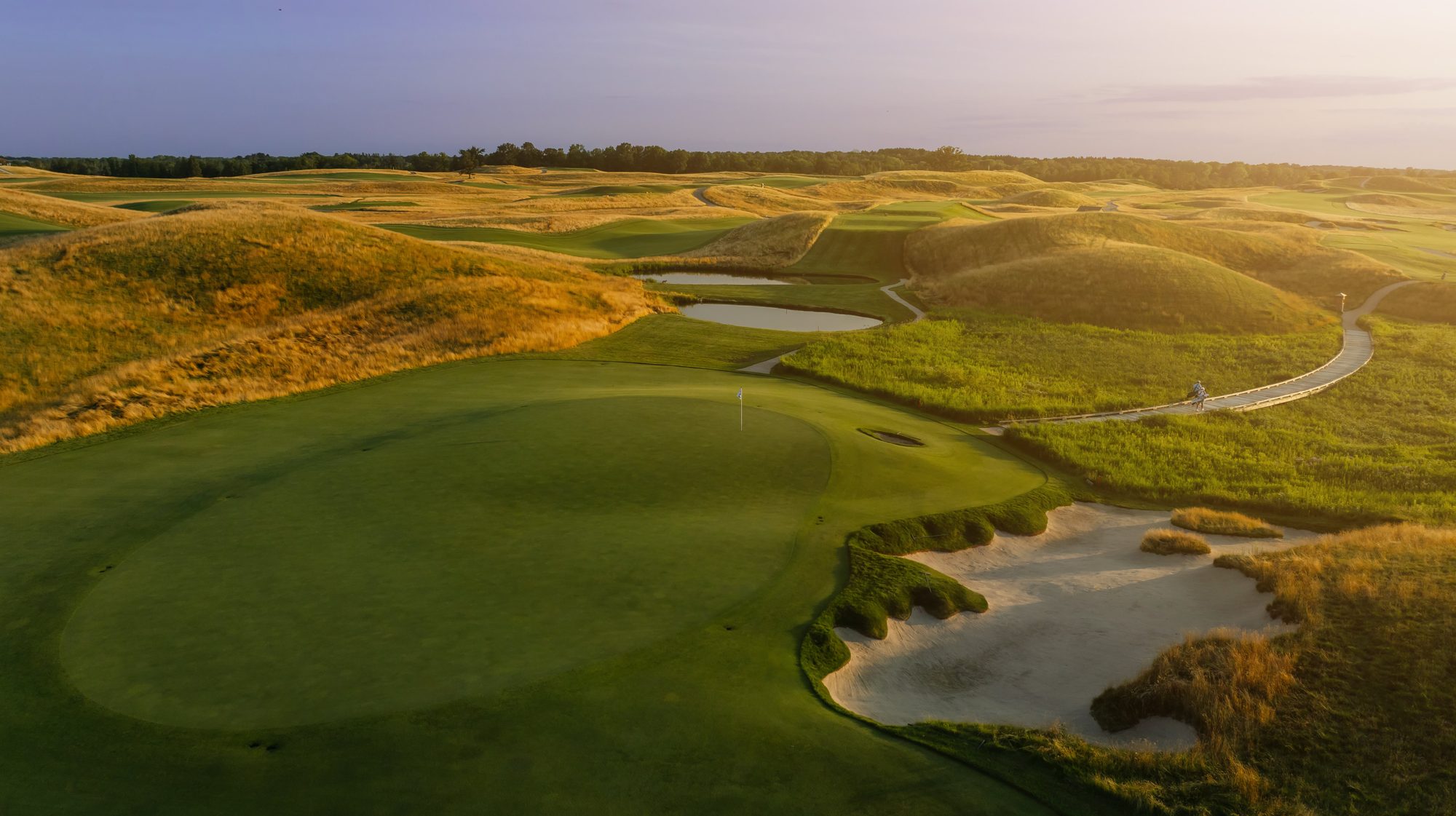
Elevated view over a big Erin Hills green and bunker toward rolling fescue hills at sunset
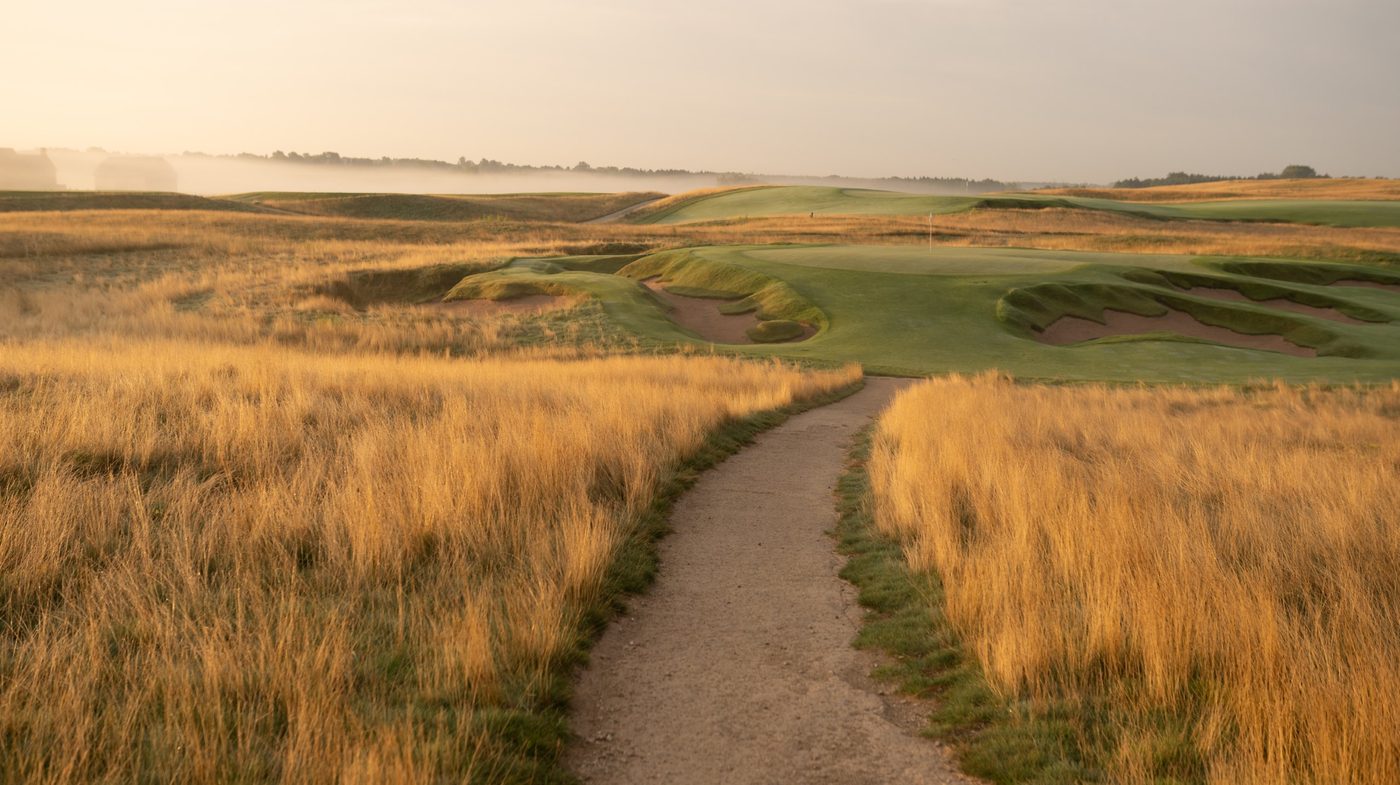
652 acres of glacial land in the Kettle Moraine. Photo: Erin Hills

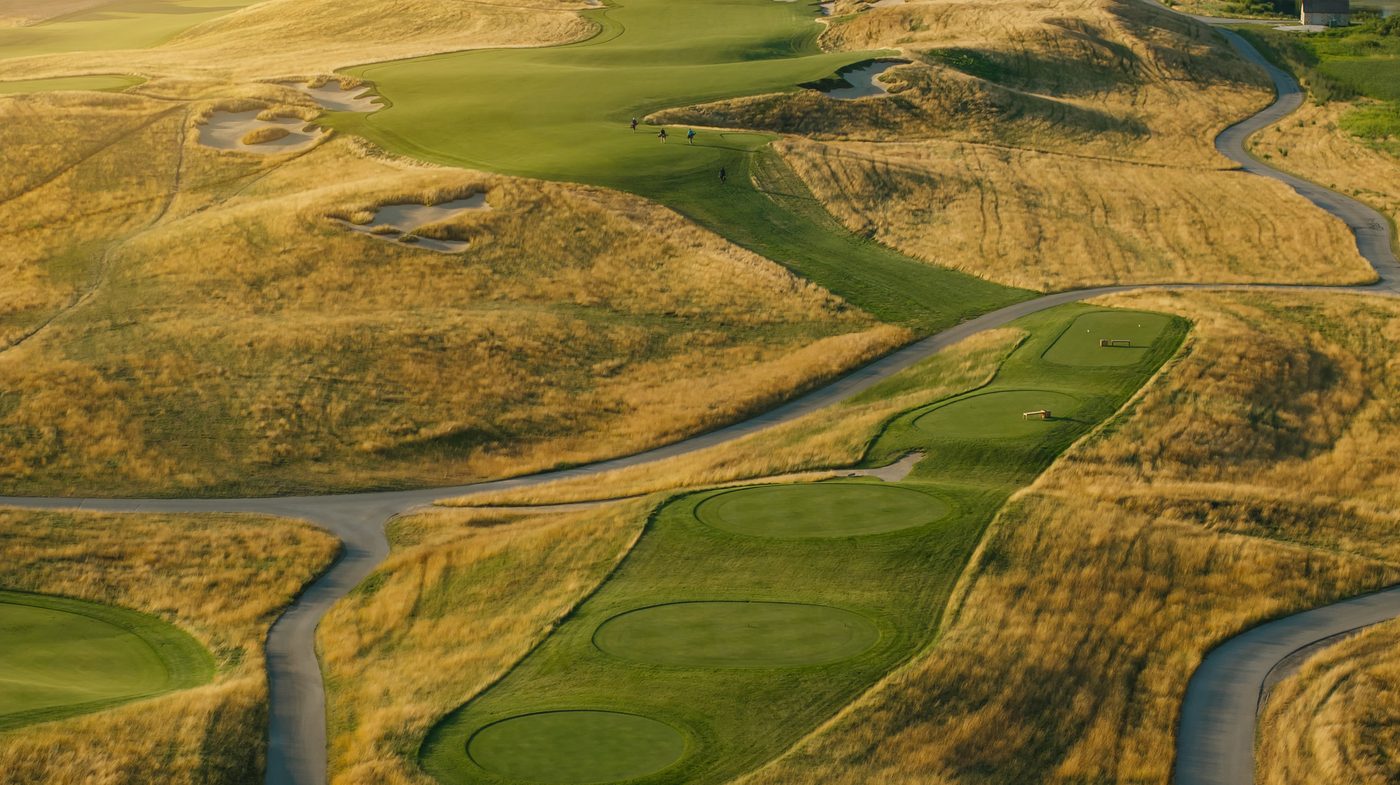
Erin Hills is the strictest walk on this list. It is walking only, and there are no push carts or pull carts, so you either carry your own bag or take a caddie. From the back tees it runs 7,715 yards, and it sprawls across 652 acres of glacial land shaped by the Kettle Moraine.

The course sells its range of holes as “from a terrifying 140 yard hole to a brute of 620,” and it hosted the 2017 U.S. Open and the 2025 U.S. Women’s Open. The fescue is long and golden, the walks between holes are real, and the club tells you to plan on four hours and 55 minutes.

It is also one of the few places on this list built for someone traveling alone. The Lodge has seven single rooms out of eleven, steps from the first tee, and dining is limited to people with a tee time or a room, so the bar is full of people who just walked the same course you did.

A group of golfers and caddies walking down a sloping Erin Hills fairway in evening light
Caddies and players on the walk.
A dirt walking path through waist-high golden fescue toward a bunkered green
The paths between holes are part of the round.
Aerial of tees, fairways and paths across rolling glacial terrain
Glacial terrain from above.
07

Whistling Straits

Haven, Wisconsin · Pete Dye · The Straits course
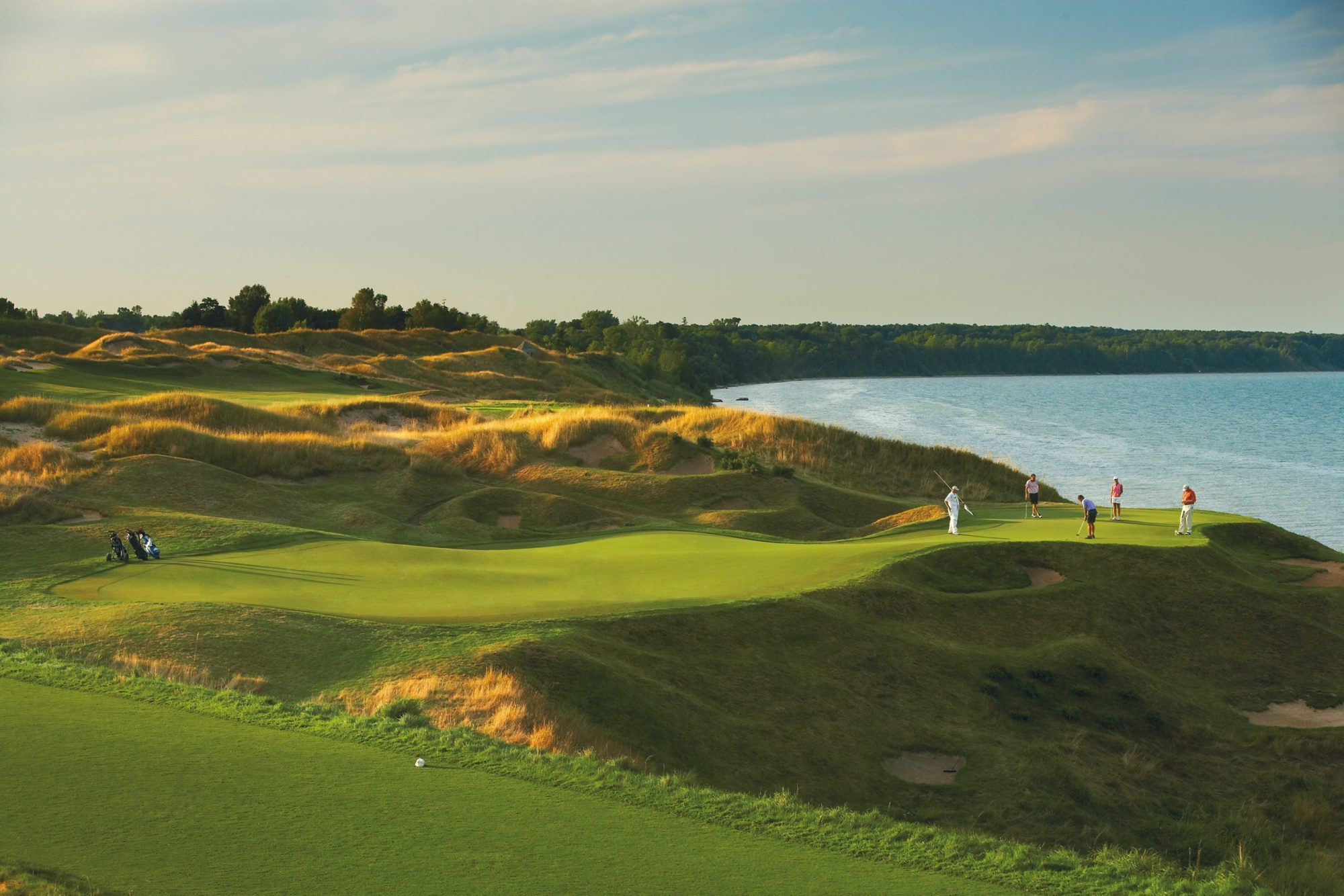
Golfers putting on a green perched on a bluff above Lake Michigan at Whistling Straits
Two miles of Lake Michigan shoreline. Photo: Whistling Straits

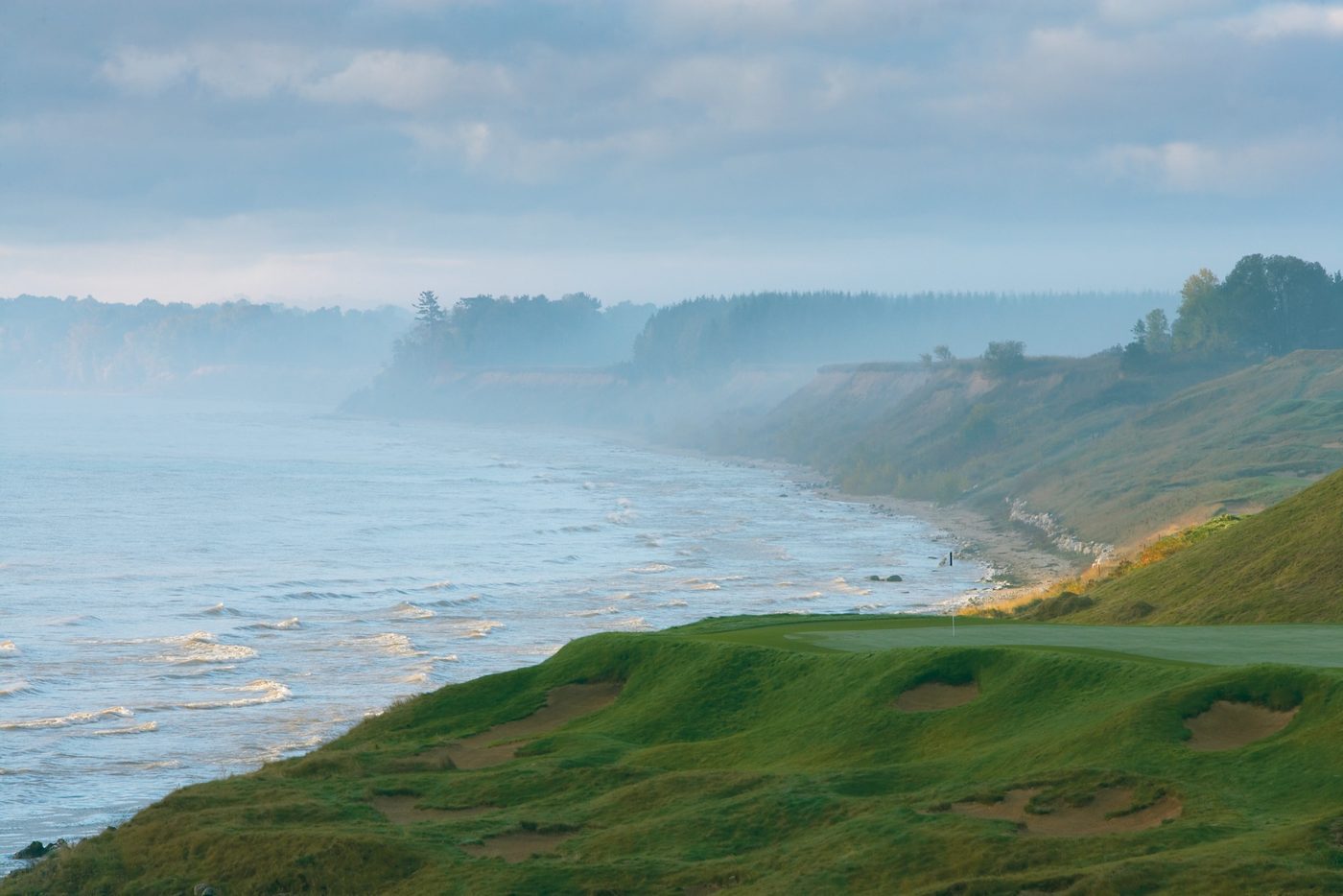
The Straits course is the longest course on this list: 7,790 yards from the back tees, rated 77.2 with a slope of 152, along two miles of rugged Lake Michigan shoreline. It is walking only, and the wind off the lake decides how long it plays on any given day.

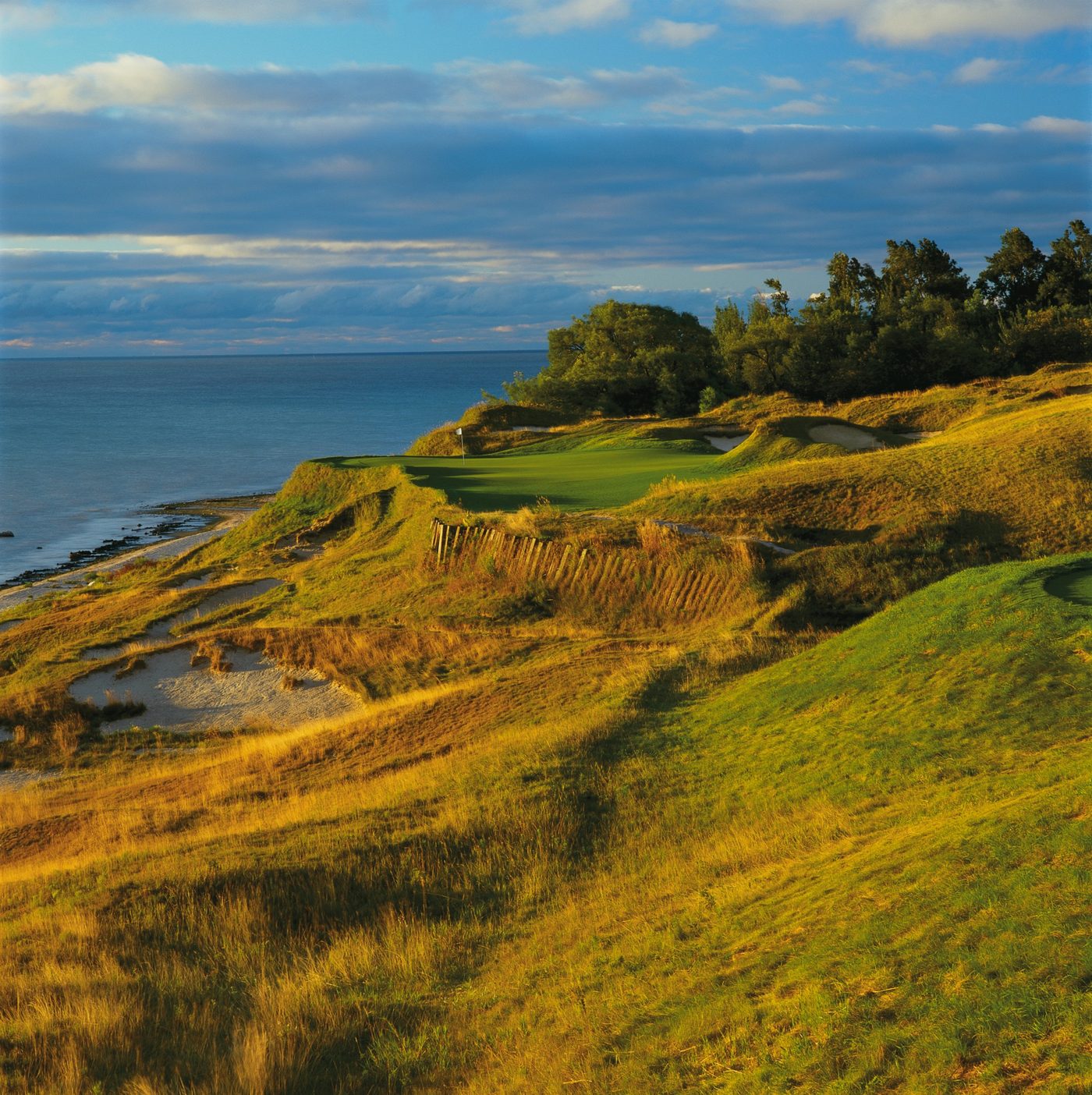
Pete Dye filled it with roughly a thousand bunkers, by Golf Digest’s count. The holes have names that tell you what’s coming. The 7th, Shipwreck, goes down to the shoreline. The 13th, Cliff Hanger, has a green on the cliff edge. The 15th starts a four-hole closing stretch the resort calls among the toughest in championship golf, and the 18th is called Dyeabolical.

Dye, asked about it, said: “Naah, this course is popcorn! But, sometimes people choke on popcorn.” It hosted three PGA Championships and the 2021 Ryder Cup.

The par-3 17th green, Pinched Nerve, on a lakeside bluff at Whistling Straits
No. 17, Pinched Nerve.
The par-3 3rd green on a bluff edge with mist over the Lake Michigan shoreline
The 3rd, in the mist.
Fog rolling off Lake Michigan over the 8th hole at dawn
Dawn fog on the 8th.
08

Bandon Trails

Bandon Dunes, Oregon · Coore & Crenshaw · 2005
From an elevated tee, Bandon Trails' 14th fairway drops into a bowl ringed by tall coastal forest
The 14th, deep in the forest. Photo: Bandon Trails

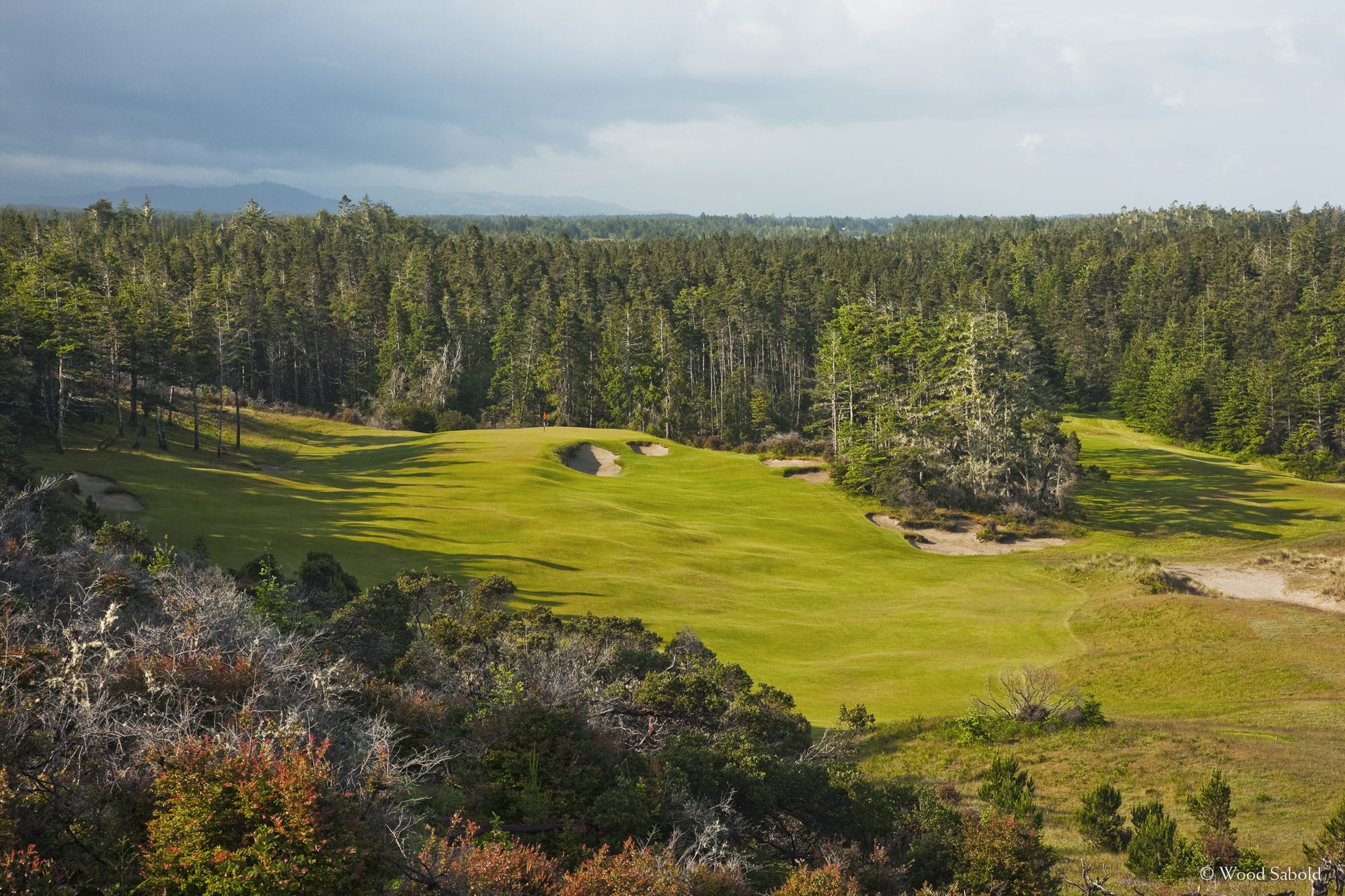
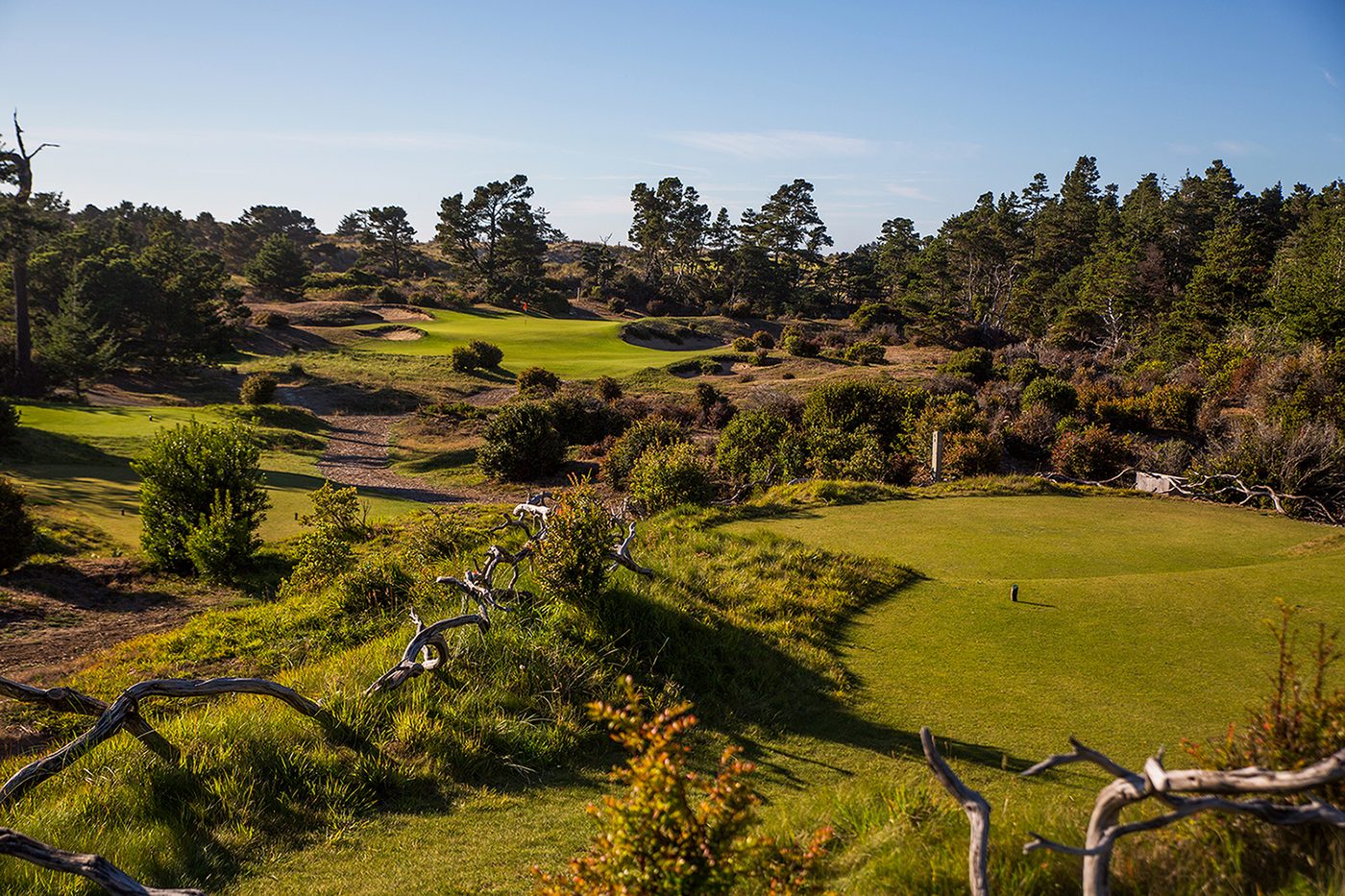
Reviewers who have walked every course at Bandon keep naming Trails as the hardest walk, and it doesn’t even sit on the ocean. In the resort’s words, it “begins atop a massive sand dune, then quickly opens into a sprawling meadow,” then “works higher into the coastal forest” before coming back down to finish in the dunes.

The climbing is in the hole notes. The 1st goes “slightly uphill through a saddle of sand dunes.” The 7th is a long uphill par 4 to an elevated green. The 16th is an uphill par 5 into the prevailing wind that “will play longer than the yardage indicates.” The resort put water refill stations after the 3rd, 6th and 15th for a reason.

It is 6,788 yards from the tips, par 71, and it is the quietest round at the resort. Out in the forest you can go several holes without seeing the ocean.

Sand dunes and marram grass in golden light beside a Bandon Trails fairway
The opening dune holes.
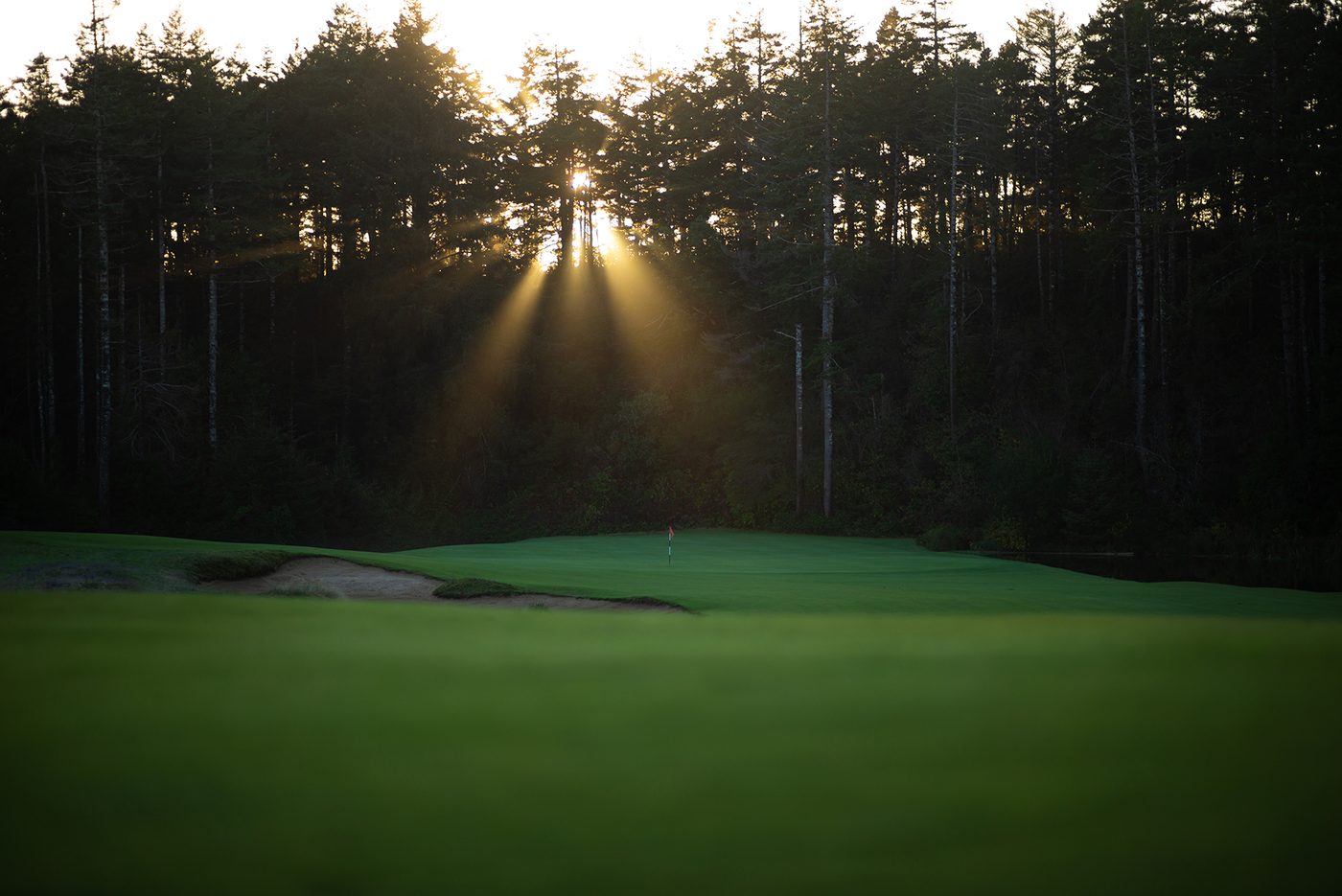
Low sun through dark forest behind a green at Bandon Trails
Into the trees.
A tee in coastal scrub with a sandy path toward a distant green
The trail between holes.
09

Cabot Cliffs

Inverness, Nova Scotia · Coore & Crenshaw · 6,835 yards
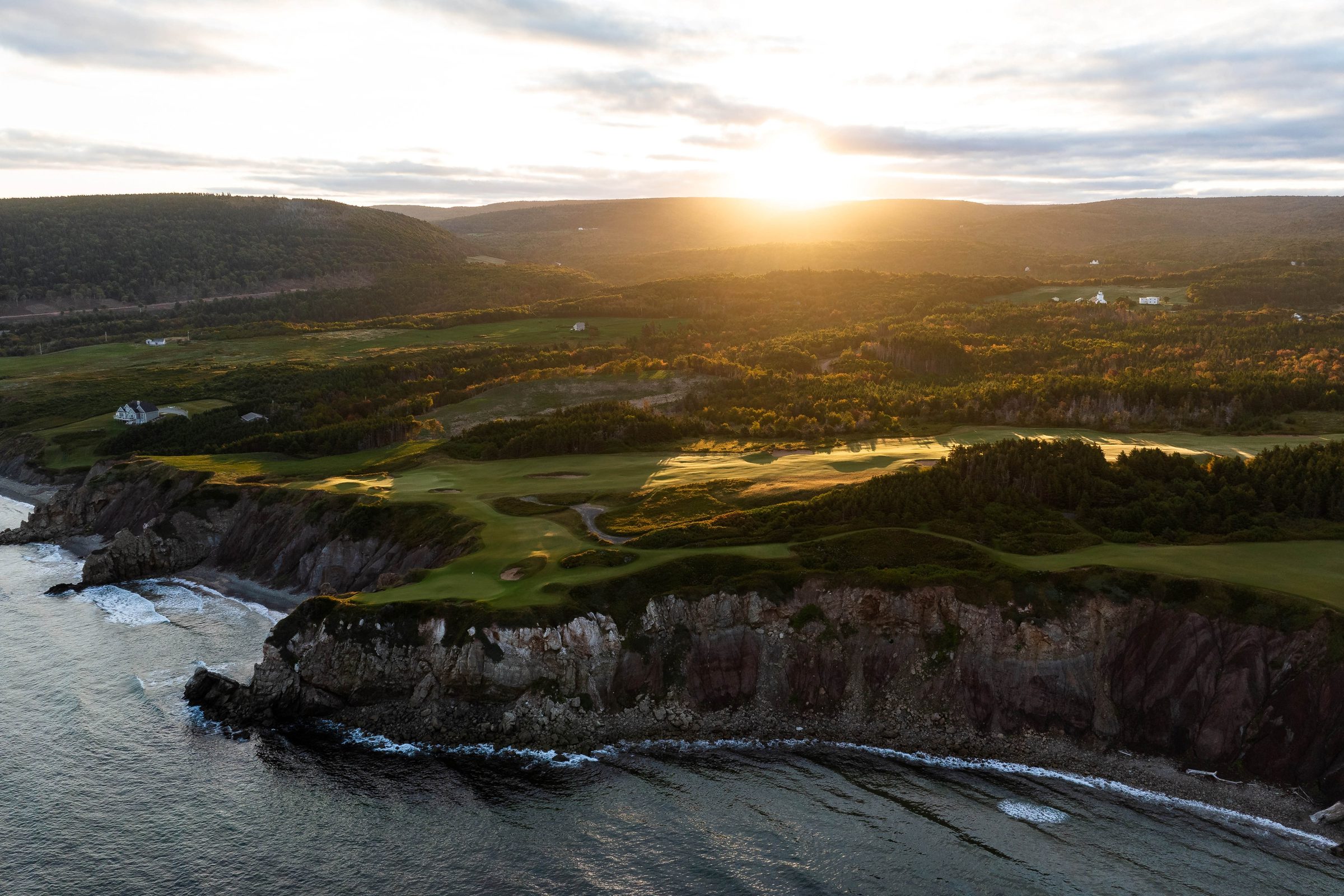
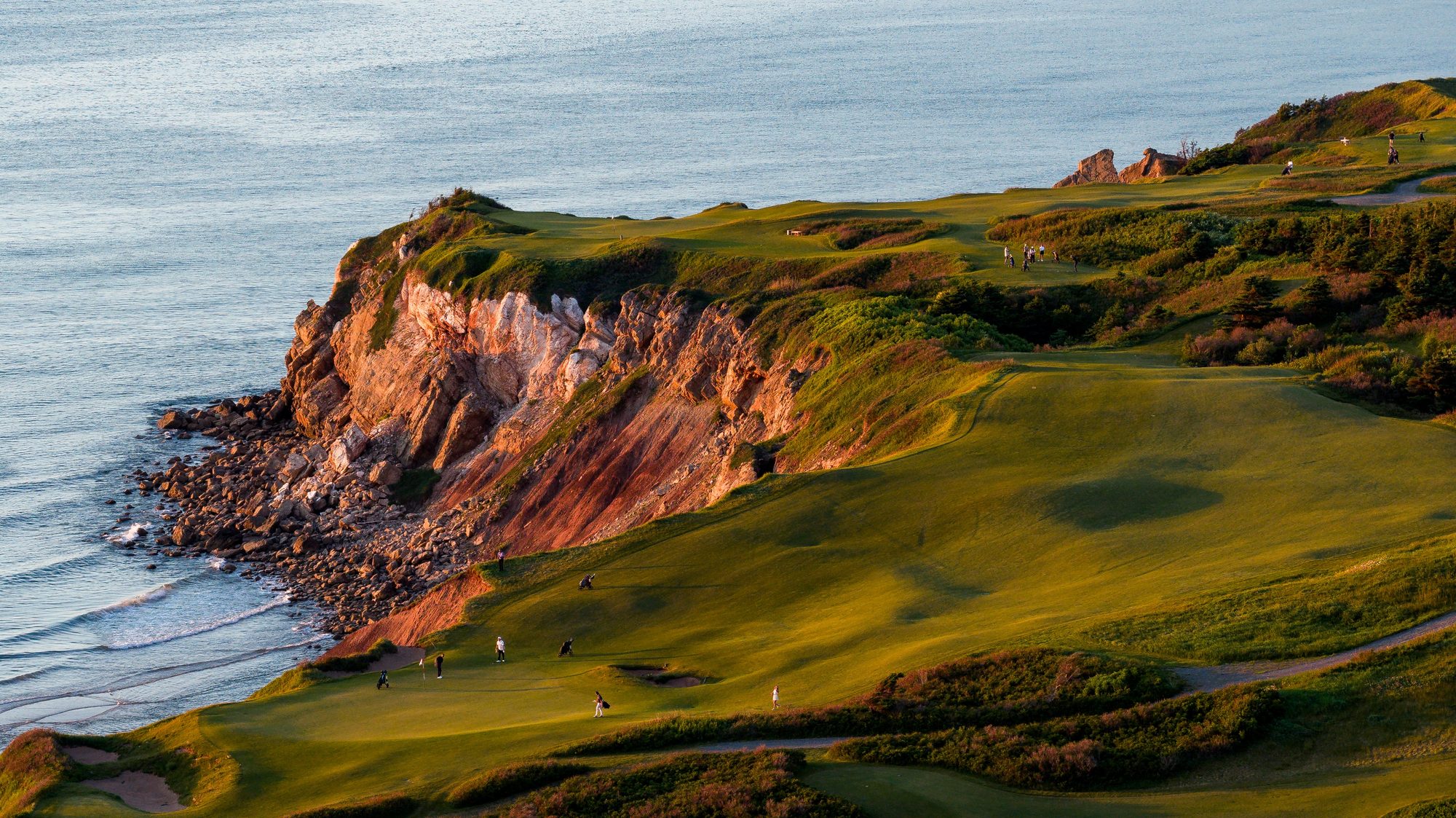
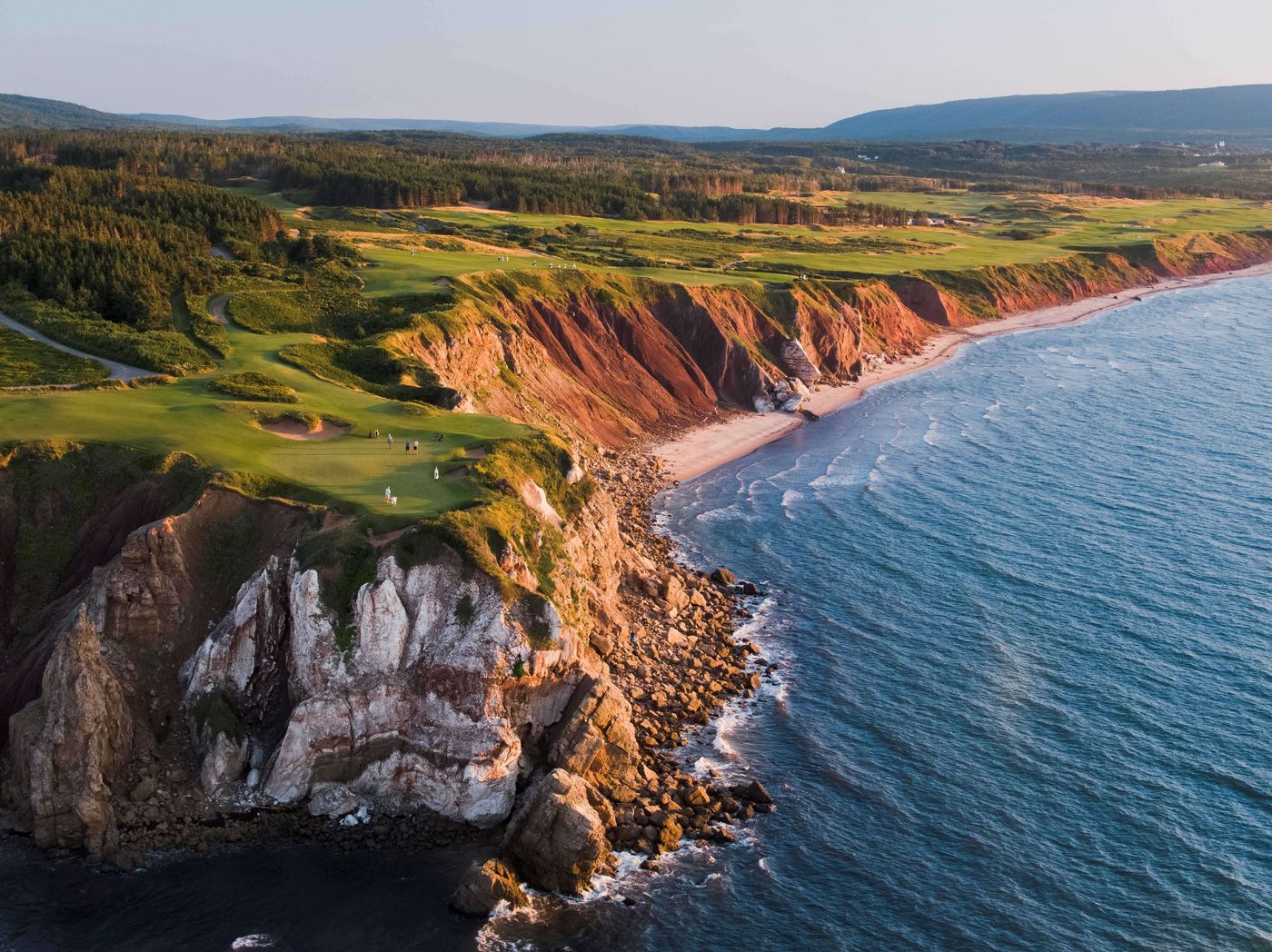
Golfers walking and putting on greens atop a red-rock sea cliff at Cabot Cliffs in golden light
Greens on the cliff edge, Cape Breton. Photo: Cabot Cliffs

Cabot’s rule is short: “We do not offer golf carts.” Everyone walks, over ground that climbs from the dunes up onto sea cliffs on Cape Breton’s west coast. The design team’s own hole guide admits “the conundrum during the design phase of Cabot Cliffs was whether we could make it work given the elevations.”

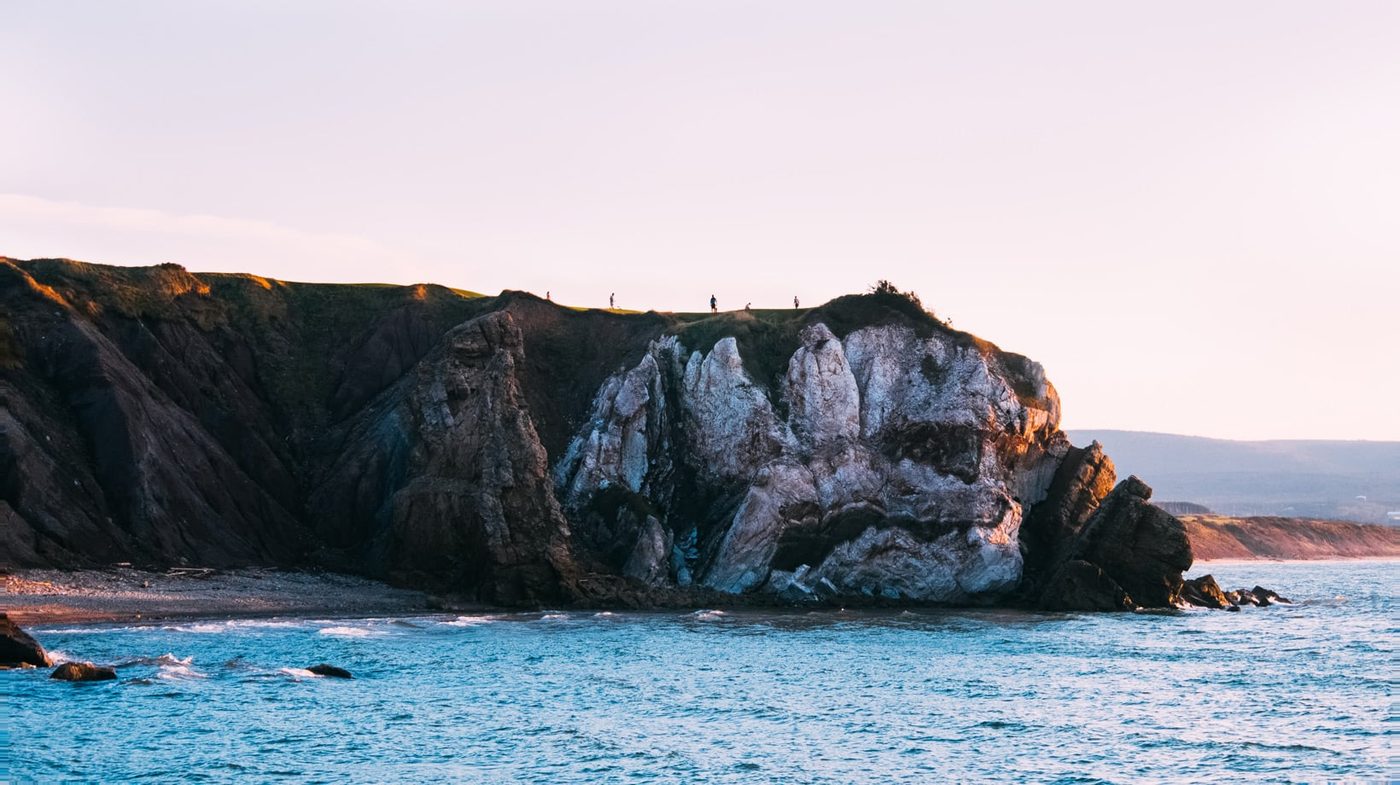
They made it work. The 9th is a short hole shaped by the crosswind, with the green right against the cliffs. The 16th, the one you’ve seen in photos, plays to a green the guide says “looks like it is hanging out over the ocean.” The 18th crosses a ravine to a narrow, serpentine green. The resort describes spring and fall as “misty rain and wind off the ocean.”

It’s the only course on this list that needs a passport, and getting there is part of the effort: a two-hour drive from Sydney or three and a half from Halifax.

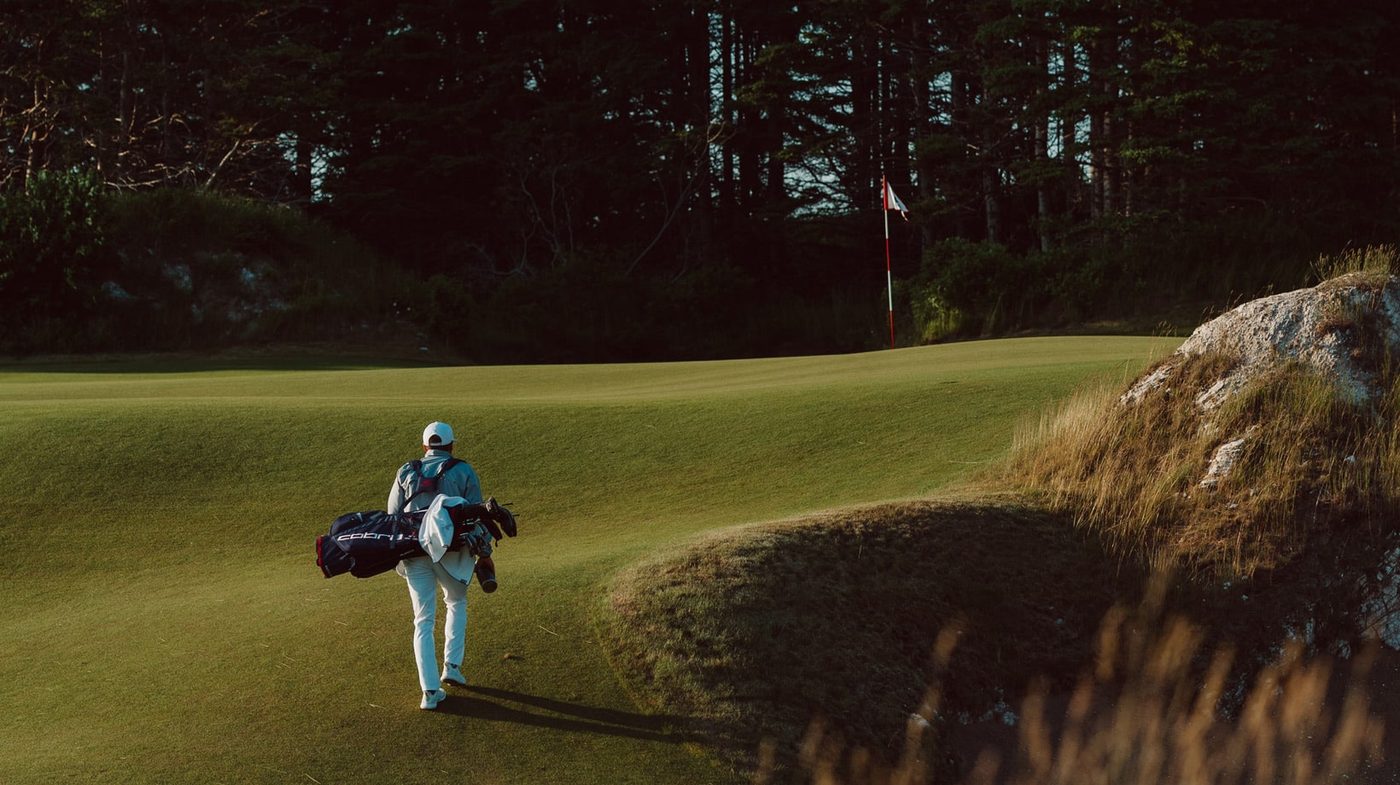
A golfer carrying his own bag up Cabot Cliffs' 14th fairway
Carrying your own on the 14th.
Aerial of greens on top of tall red and white cliffs with a long beach beyond
The cliffs from the air.
Golfers on the 16th green atop a sheer cliff above the sea
The 16th.
“This is a hole that just cried out, ‘Here I am.’”— Cabot Cliffs hole guide, on the 18th
10

Kiawah Ocean Course

Kiawah Island, South Carolina · Pete & Alice Dye · 7,385 yards
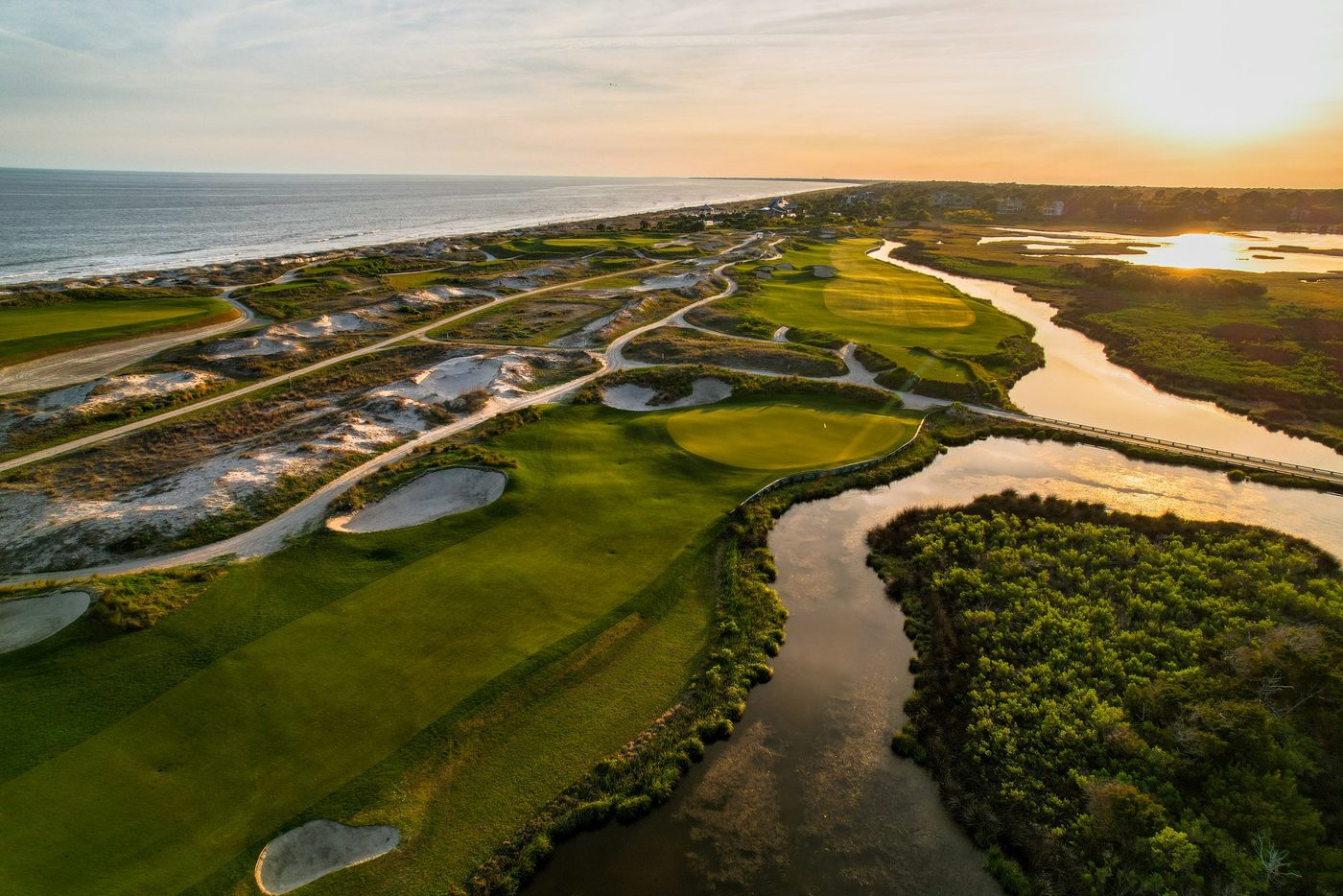
Aerial of Kiawah Ocean Course's 14th green in sandy dunes right above the Atlantic beach
The 14th, the most exposed green on the course. Photo: Kiawah Ocean Course

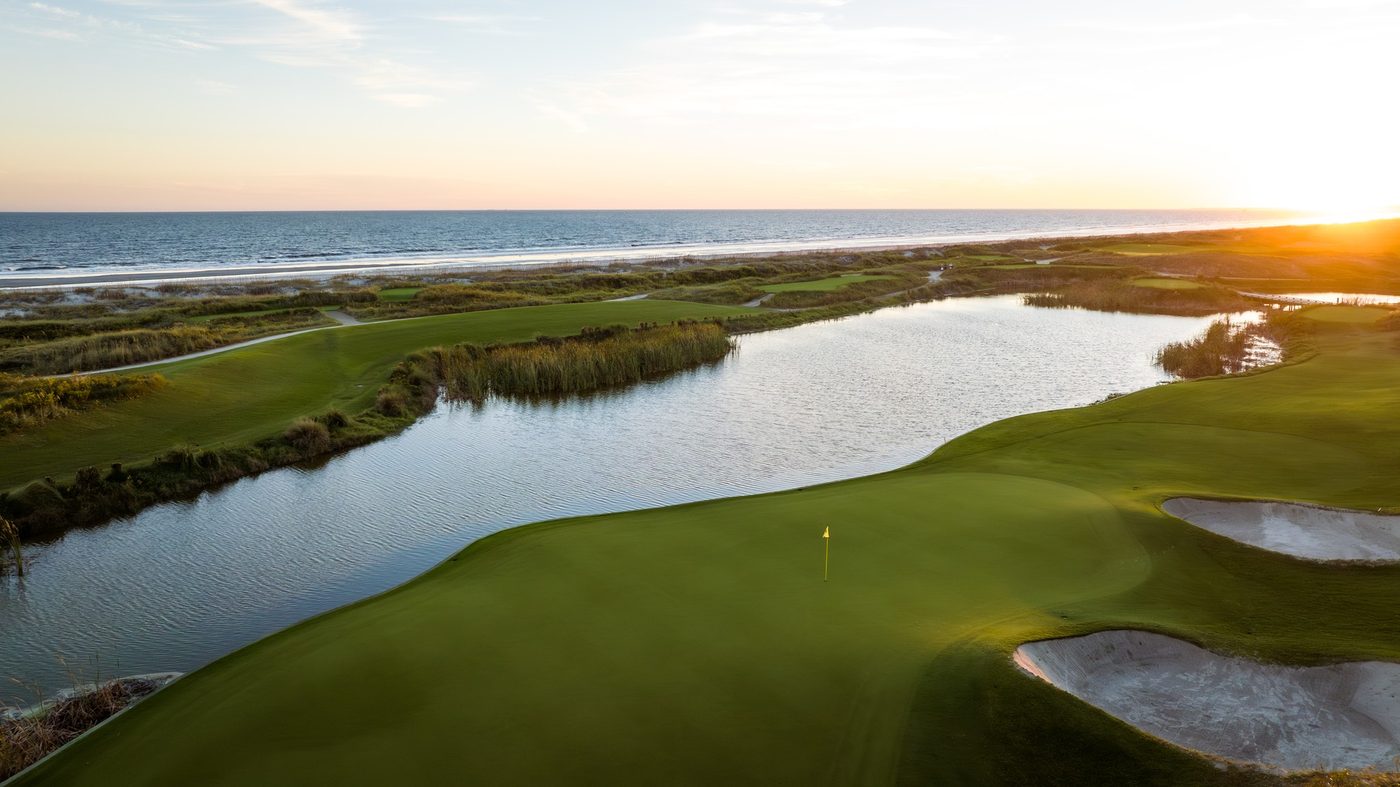
The Ocean Course is flat, and the resort itself calls it its easiest walk. It is on this list for the wind. Ten holes run along the Atlantic and the other eight parallel it, and the resort says a player “can experience up to an 8-club difference on holes” depending on how hard and which way it blows.

Alice Dye suggested raising the course up out from behind the dunes, which left it exposed to the wind. Because Kiawah has no prevailing wind, Pete Dye designed “two courses in one,” one for an easterly and one for a westerly. On the 194-yard 14th, the most exposed green on the course, Dye expected players to need “between a 2- and 4-iron.”

It is a physical test of a different kind: four-plus hours of leaning into it, on foot, with the sea in your ear the whole way.

Sunset aerial of fairways between salt-marsh creeks and the Atlantic beach at Kiawah
Marsh on one side, ocean on the other.
Low aerial over the sandy waste area short of Kiawah's 18th green
Sand short of the 18th.
Low sun over the ocean behind a lagoon wrapping a green at Kiawah
Late light over the lagoon.
Sunburst over a wide valley with a green among sagebrush and pines at Silvies
Part III · 5 courses

Spirit

Courses that quiet everything down.

Desert with no houses, a ranch with no cell service, Pueblo land, redwoods and restored sand barrens. These are the places where the landscape is the point and the golf follows it.

11

We-Ko-Pa Saguaro

Fort McDowell Yavapai Nation, Arizona · Coore & Crenshaw · 2006
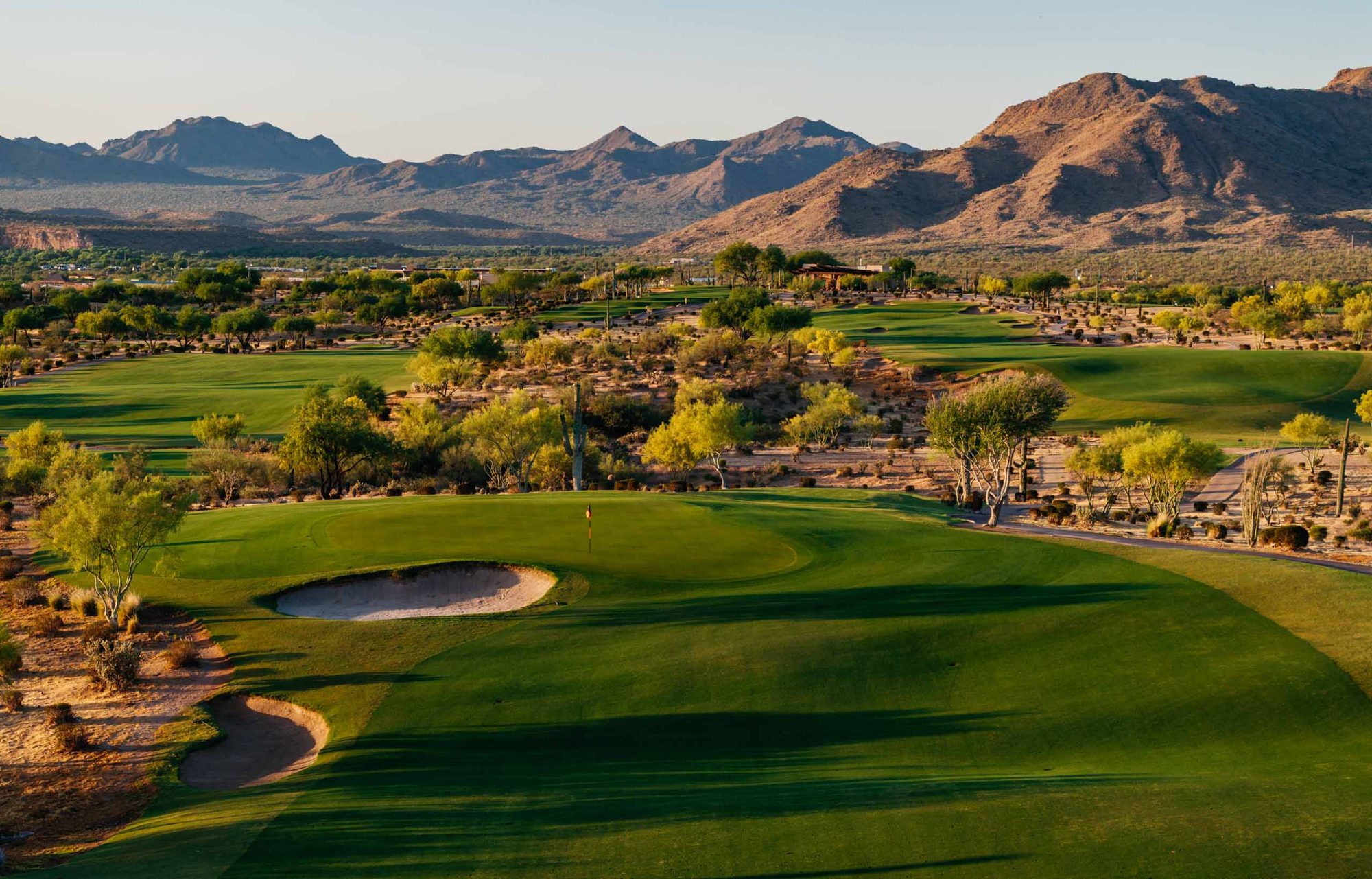
Elevated view down a We-Ko-Pa Saguaro fairway in low golden light with saguaros and bare mountains behind
The Sonoran Desert, mostly left as it was. Photo: We-Ko-Pa Saguaro

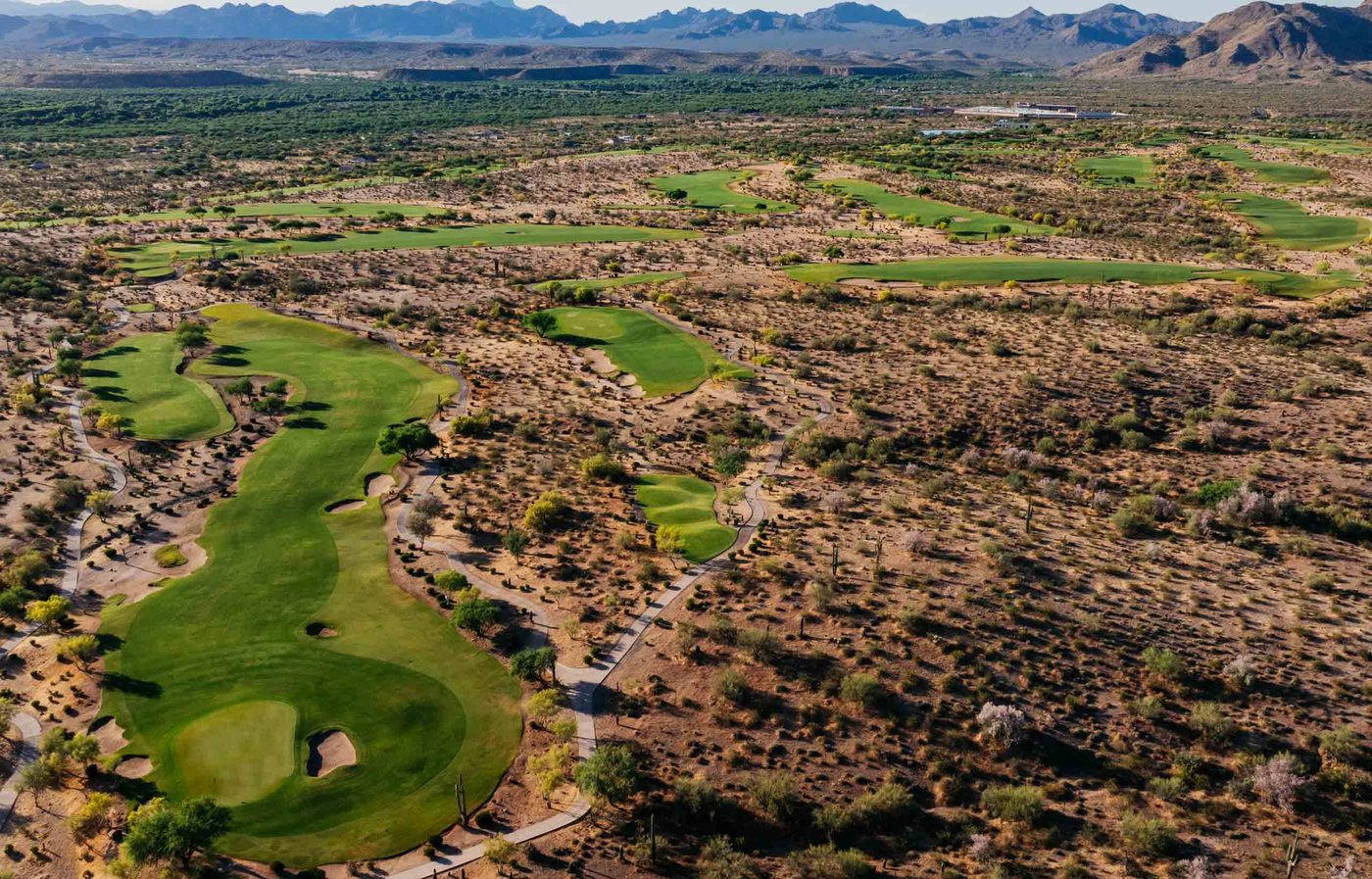
We-Ko-Pa is owned by the Fort McDowell Yavapai Nation, and the club puts its appeal plainly: “with no homes, roads, businesses or development of any kind, at We-Ko-Pa, it’s just you, your ball and the sights and sounds of nature.” Around Scottsdale, that is rare.

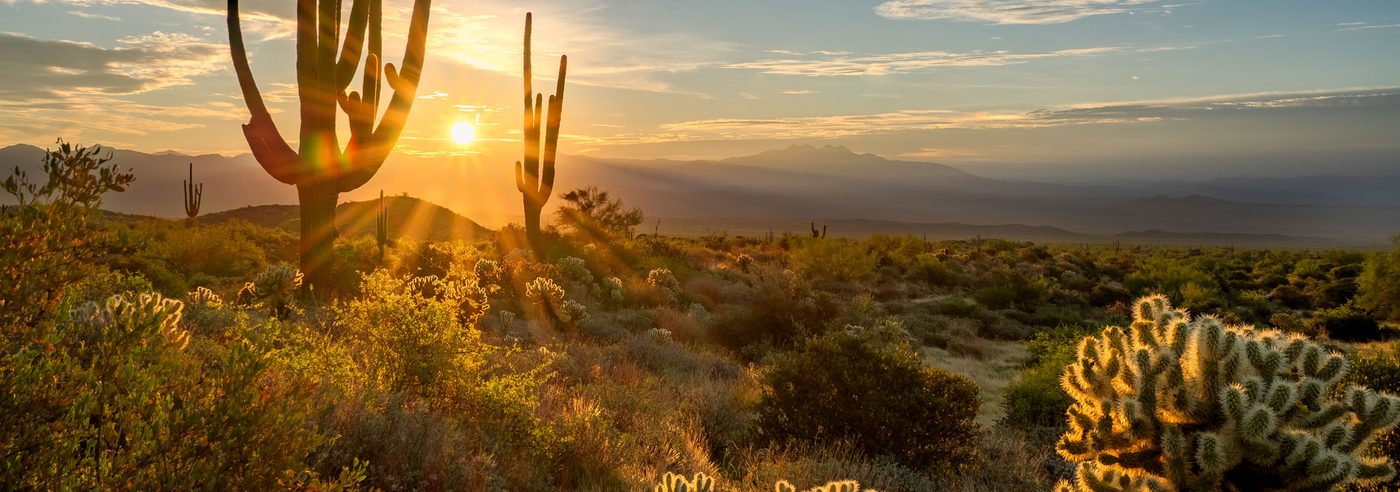
Bill Coore and Ben Crenshaw walked the land for two months before they settled on a routing, and the club says “hardly any dirt was moved.” Tees and greens sit close together, and the club calls it one of just a few courses in Scottsdale built for walking. You play among hundreds of saguaros, which grow to 40 or 50 feet and live 150 to 175 years, with views of four mountain ranges: the Superstitions, the McDowells, the Mazatzals and Four Peaks.

Crenshaw’s line about the site: “This ol’ boney ground has some sting to it.” Roadrunners cross the fairways, hawks circle overhead and, in the club’s words, the occasional coyote shows up in the distance.

Saguaros silhouetted against a low sun with a cholla in front
Saguaros at last light.
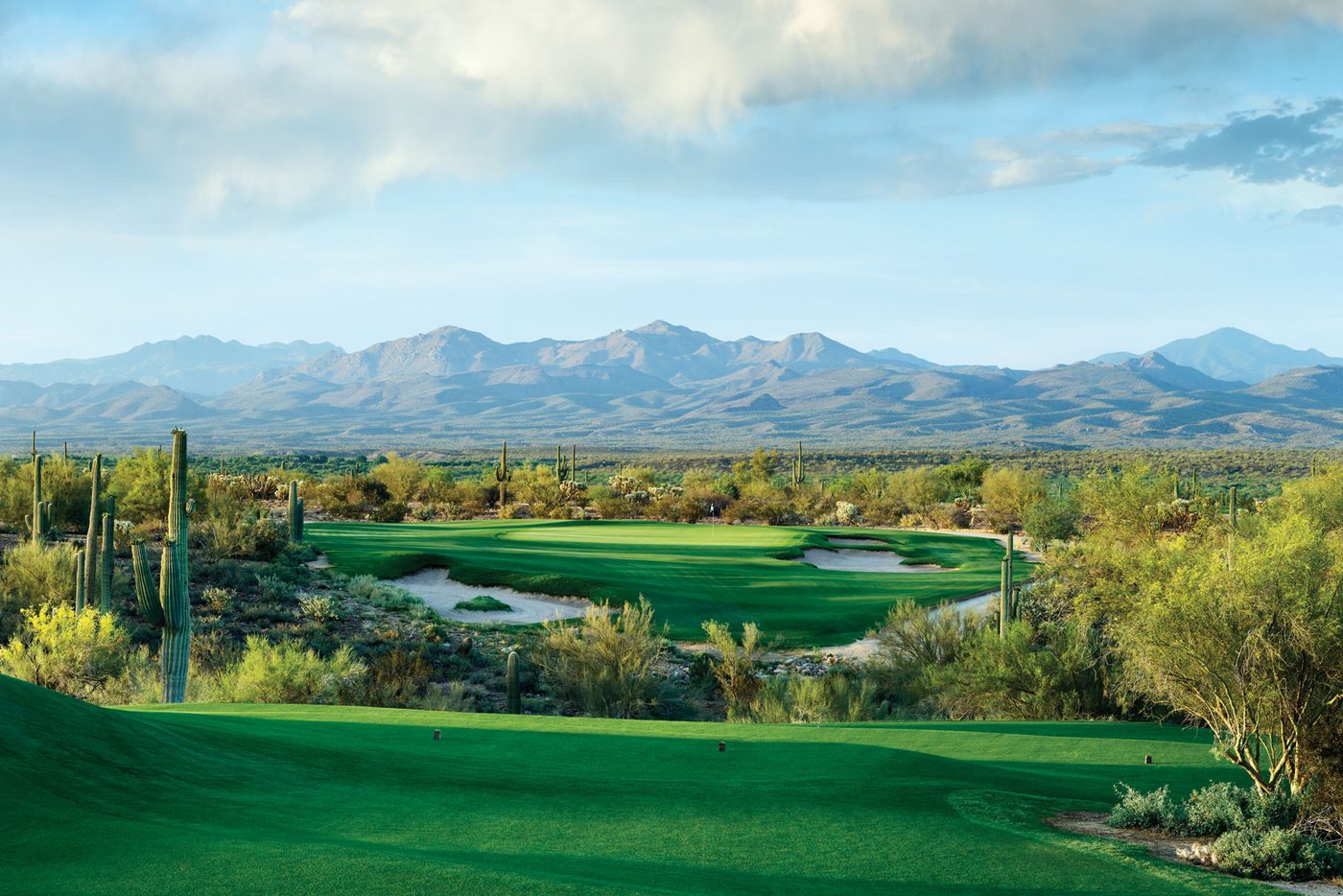
A We-Ko-Pa fairway and green under a big sky with mountains behind
Four mountain ranges in view.
Drone view of narrow fairways threaded through open Sonoran desert
Fairways threaded through the desert.
12

Silvies Valley Ranch

Seneca, Oregon · Dan Hixson · 2017
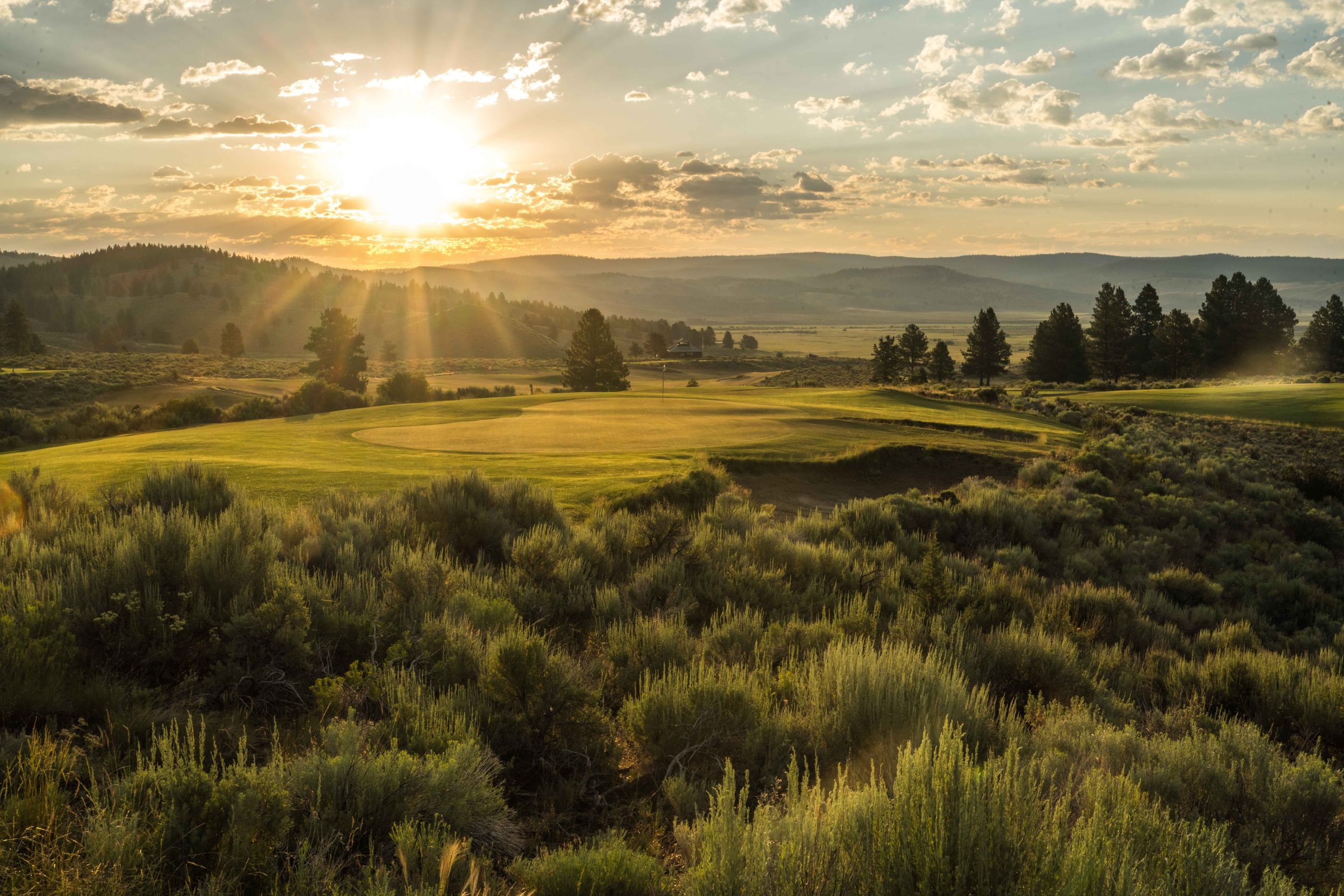
Sun setting over the valley behind a bunkered green framed by sagebrush and pines at Silvies Valley Ranch
Craddock No. 4, about 5,000 feet up. Photo: Silvies Valley Ranch

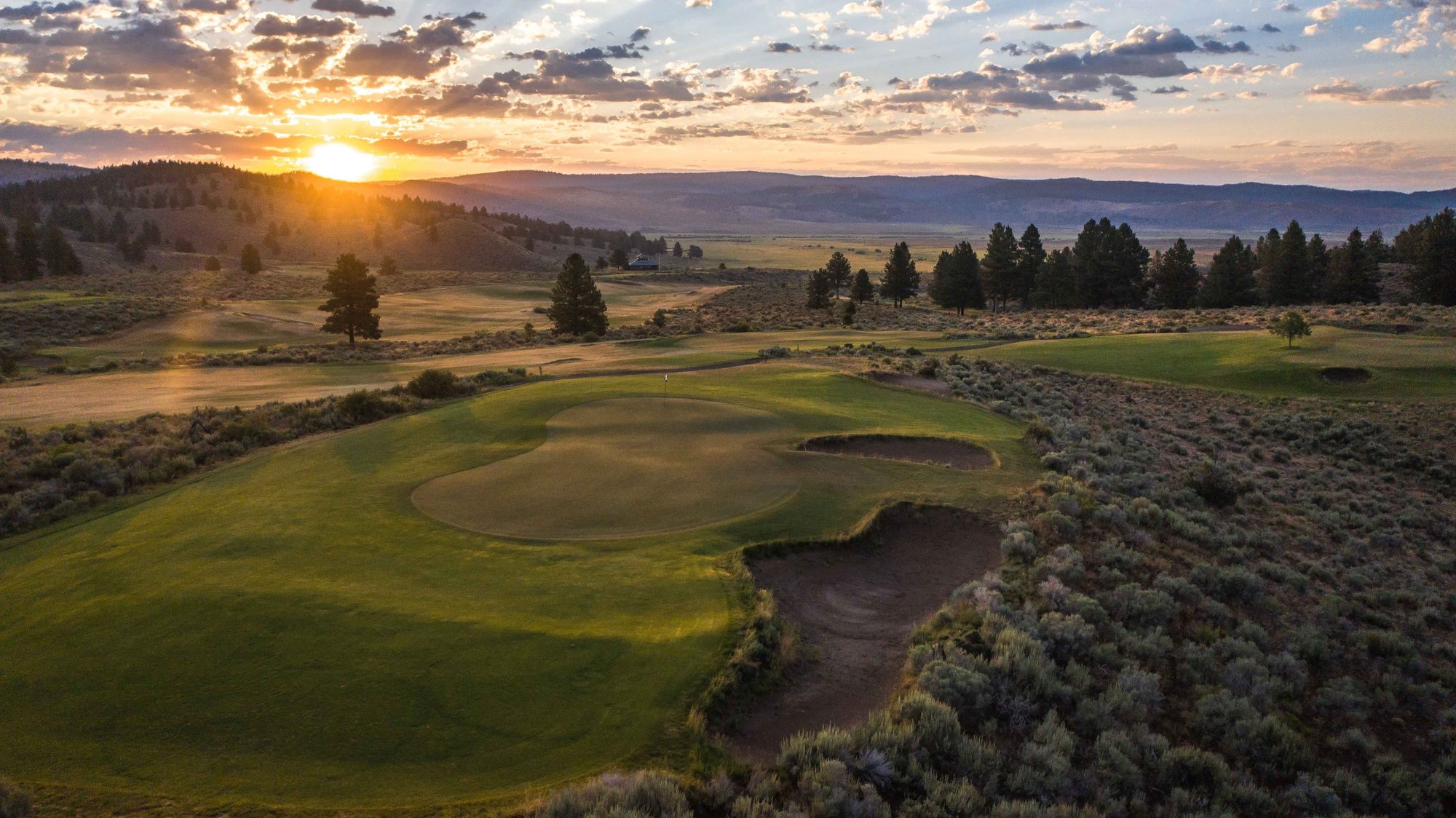
This is the most remote place on the list and the quietest. Silvies is a working cattle and goat ranch of more than 150,000 acres in eastern Oregon, at about 5,000 feet, which makes it what the ranch calls the highest course in Oregon. There is no cell service. The ranch’s own advice to golfers: “it is a long way to the hospital – please don’t overdo it.”

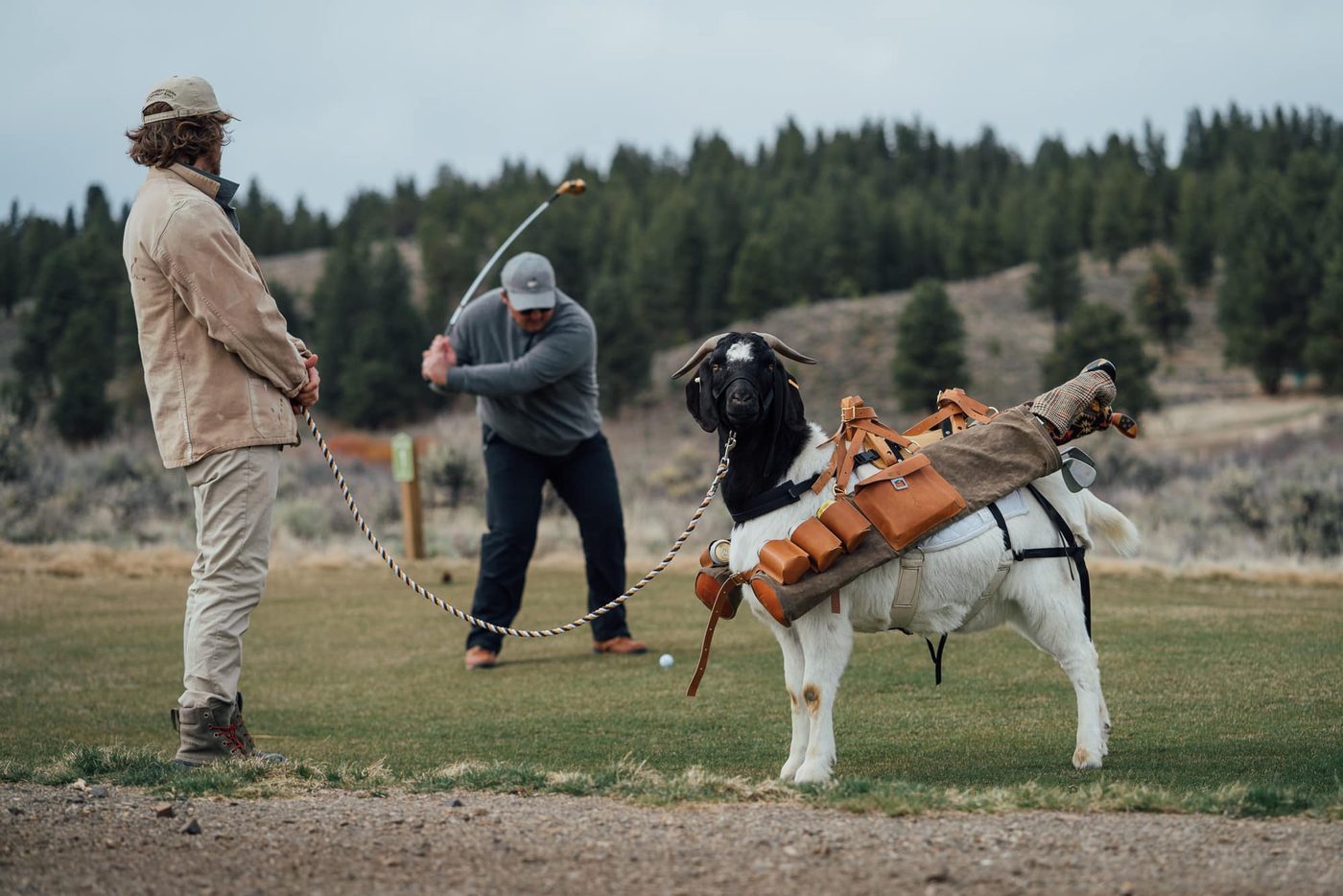
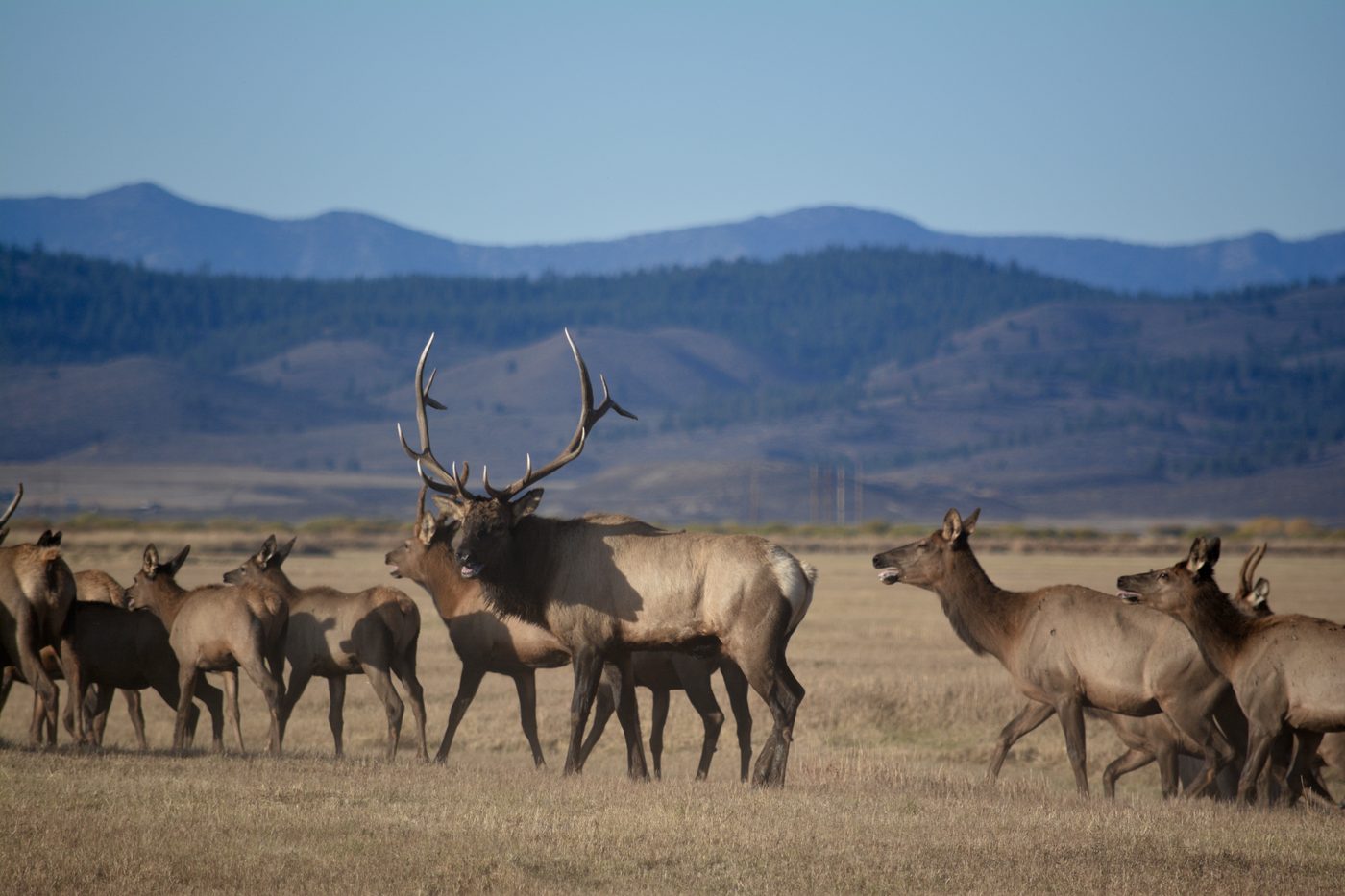
Dan Hixson built two reversible 18s, Craddock and Hankins, which play the same ground in opposite directions. Then there is McVeigh’s Gauntlet, seven holes on a ridge where the caddies are goats carrying your bag. The owners describe a long-running habitat restoration for wildlife and fish, and elk graze the valley.

FORE Magazine put it best: “But if you want to be alone and unbothered, Silvies Valley Ranch is pure gold.”

A golfer hits while a handler holds a goat carrying a leather golf bag at Silvies
A goat caddie on McVeigh’s Gauntlet.
A bull elk with a herd on open grassland below forested hills
The neighbors.
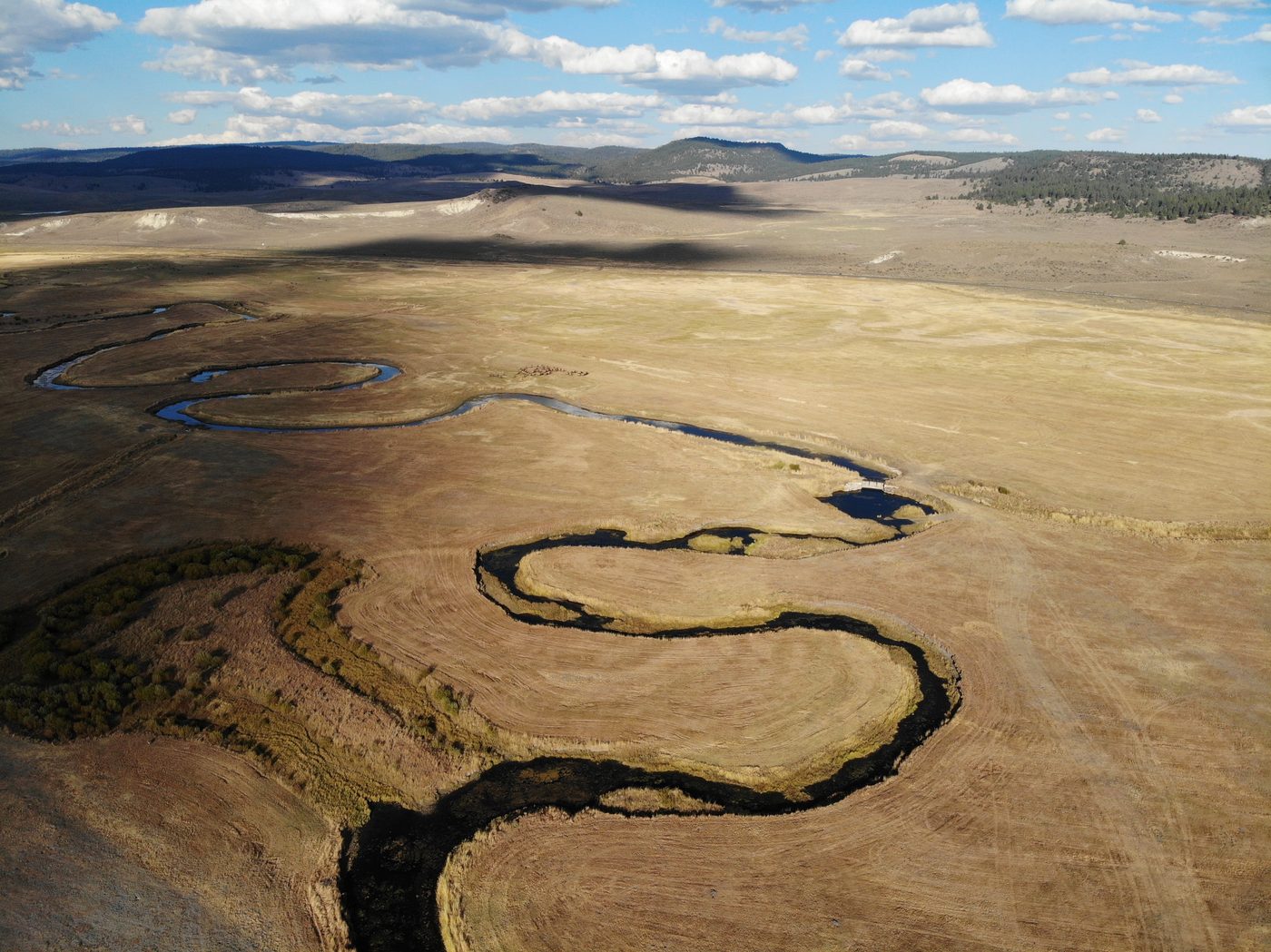
Aerial of a creek meandering across a broad valley floor
The valley from above.
“Due to our rural location, there is no cell service on the ranch.”— Silvies Valley Ranch FAQ
13

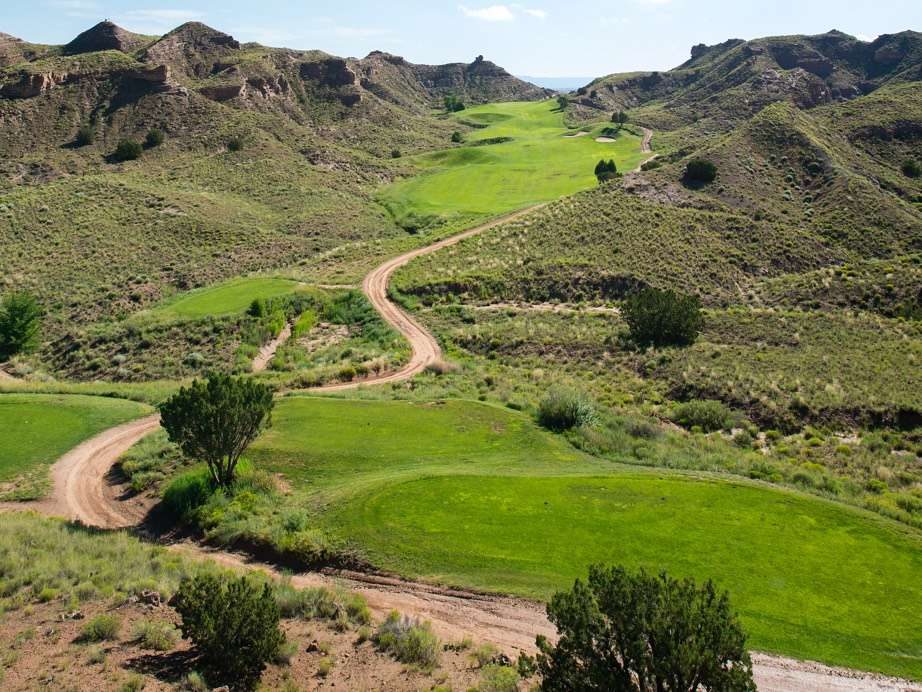
Black Mesa

Santa Clara Pueblo, New Mexico · Baxter Spann · 2003
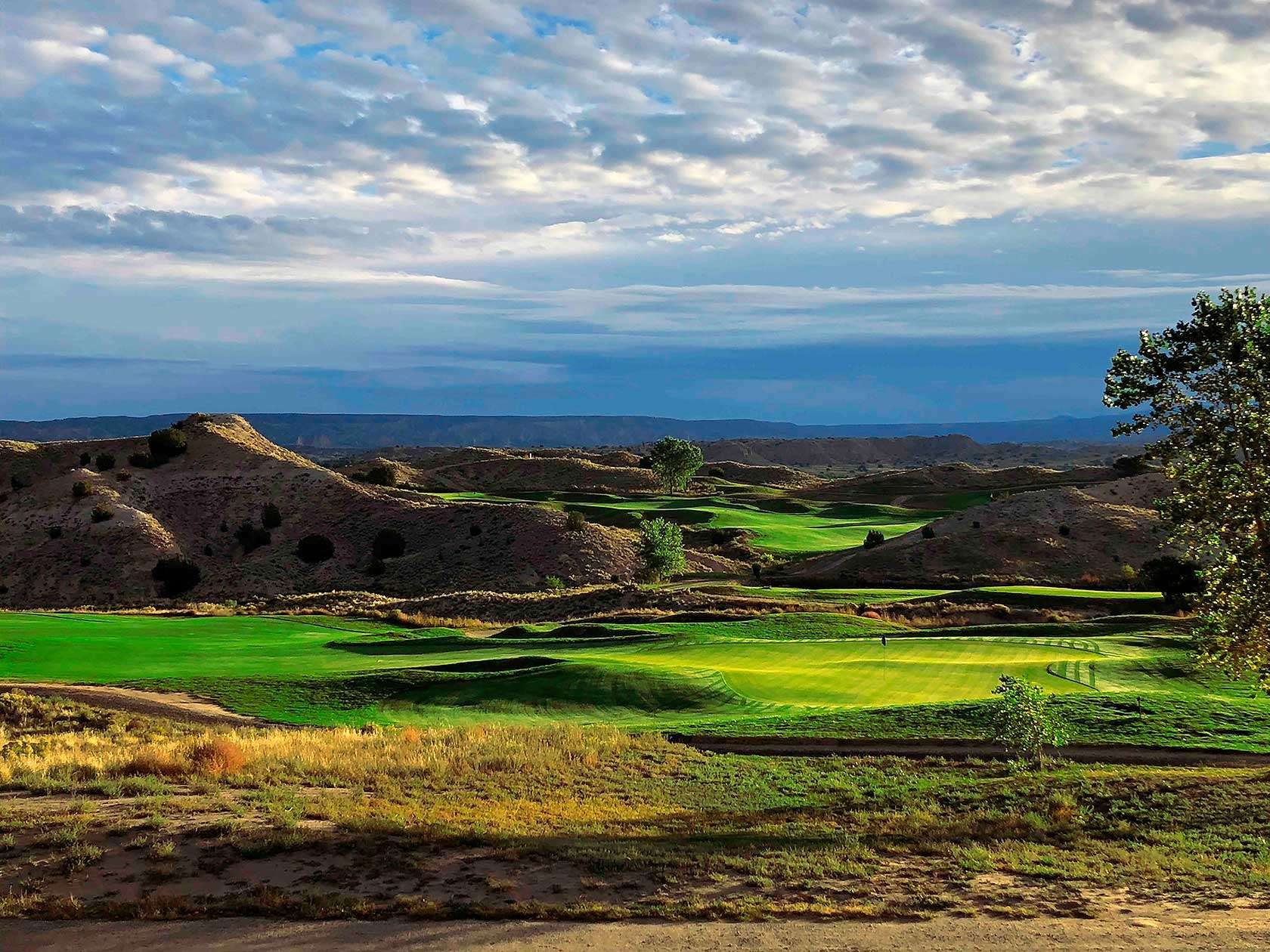
Low golden light across a Black Mesa fairway with eroded badland ridges and a long mesa
High desert north of Santa Fe. Photo: Black Mesa

Golf Digest’s description of Black Mesa is hard to beat: “there is no development on or near the vast, high-desert property.” The course runs through buttes, sagebrush ridges and dry arroyos. It is owned by Santa Clara Pueblo, 25 miles north of Santa Fe, with the Sangre de Cristo Mountains in view.

Arroyos come into play on ten of the eighteen holes. The 4th has one fourteen feet deep; on the 18th, one runs the whole length of the hole. Architect Baxter Spann called it “the most interesting and spectacular site I have ever had the opportunity to work with.” His note on the 1st hole gave this story its opening line.

It is also the cheapest course in our Spirit section, at about $91 on a weekday with a cart.

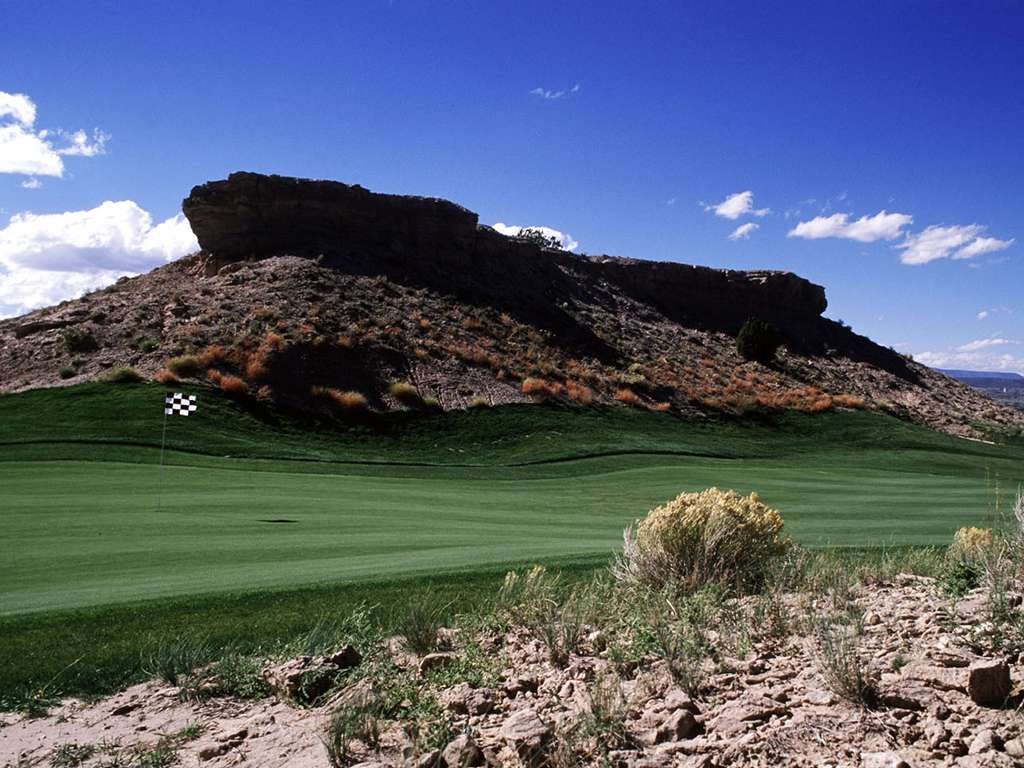
A dark basalt-capped mesa rising over a Black Mesa fairway
The 2nd, under the mesa.
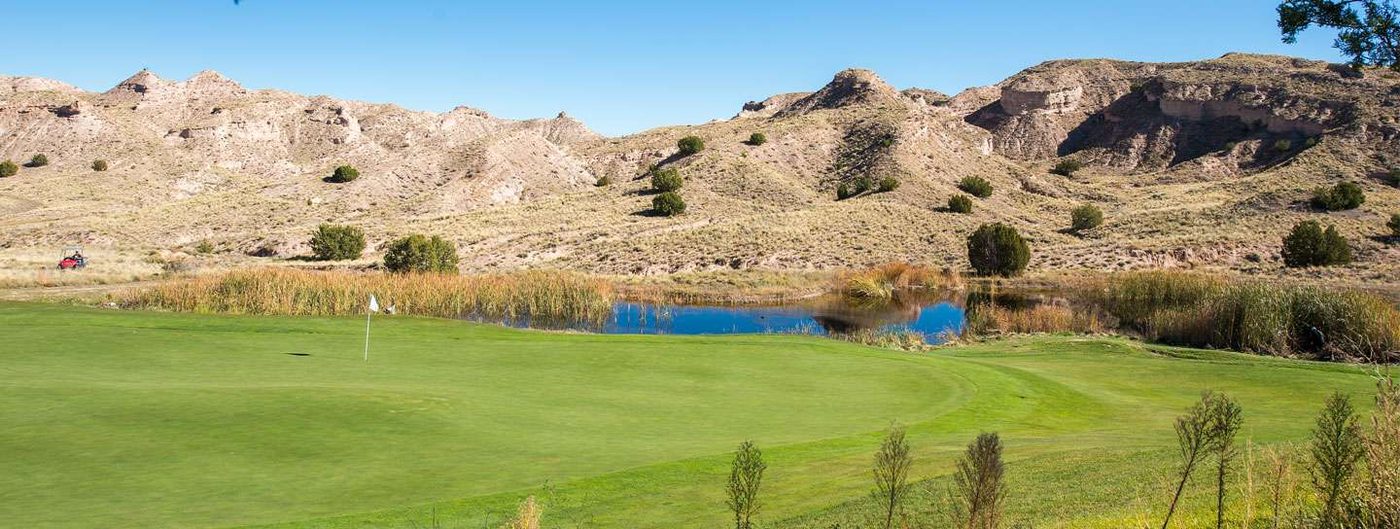
Panorama of a green beside a reed-fringed pond below pale eroded cliffs
Pond and cliffs.
A dirt cart path curling through a green valley between sage-covered hills
Paths kept mostly out of sight.
14

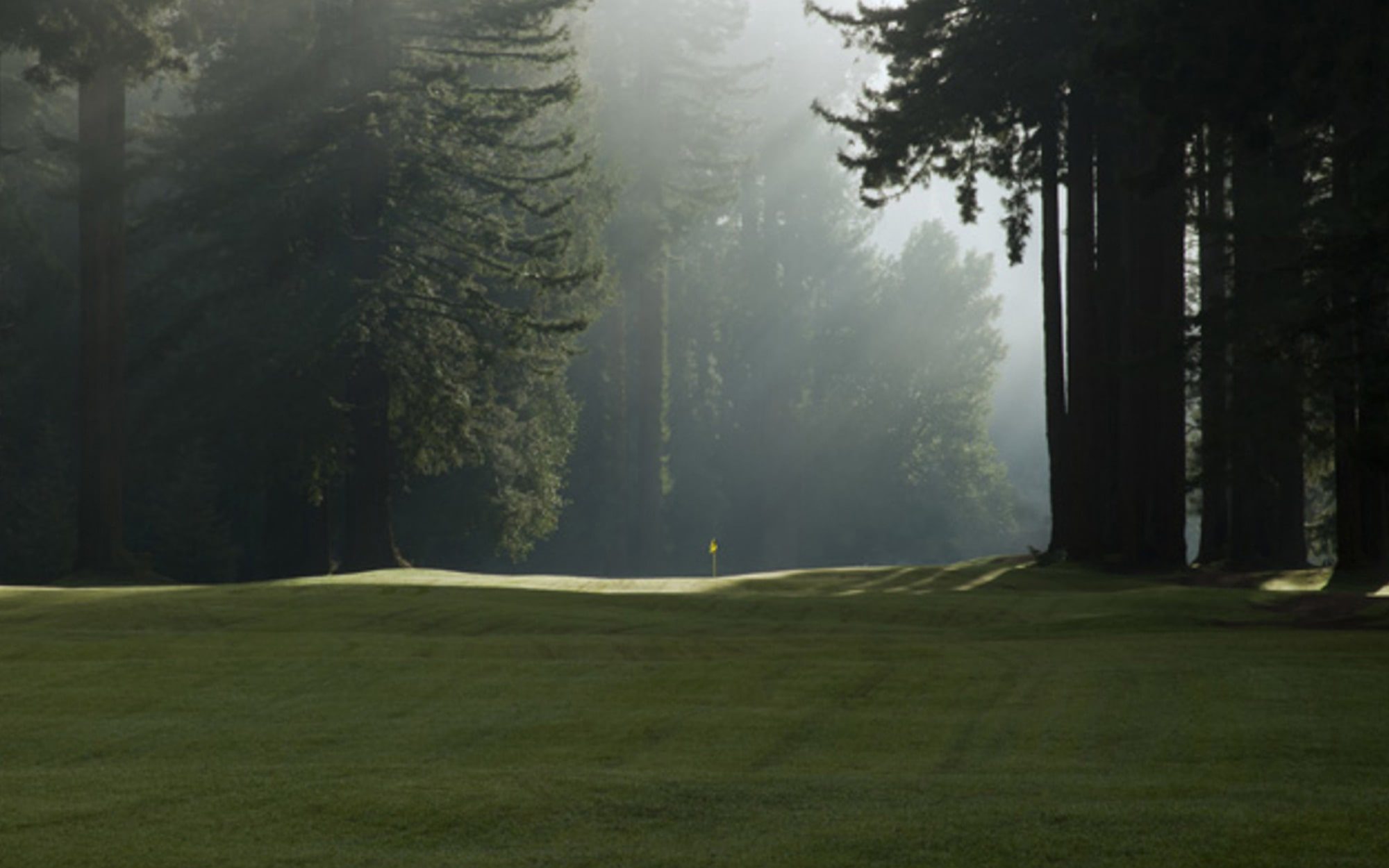
Northwood

Monte Rio, California · Alister MacKenzie · 1928 · nine holes
Morning mist and light shafts among tall redwood trunks at the edge of a Northwood fairway
MacKenzie in the redwoods. Photo: Northwood

Northwood is nine holes of Alister MacKenzie routing in a grove of redwoods on the Russian River. Jack Neville, a Bohemian Club member, came up with the idea of a course on 70 wooded acres across the river from the Bohemian Grove, and he brought in MacKenzie and Robert Hunter, who designed it in 1928.

It is not remote, and it is not grand. It sits on a highway in a small river town, there are homes around it, and GOLF.com’s Noel Freeman wrote that it “could use some restorative touches.” He also called it “a period piece and a wonderful walk amid arboreal splendor,” which is why it’s here. Redwood trunks line the holes, and in the morning the light comes through them in shafts.

Treat it as a day, not a week: walk 18 by going around twice, then spend the rest of the trip on the Sonoma coast.

15

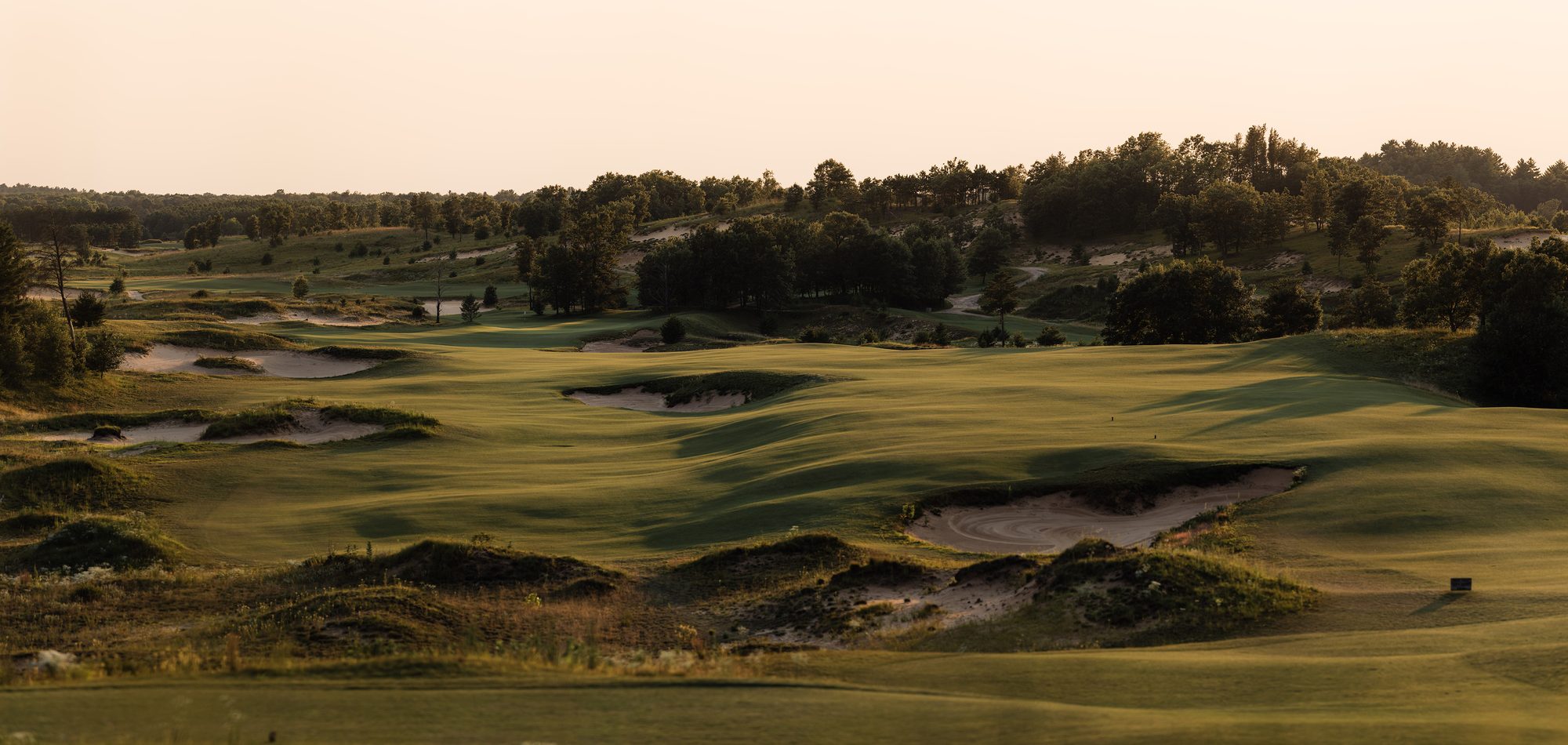
Sand Valley

Nekoosa, Wisconsin · Coore & Crenshaw · 2017
Soft evening light over Sand Valley's rolling fairways, sandy blowouts and scrubby dunes with woods behind
Sand barrens in central Wisconsin. Photo: Sand Valley

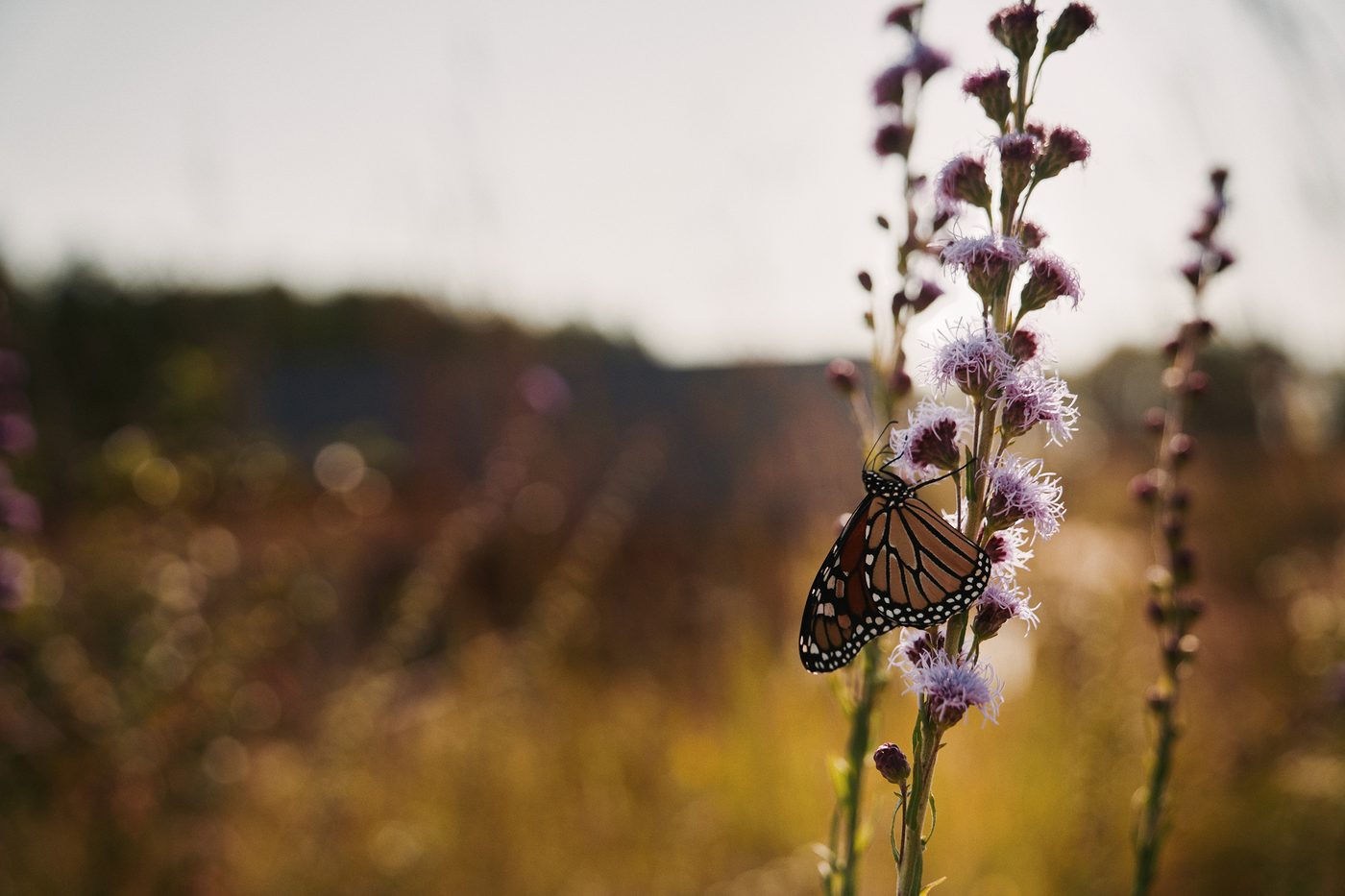
Sand Valley sits in an ancient glacial lakebed in central Wisconsin, on ground that had been planted over as a red pine plantation. The resort’s owners pulled the pines and started bringing the sand barrens back: a Field Museum guide counts 250 acres of sand barrens and prairie being restored, plus 200 acres of oak savanna and jack pine managed with fire, as habitat for creatures like the Karner blue butterfly.

The original Coore & Crenshaw course came out of that ground in 2017, and the resort sells it as “The original course that’s like golfing in a national park.” Blowout bunkers, scrub and big open sky, on 12,000 acres in all. The Field Museum guide opens with Aldo Leopold, whose A Sand County Almanac was written about Wisconsin’s sand country.

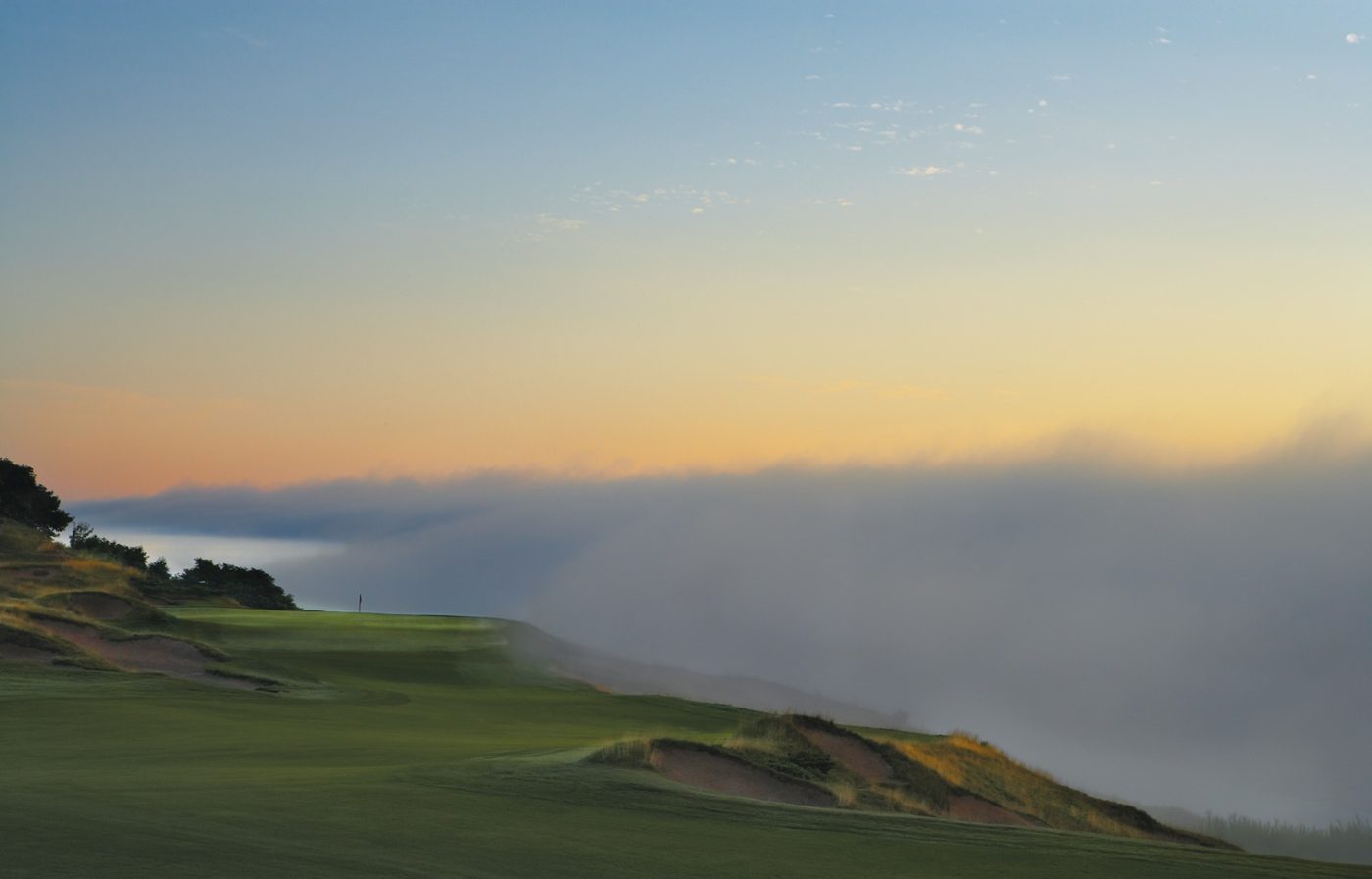
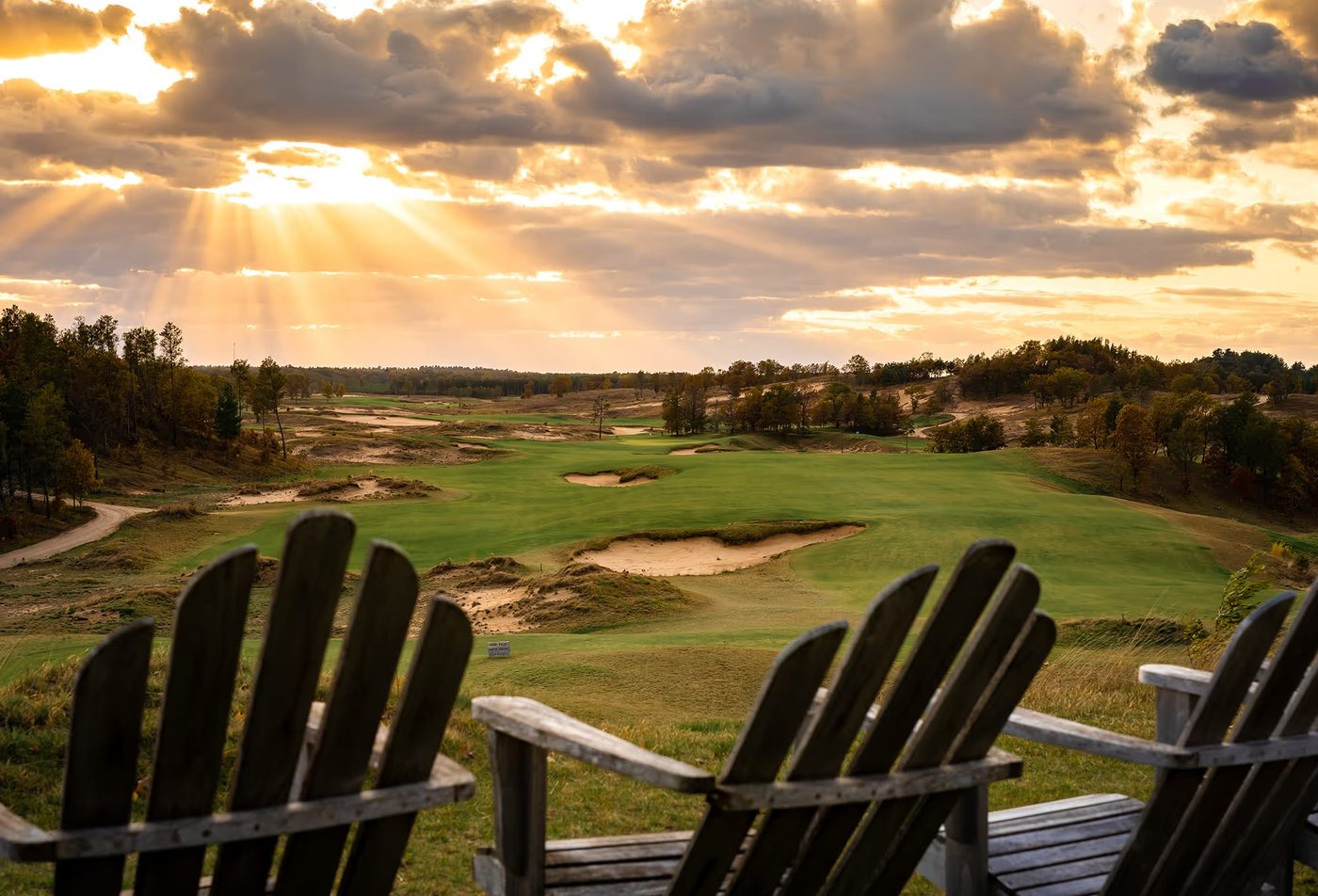
It’s a big resort now, with more courses and real estate for sale, so it isn’t empty. But play the original late in the day and it gets very quiet. That’s our hero photo up top.

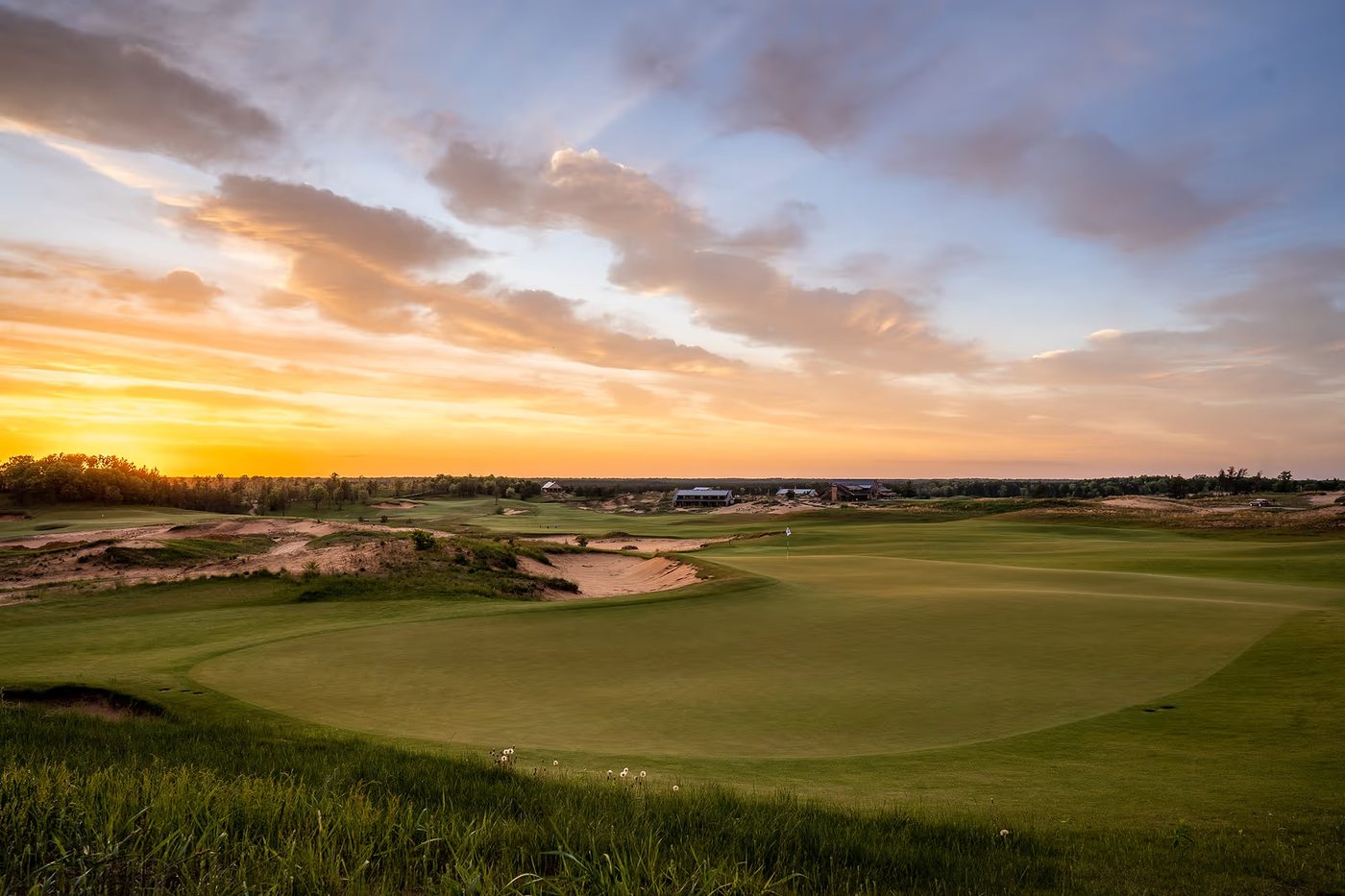
A wide green with sand faces under a streaked orange sunset at Sand Valley
Sunset on the original course.
Wooden Adirondack chairs looking over the course as sun rays break through cloud
The view from the chairs.
A monarch butterfly on a purple blazing-star wildflower
Restored prairie, and who lives there.

Going Alone: What We’d Tell a Friend

Pick the right course

Some courses are set up for a single. Sweetens Cove sells one pass per person and starts everyone together with a whiskey shot. Landmand pairs singles with singles, and Kiawah says it pairs players up. Black Mesa is the exception: there, playing alone means paying for the whole foursome.

Book the room first

Erin Hills has seven single rooms in its Lodge. Bandon sells single rooms and has a solo option in its trip planner. Silvies has single-king suites. At a walking resort with a pub, you won’t eat dinner alone unless you want to.

Take the caddie

On a walking-only course, a caddie is company and local knowledge in one. Bandon ($125), Erin Hills ($65), Whistling Straits ($90) and Cabot (C$60–C$90) all have caddie programs, and Kiawah charges no caddie fee, just a gratuity.

Play the windows

The hard tee times are easier for one. Bethpage hands out walk-up times to whoever is in line, and a single fits into gaps a foursome can’t. And the last tee times of the day are the quietest golf anywhere.

All Fifteen at a Glance

PillarCourseWhereFeeWalkingGoing alone
MindTobacco RoadNC~$250 (dynamic)Cart includedTravel desk books singles
MindBethpage BlackNY$140–$160Walking onlyWalk-up line
MindOld MacdonaldOR$180–$425Walking onlySingle rooms
MindSweetens CoveTN$100–$240 day passWalk or rideOne pass, one person
MindLandmandNE$175 (2027)Walk or rideSingles paired
BodyErin HillsWI$395–$495Walking only, no carts7 single rooms
BodyWhistling StraitsWINot publishedWalking onlyNo policy published
BodyBandon TrailsOR$180–$425Walking onlySingle rooms
BodyCabot CliffsNS, CanadaC$275–C$565No cartsWalk-in bar
BodyKiawah Ocean CourseSCNot publishedWalking only (most of the year)Resort pairs players
SpiritWe-Ko-Pa SaguaroAZ$109–$359Built for walkingFlat pricing
SpiritSilvies Valley RanchORCall the ranchWalking encouragedSingle suites, communal dinners
SpiritBlack MesaNM~$91–$110Cart includedPay for 4 to play alone
SpiritNorthwoodCAFrom $49WalkingShort and cheap
SpiritSand ValleyWI$235–$325Walking onlyGolf-only times

Fees are 2026 unless noted, checked October 27, 2026. Day-guest rates for resorts.

Get The Grassy Issue in your inbox.New posts by email, via our Substack
Keep Reading Explore All Brands →
On Our Radar: Three Small Golf Brands Bringing Back the Clubhouse Look
Drops & Brands
Austin Apartments With Golf Simulators: Ten Buildings With a Sim Room Downstairs
Field Notes
The Austin Food Truck Field Guide — 15 Stops Around Town
Field Notes
Brand to Know: Matchstick Golf — Ball Markers With a Story
Drops & Brands