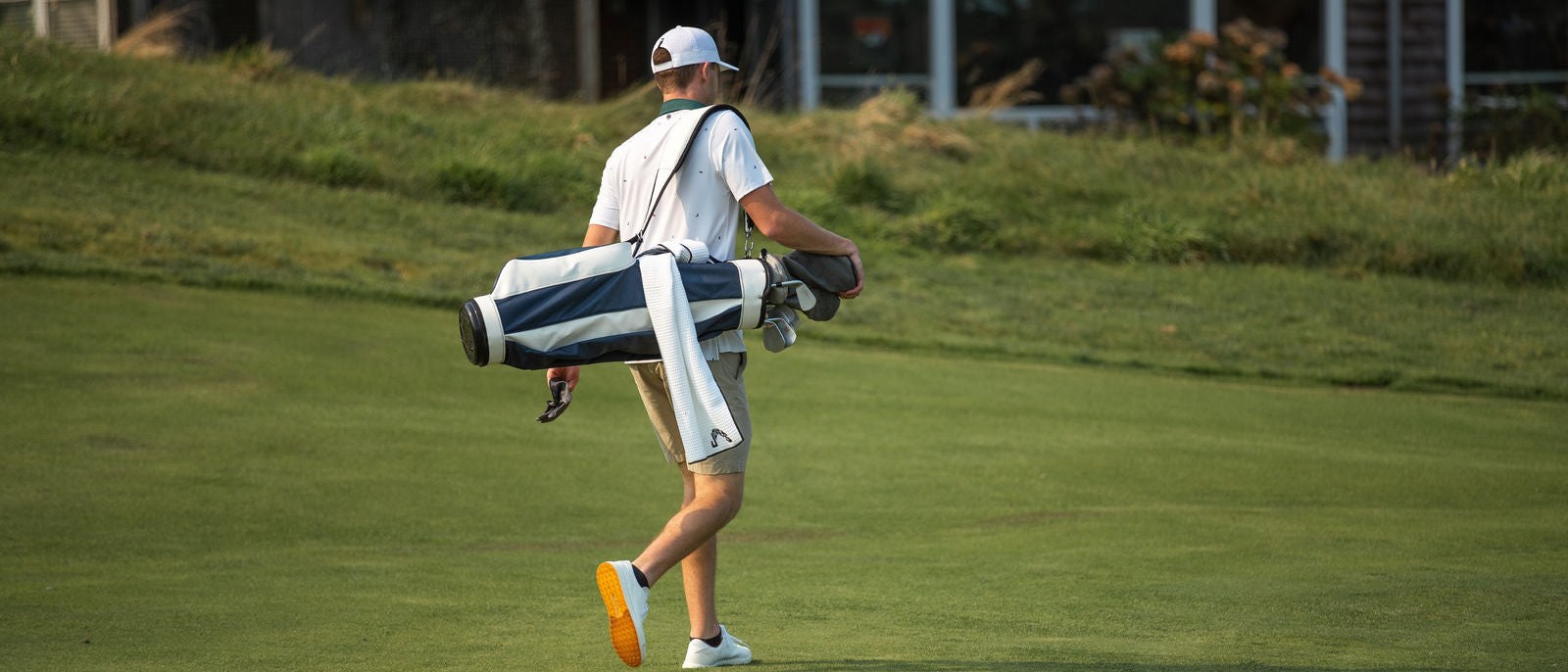
Shapland, Shoal and Jones build the same object three different ways, and all three treat a carry bag as something you choose rather than something you end up with.
Most golfers do end up with one. The bag in the boot came from a brother-in-law, or a pro shop clearance rack, or a set someone bought whole in 2014. It works. It holds fourteen clubs and it stands up, and there is nothing wrong with playing muni golf out of a bag that owes you nothing. But it is the piece of equipment you are in contact with for four hours at a time and never actually swing, and at some point that becomes the argument for picking one on purpose.
What the three have in common is restraint. None of them is selling you storage. Shapland rebuilds a 1980s Ping silhouette in leather and brass and names its models after Harry Colt golf courses. Shoal makes a single canvas bag in ten colours and opens ordering a few times a year. Jones has been making the same single-strap carry bag in Portland since 1971 and has spent fifty years leaving things off it. Three different centuries of reference, one shared instinct: a bag should be quiet, light, and built to still look like itself in ten years.
They run from a hundred and eighty-five dollars to four hundred and ninety-five, and the top of that band is where the material changes — canvas and top-grain leather instead of printed polyester, brass instead of moulded plastic, stitching you can see. It is also where the runs get small enough that a bag you want is frequently not in stock. Shapland has been sold out since August. Its next two production runs finish this month and the third lands in November, which is the useful thing to know before the restock rather than after it.
This is for the walker. Somebody carrying or pushing, playing a public course most weeks, who has looked down at the bag on the tee and thought about it.
SOLD OUT · RESTOCKING THIS MONTHThree models, one silhouette, and a line that has been sold out since August. Restock dates are on each card.
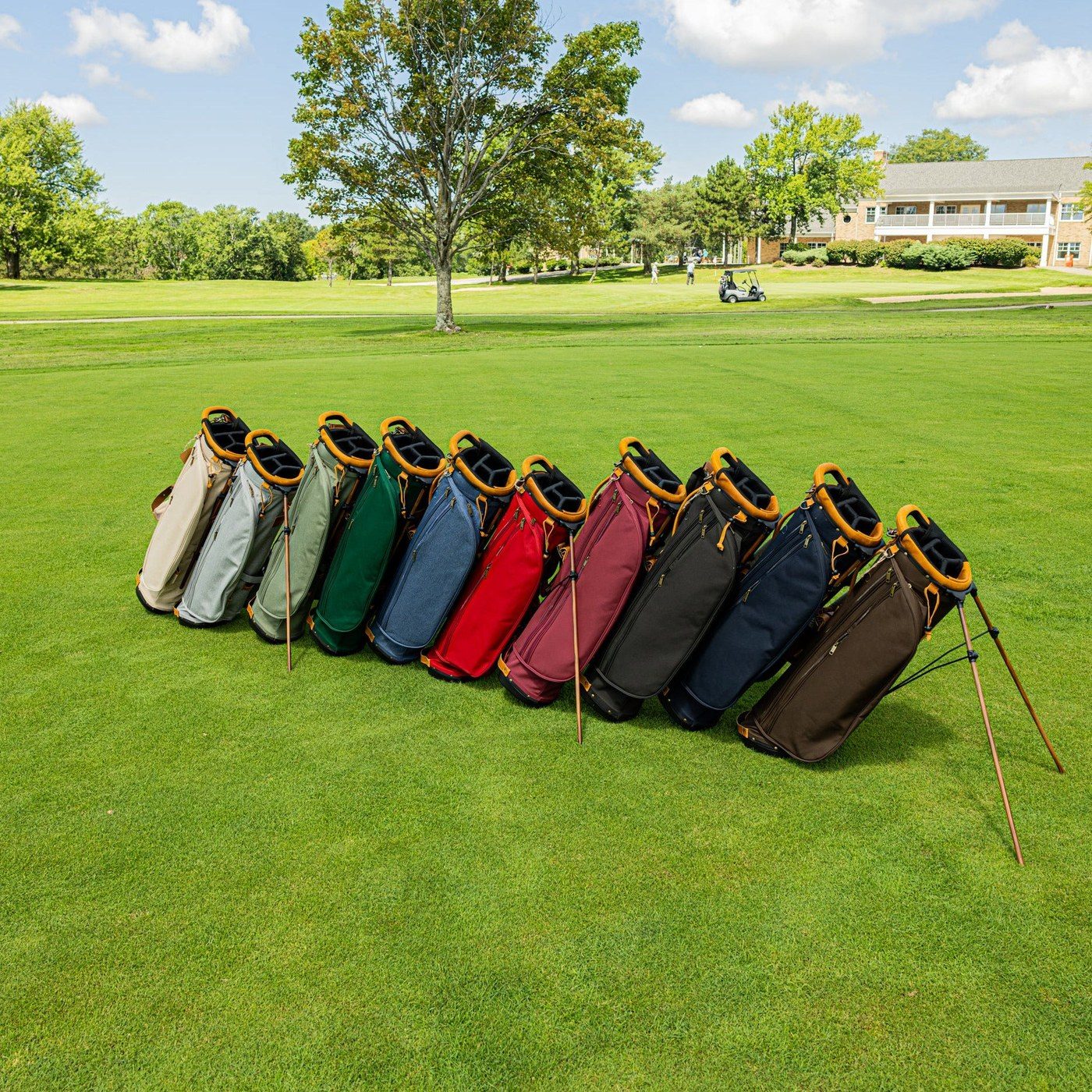
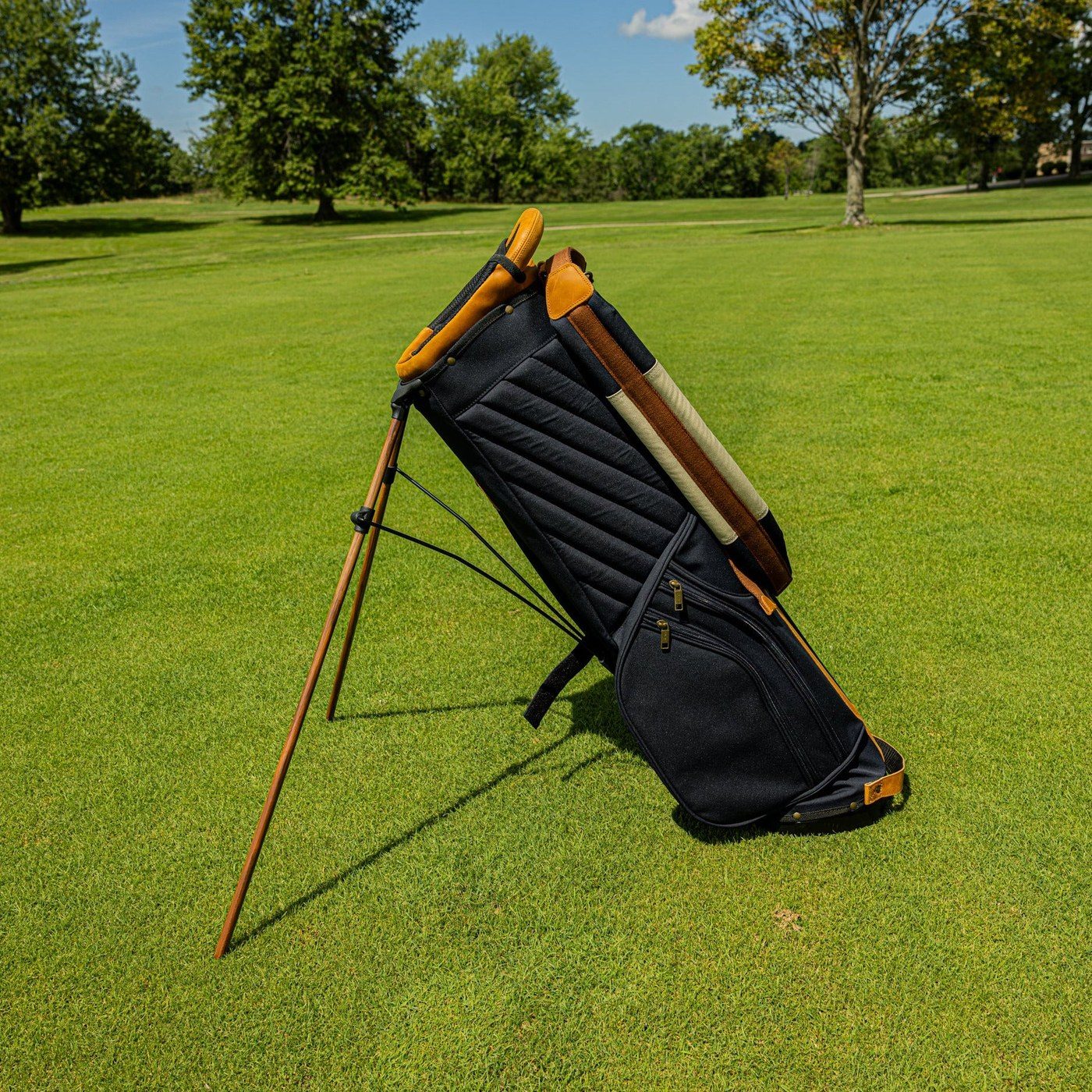
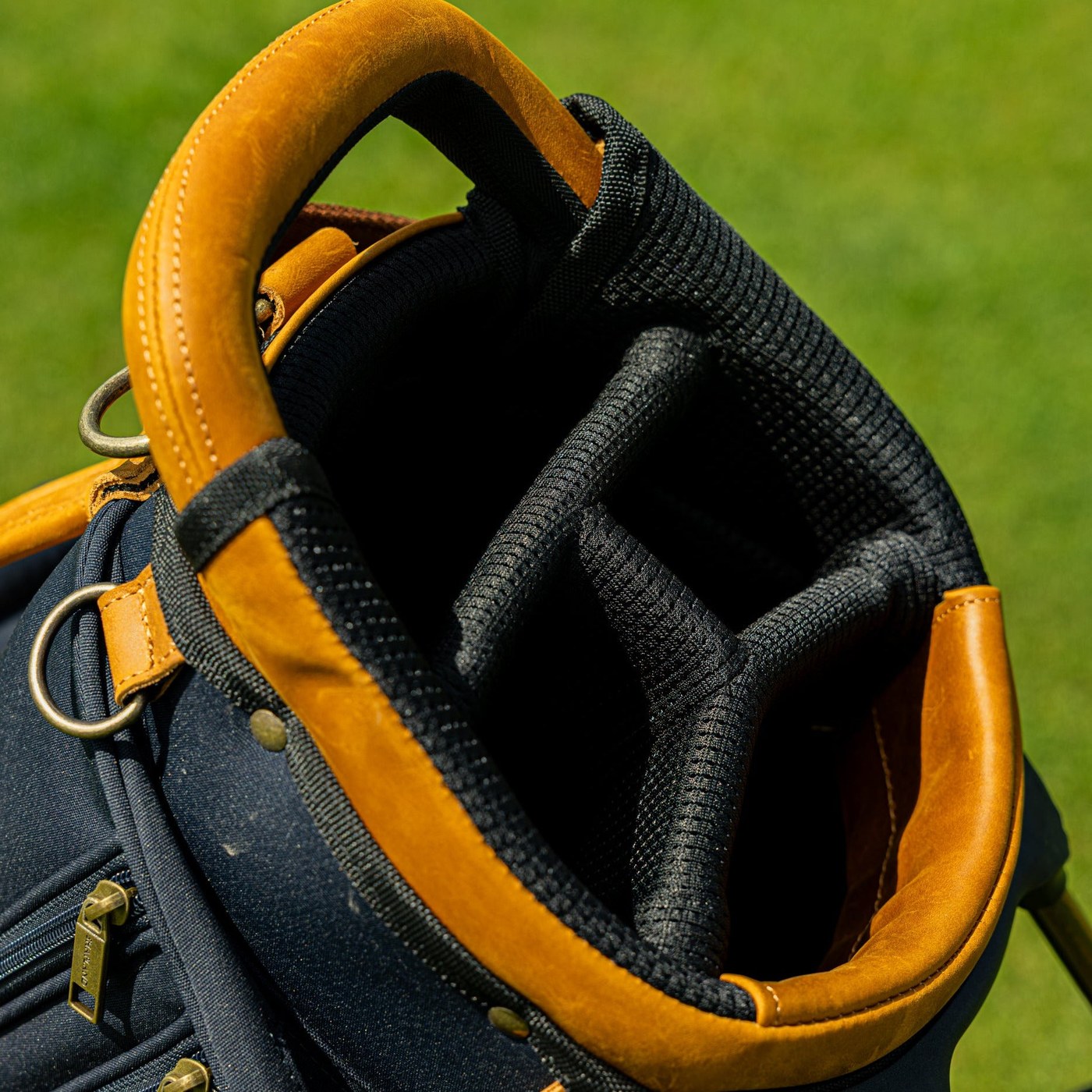
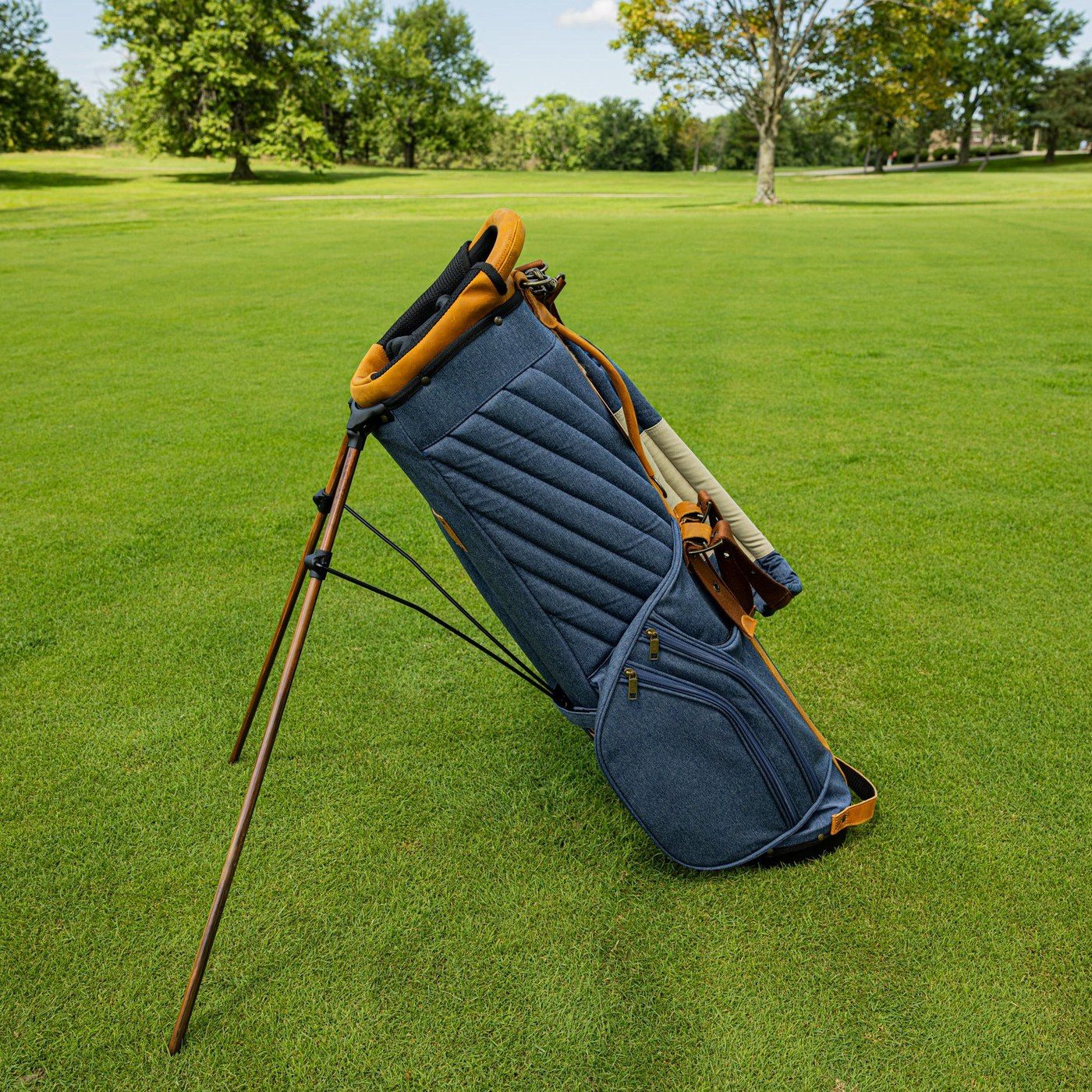
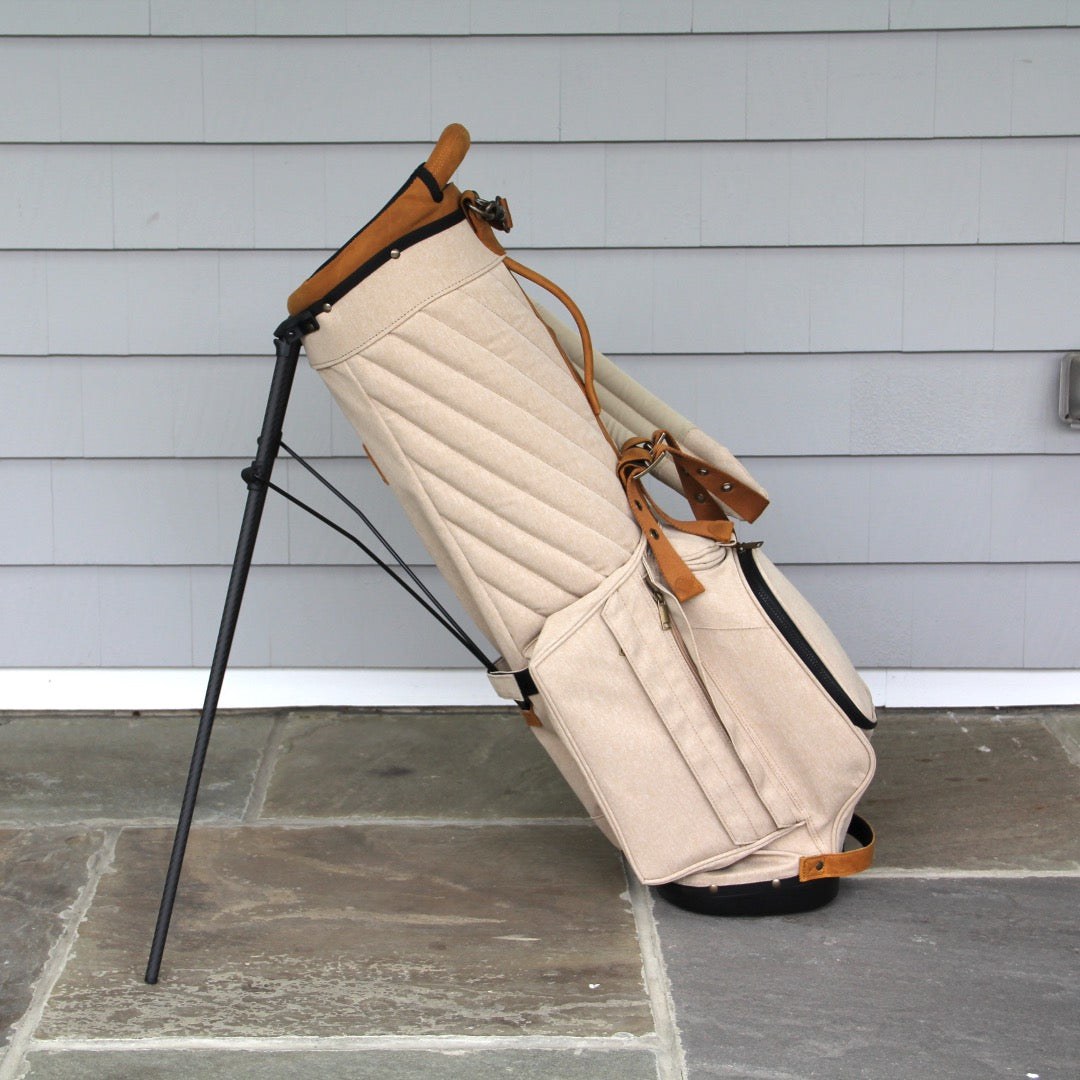
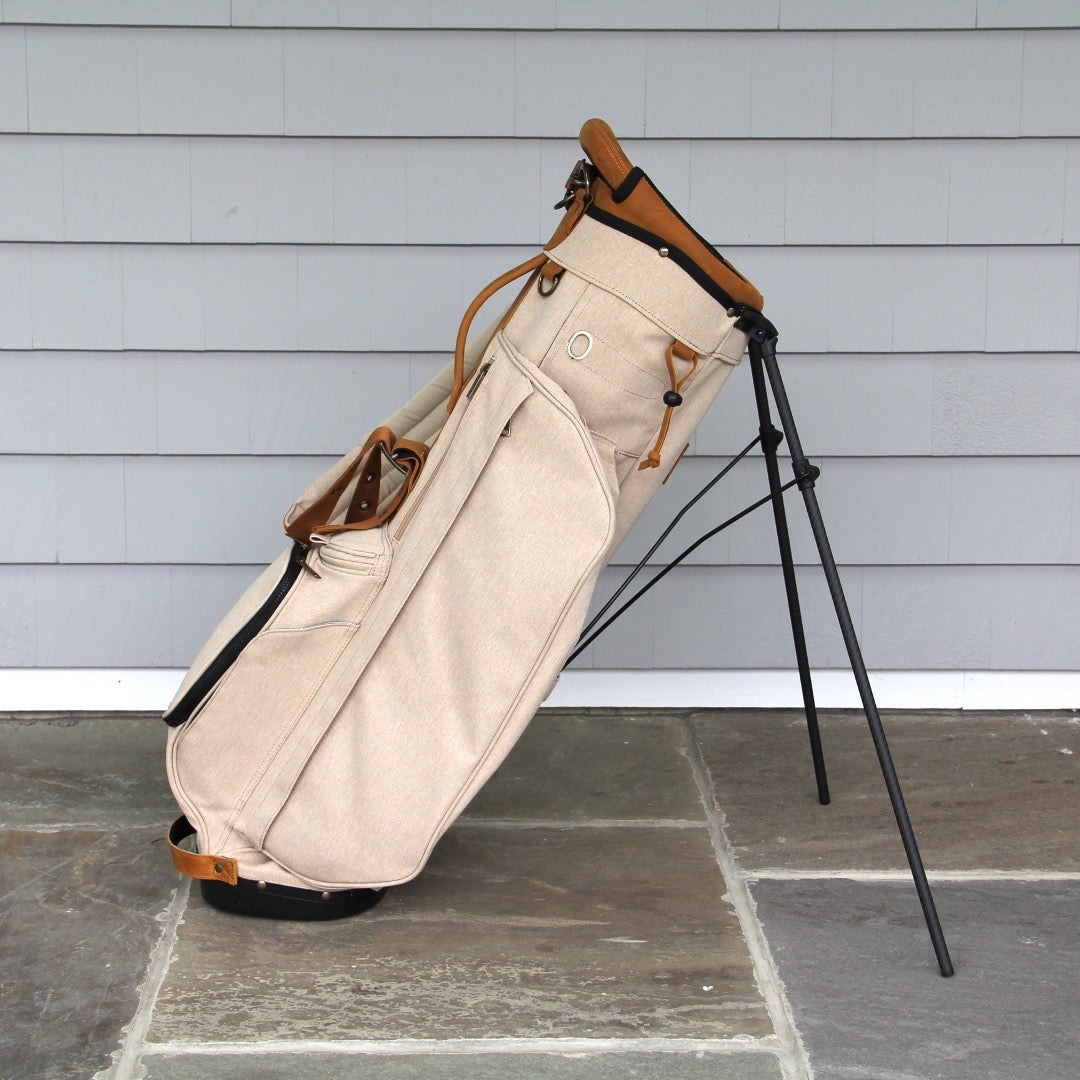
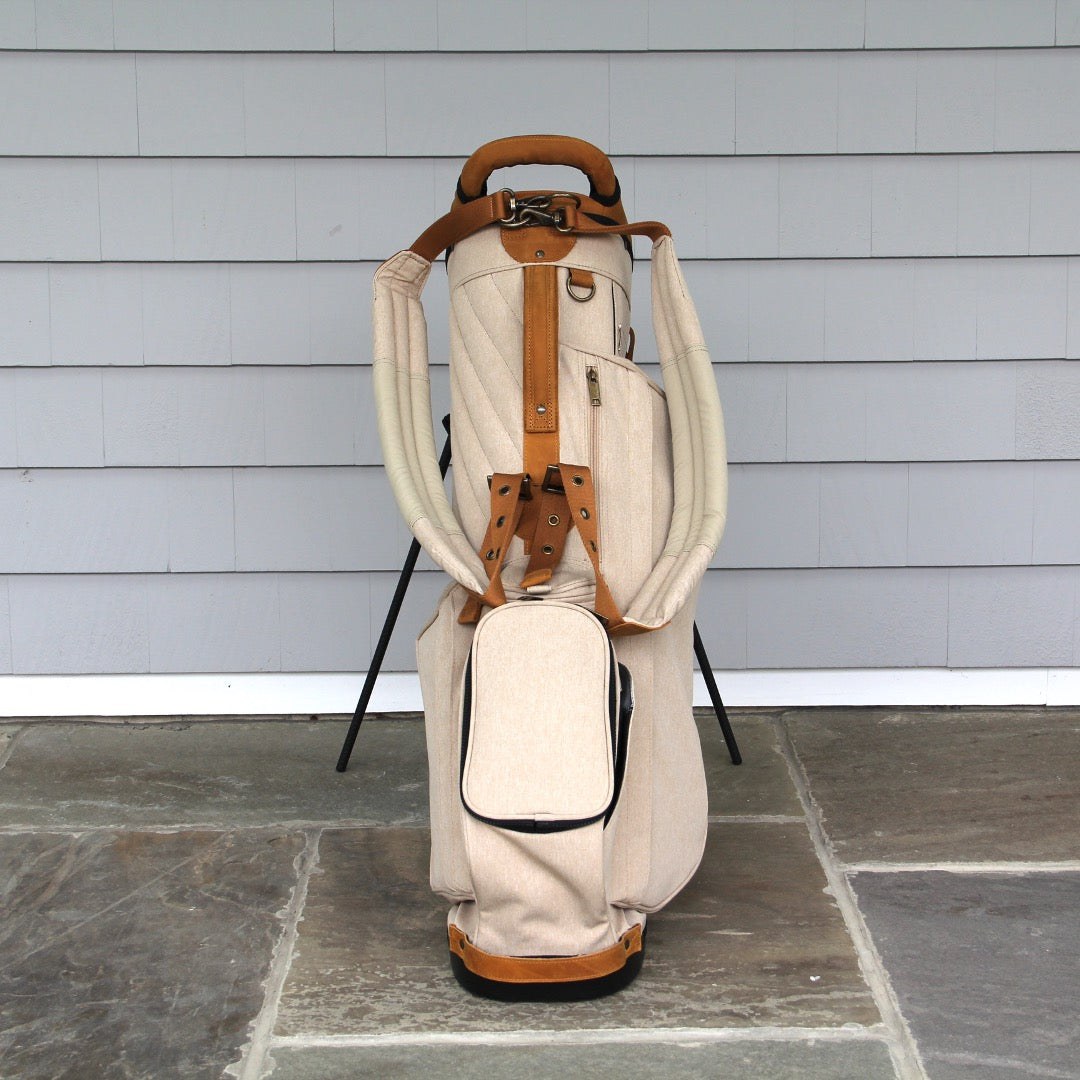
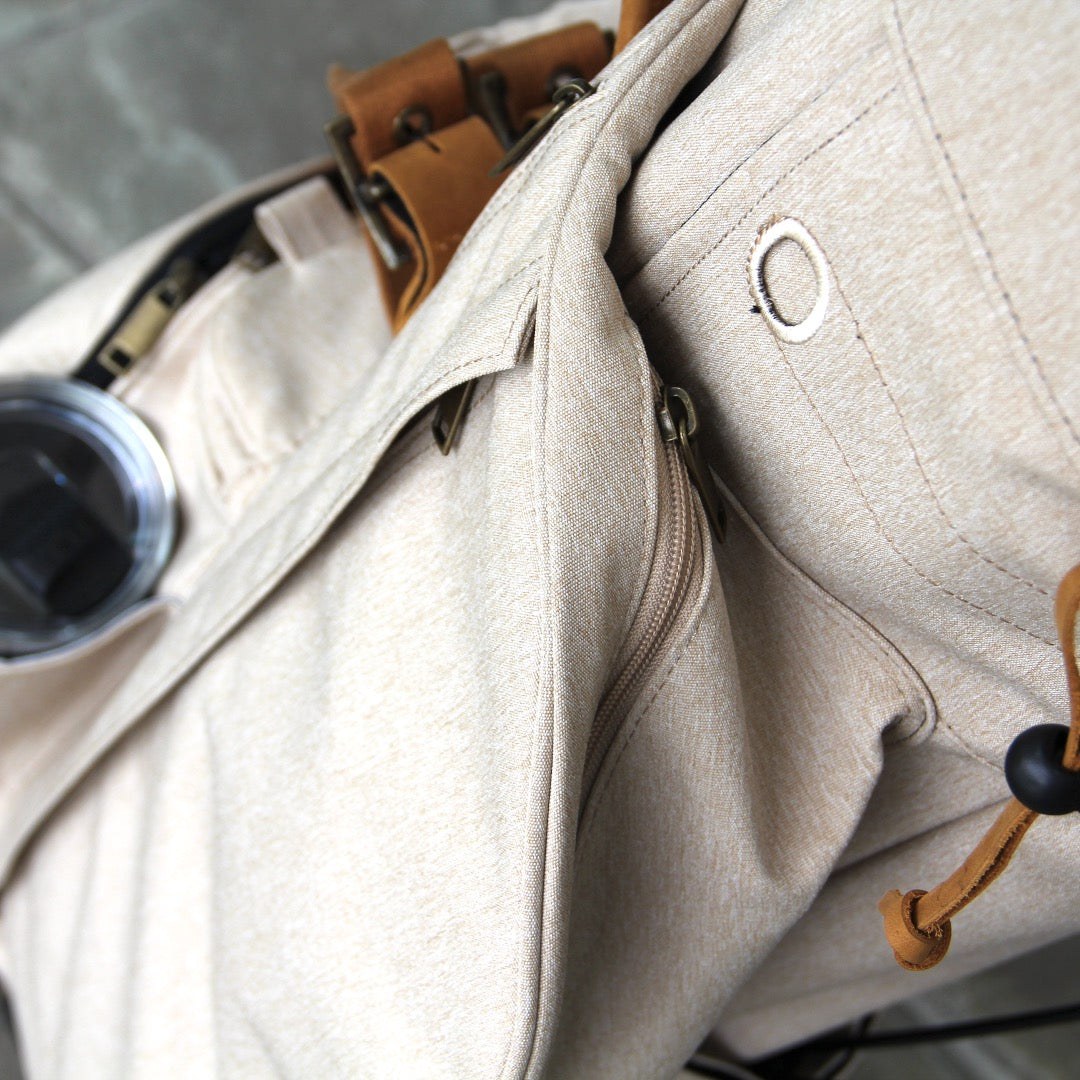
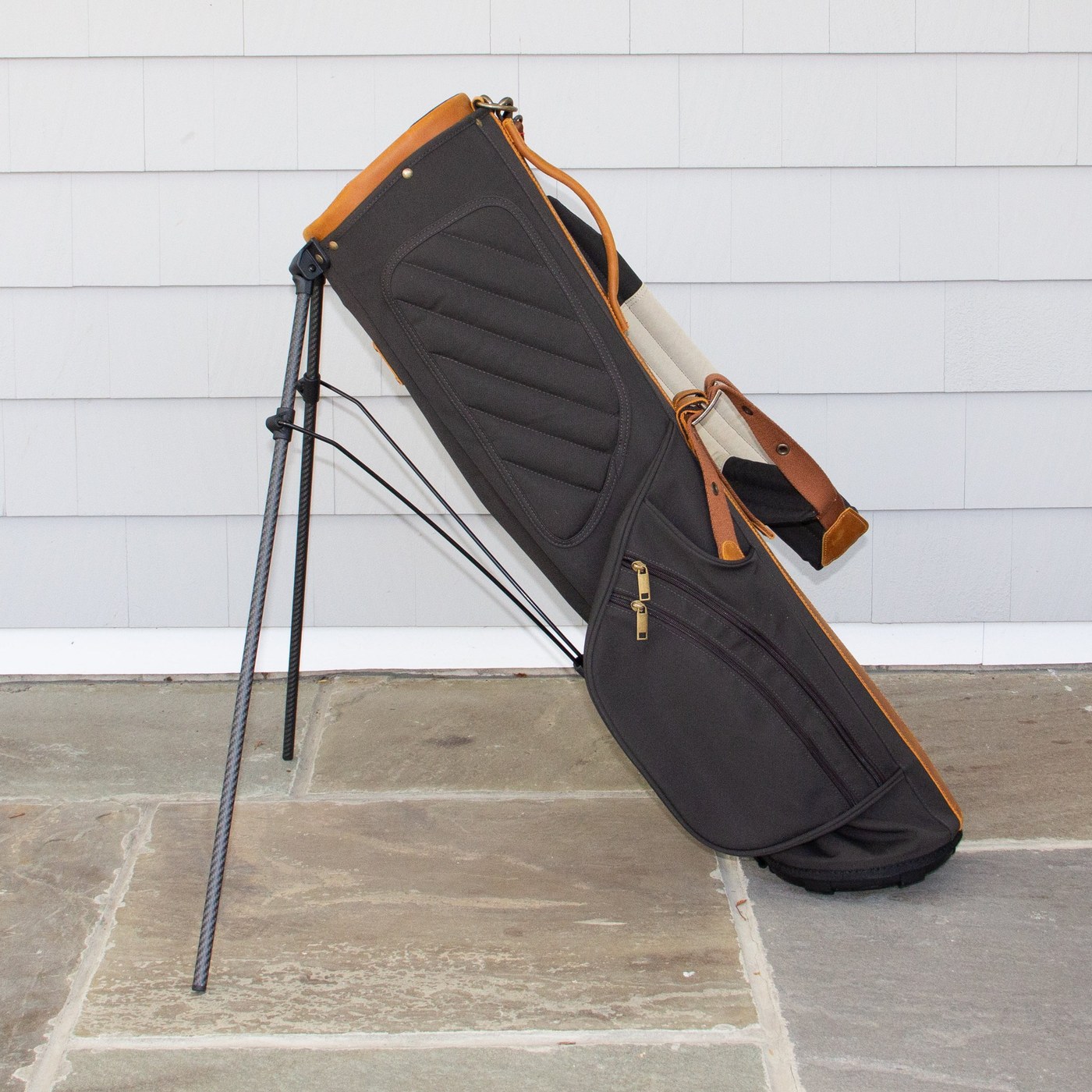
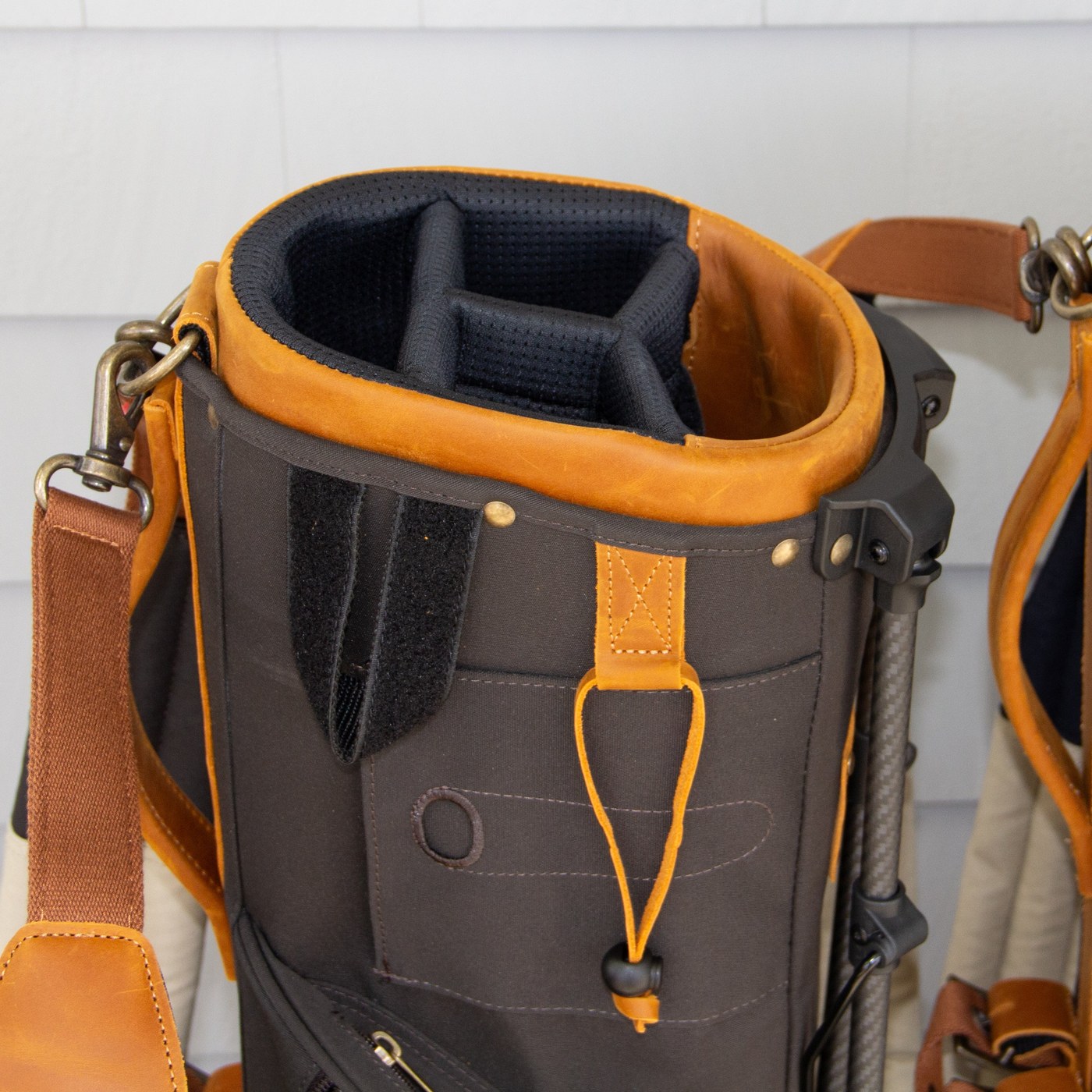
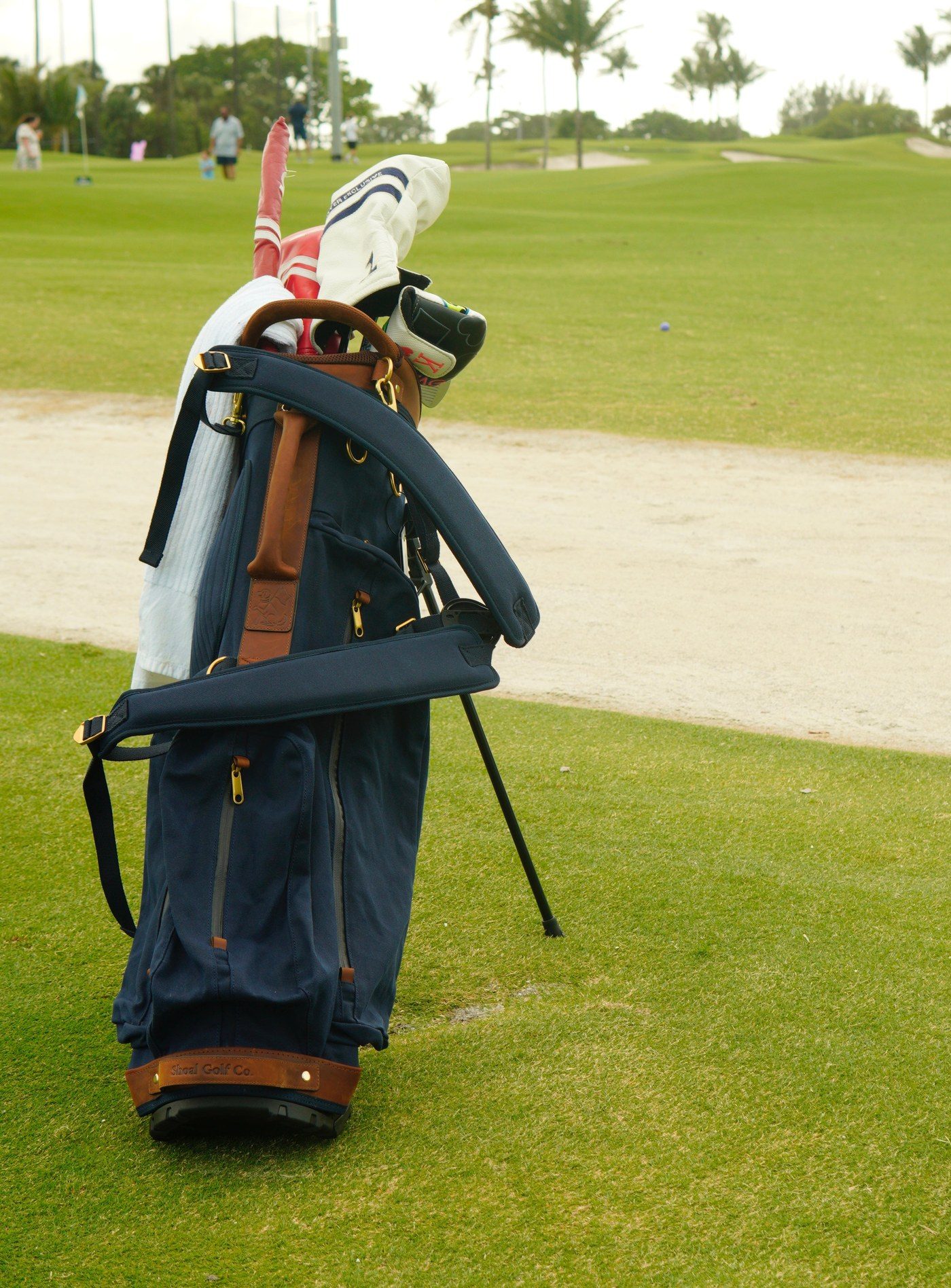
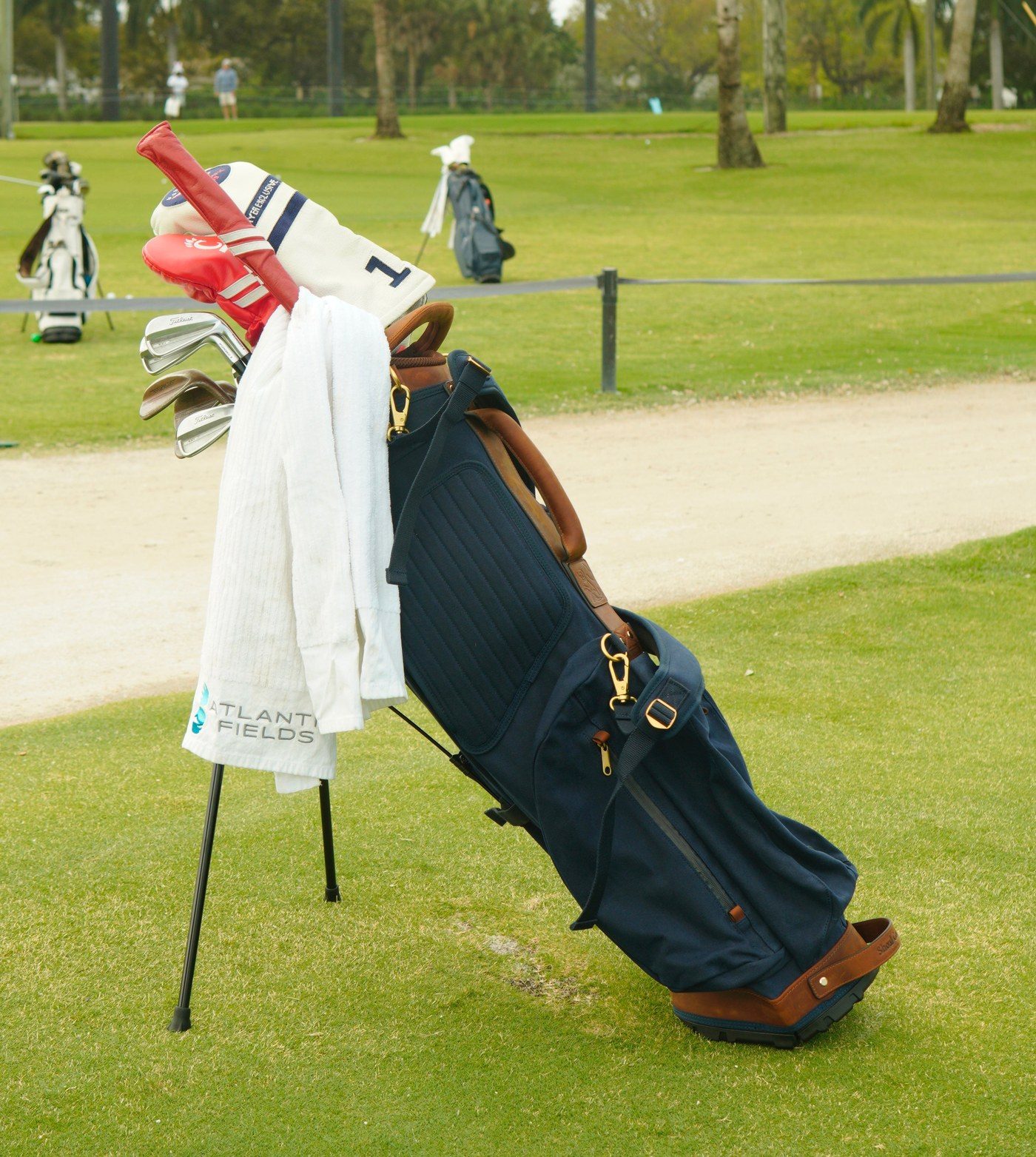
ONE BAG · TEN COLOURS · PREORDERShoal builds a single model and opens ordering in windows. These are three of the ten colourways, and which you can have depends on when you are reading.
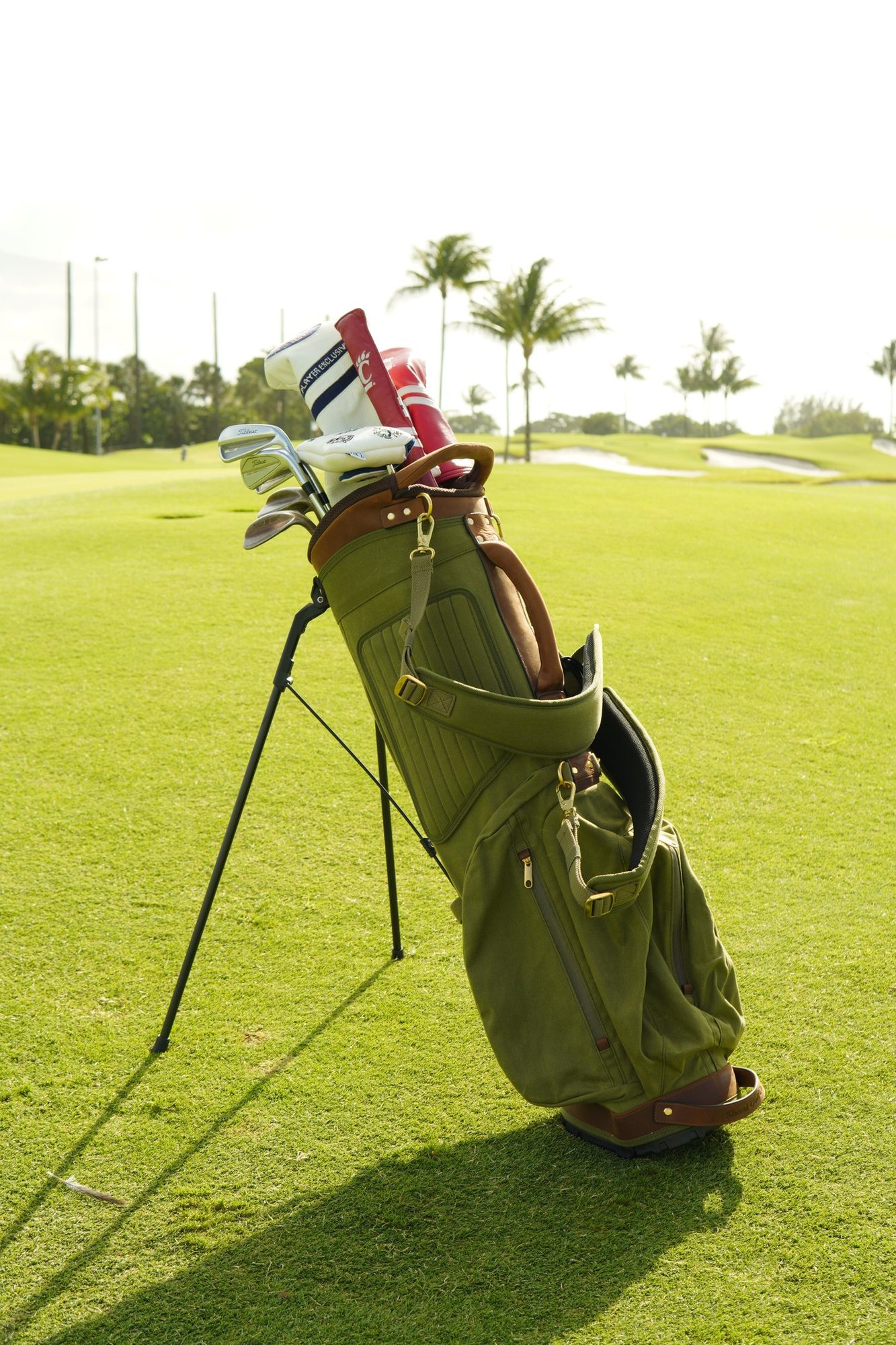
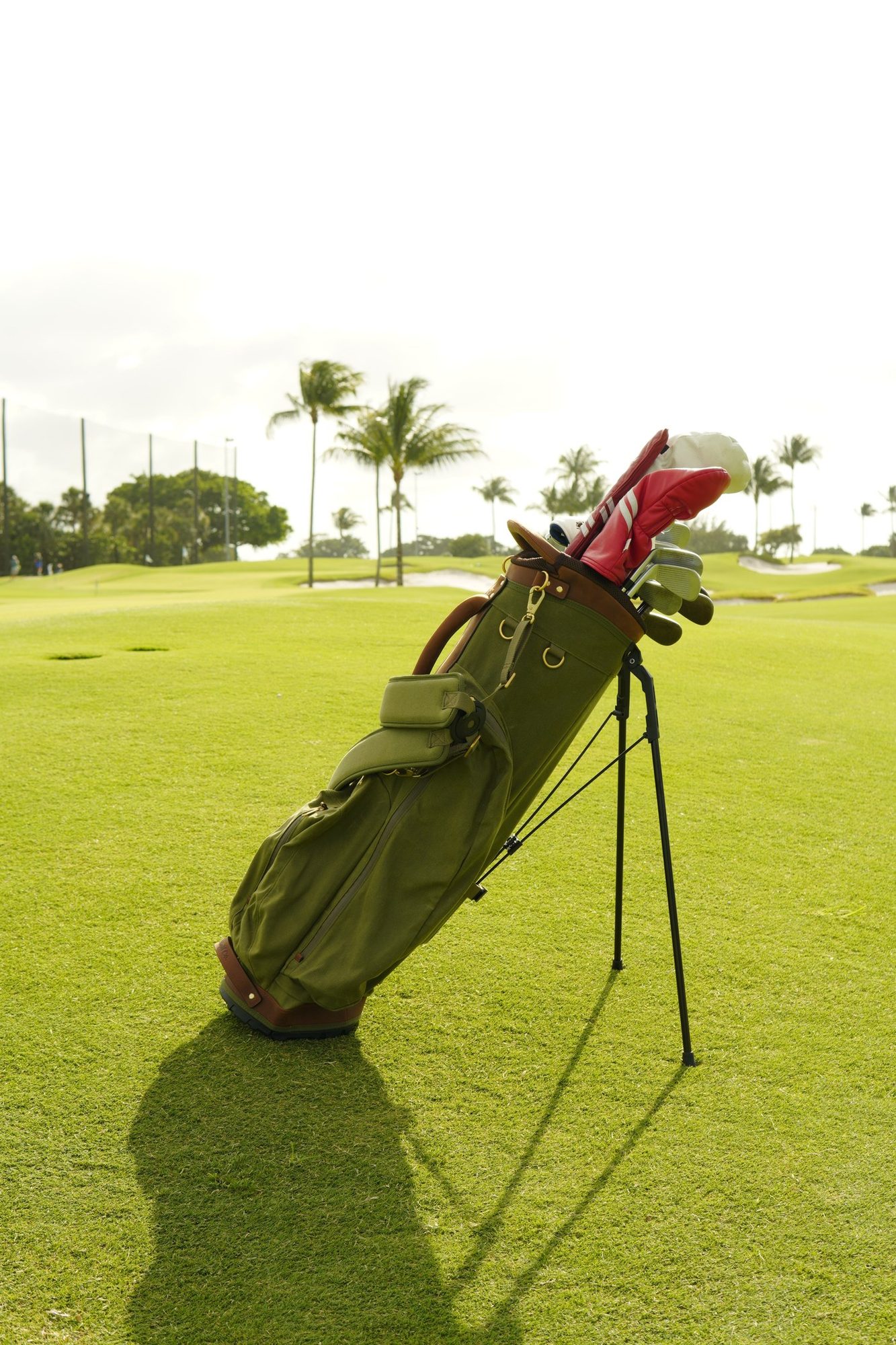
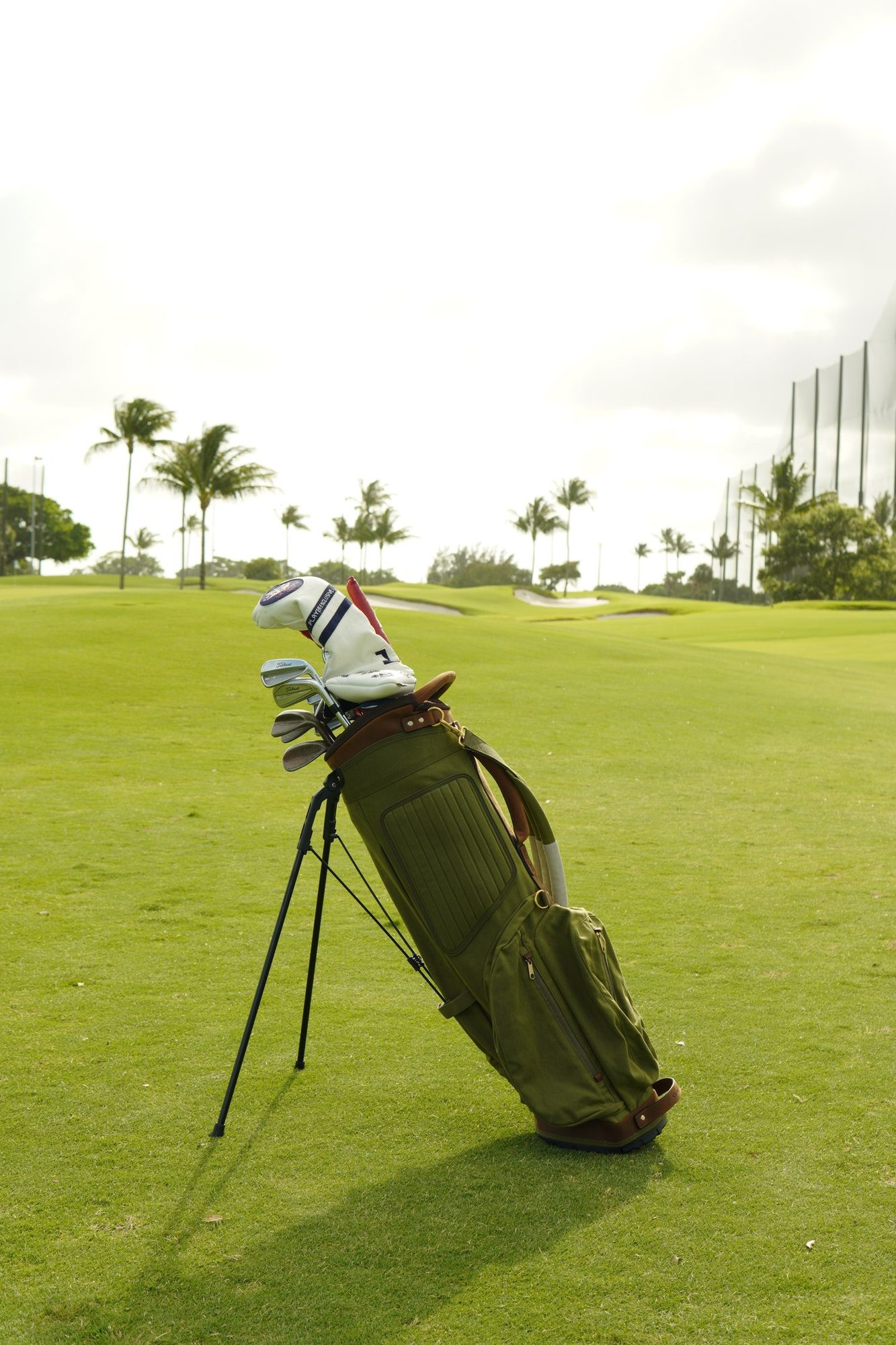
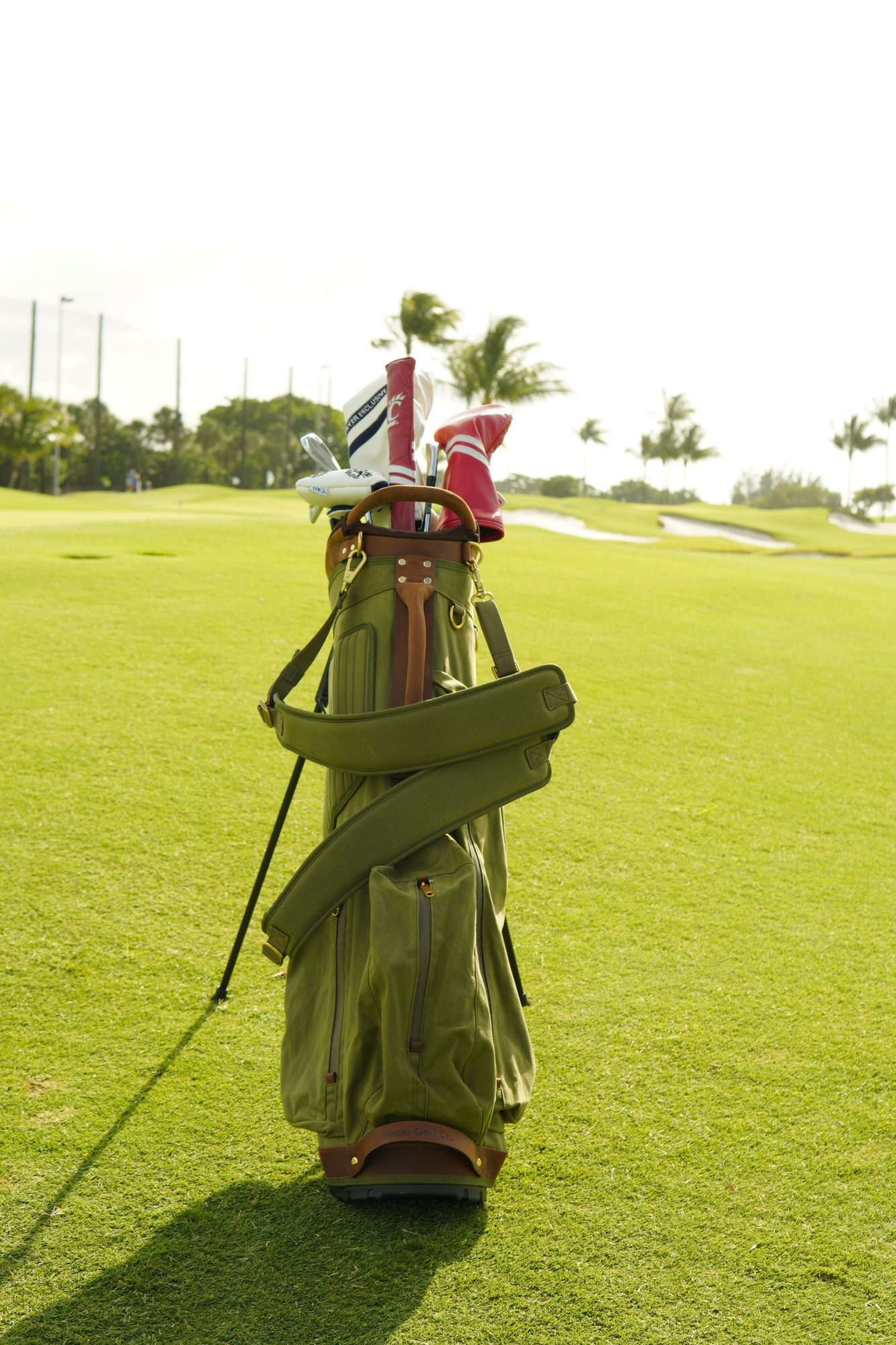
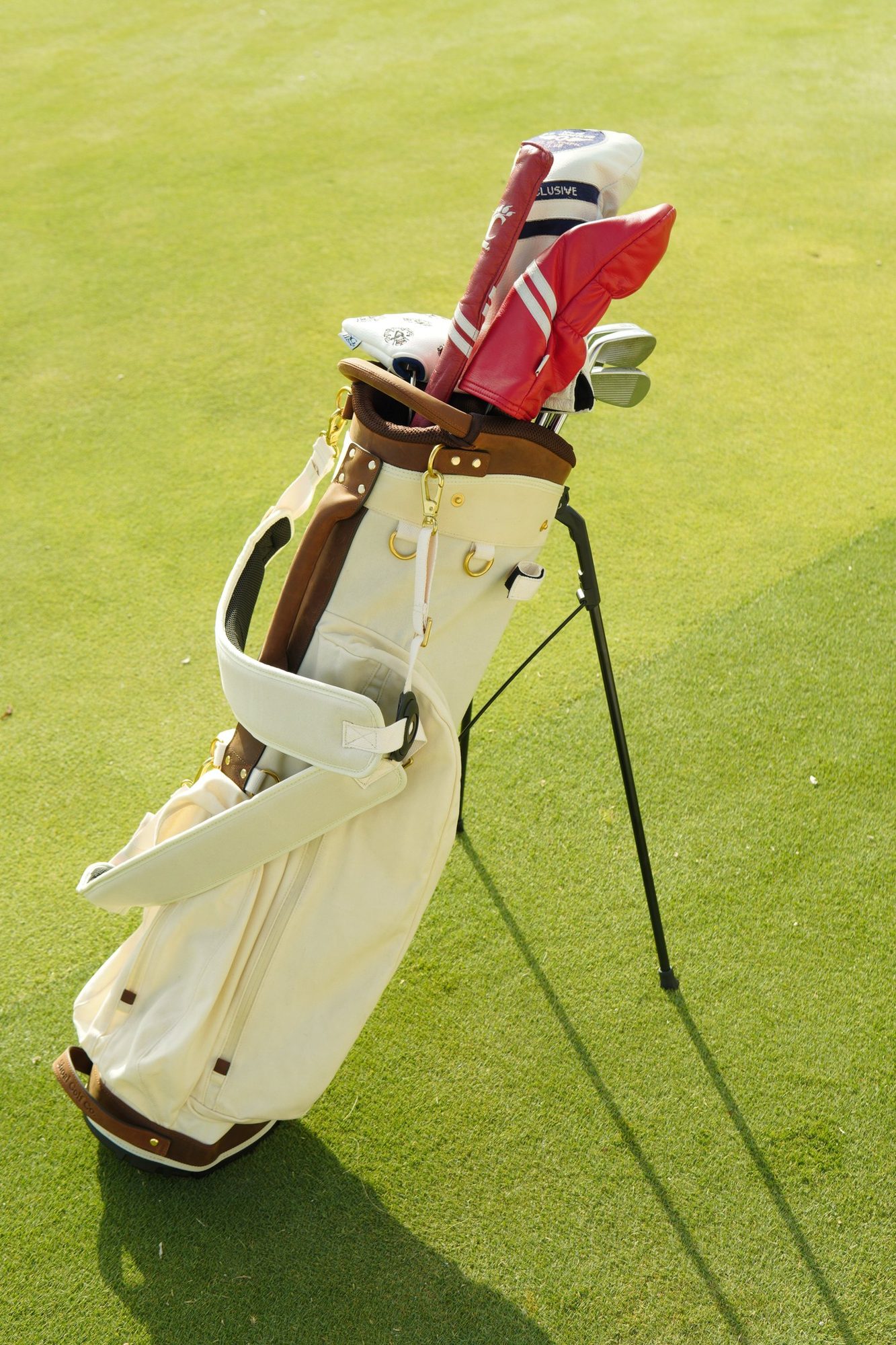
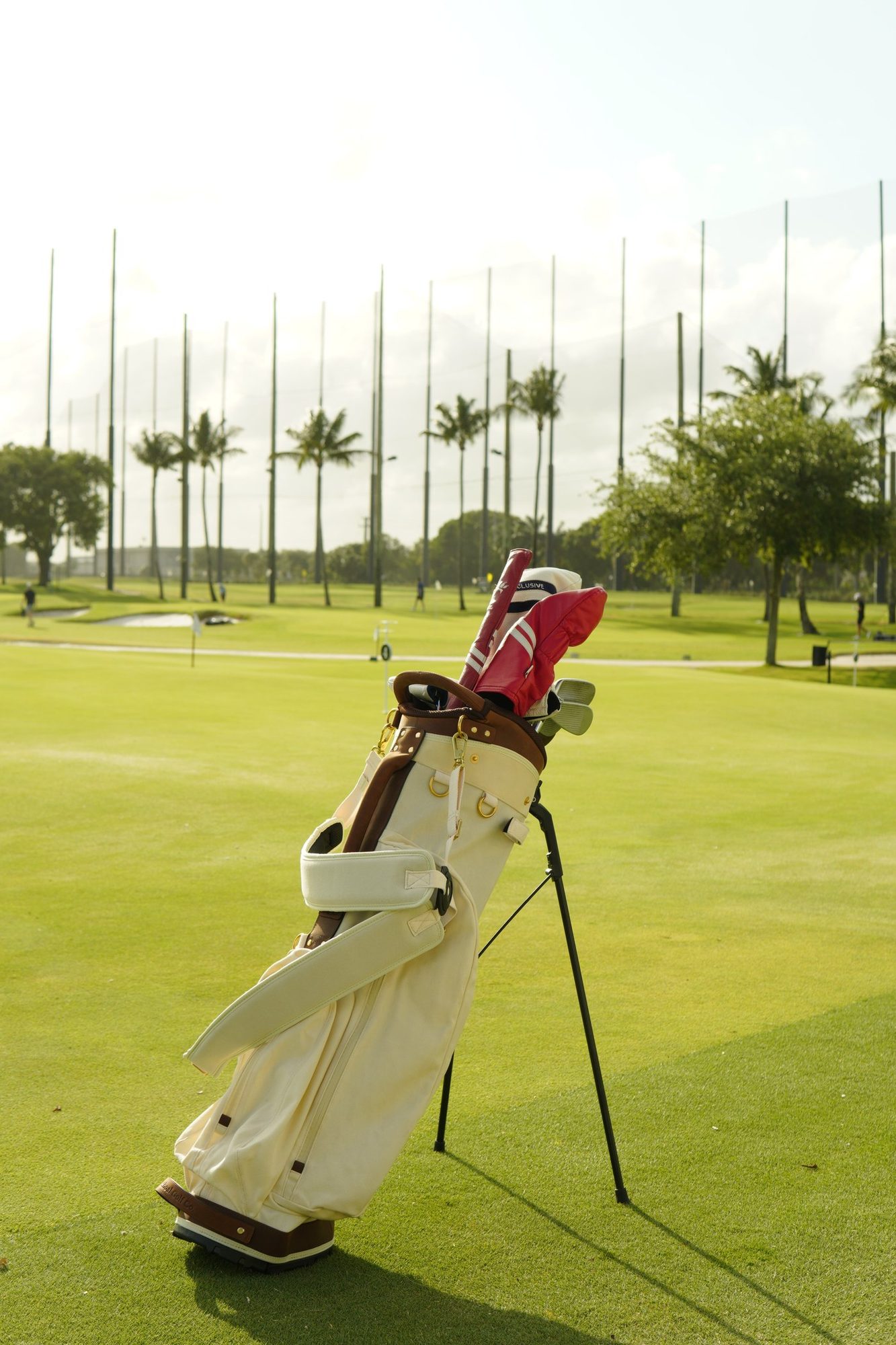
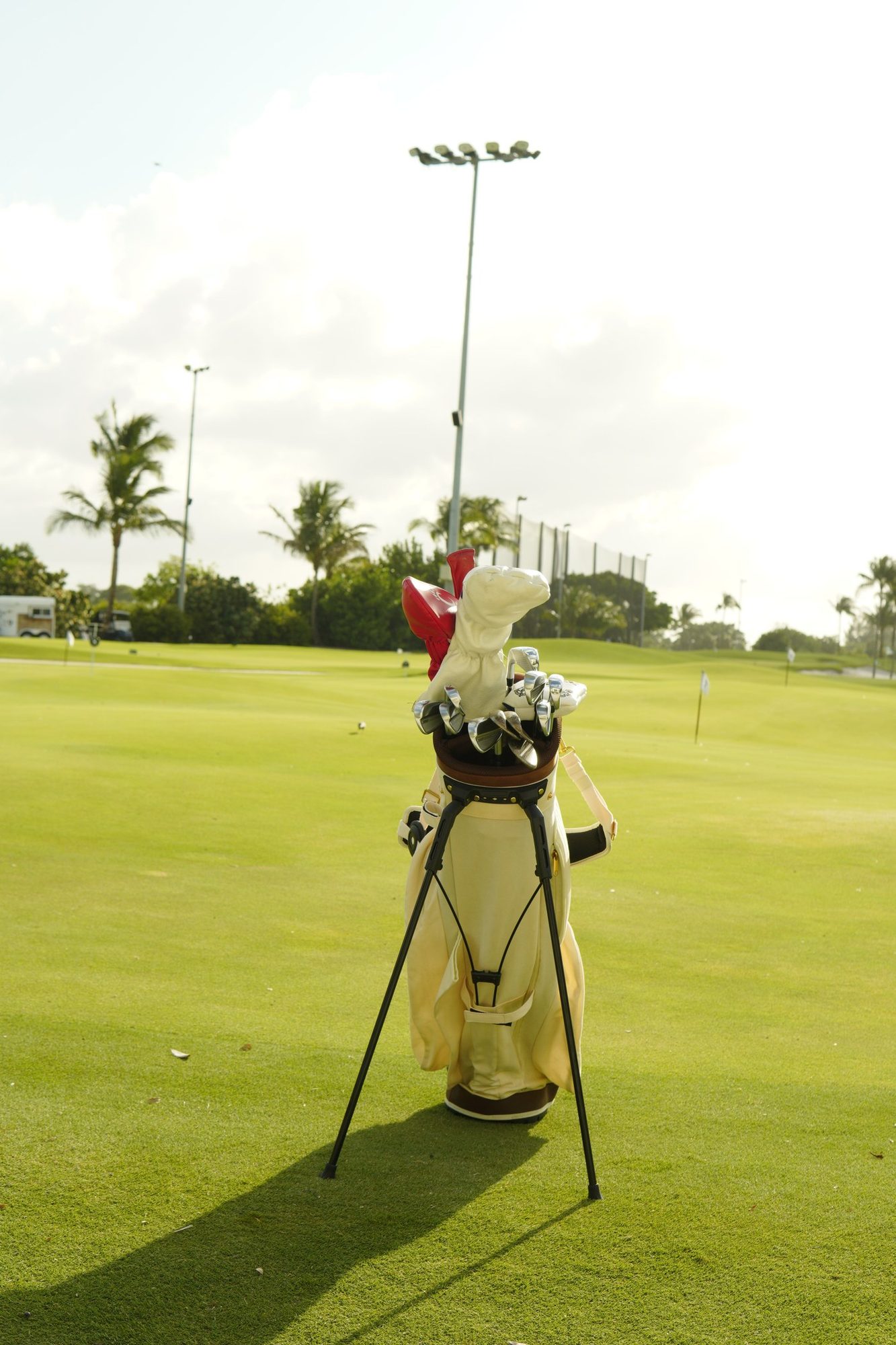
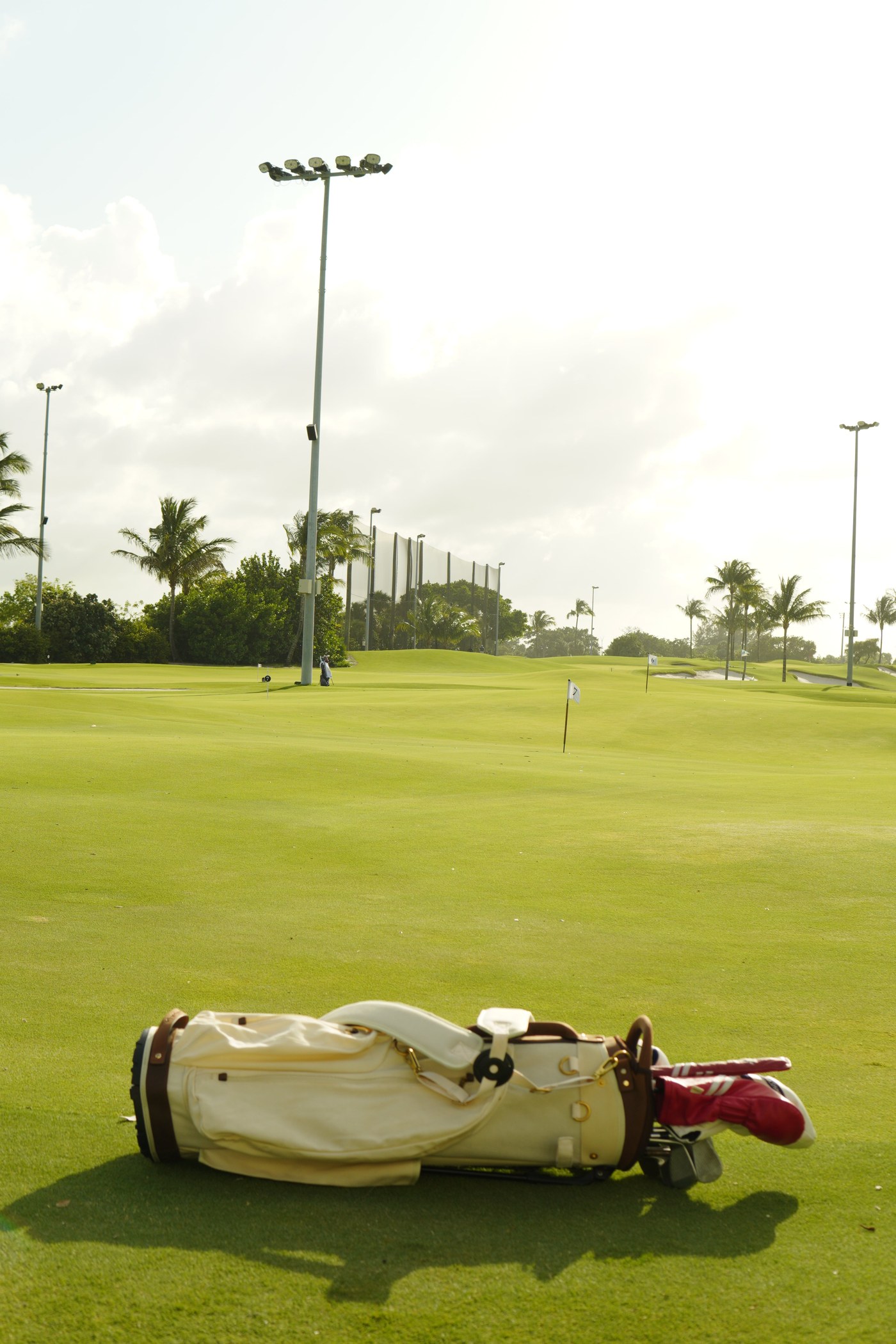
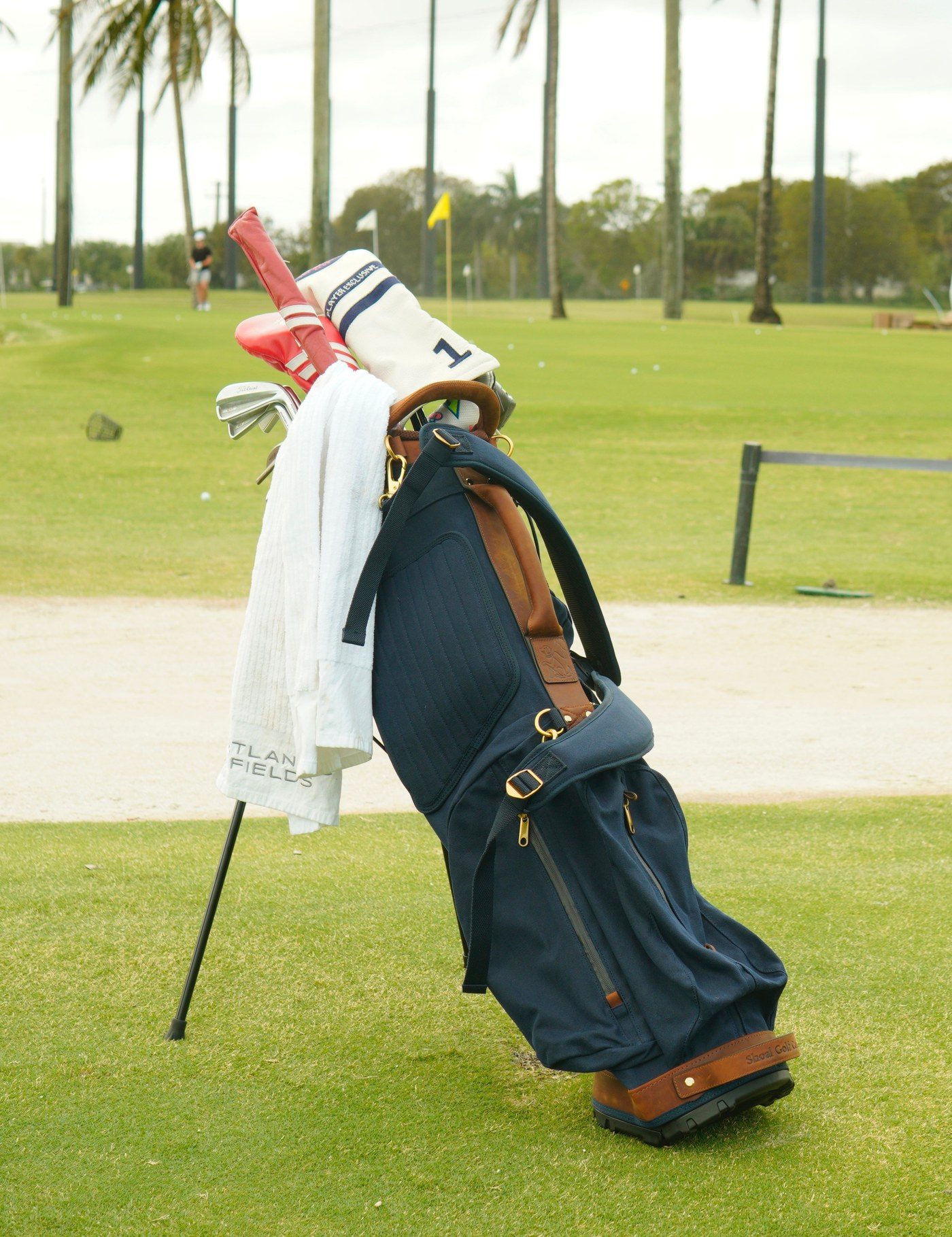
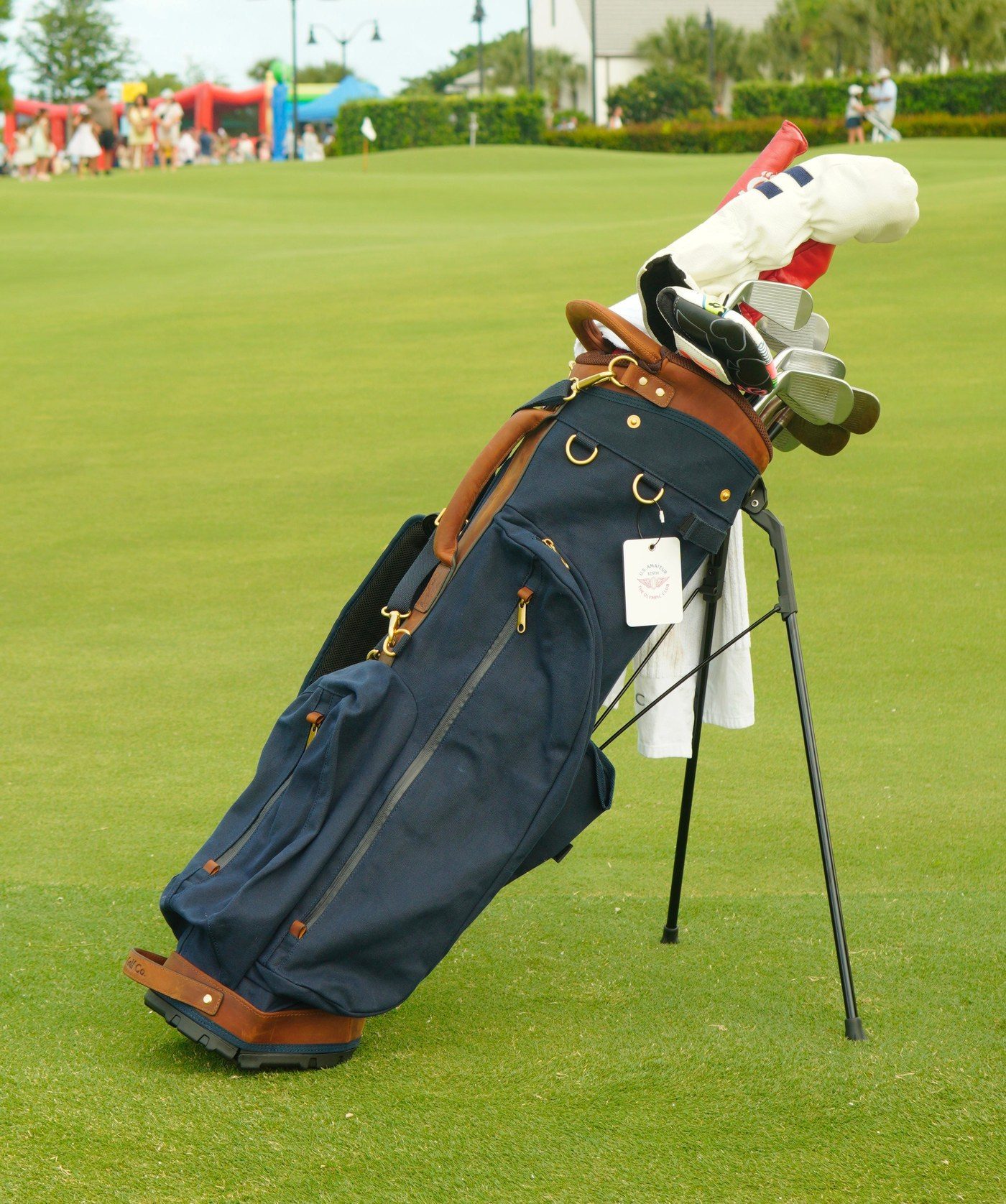
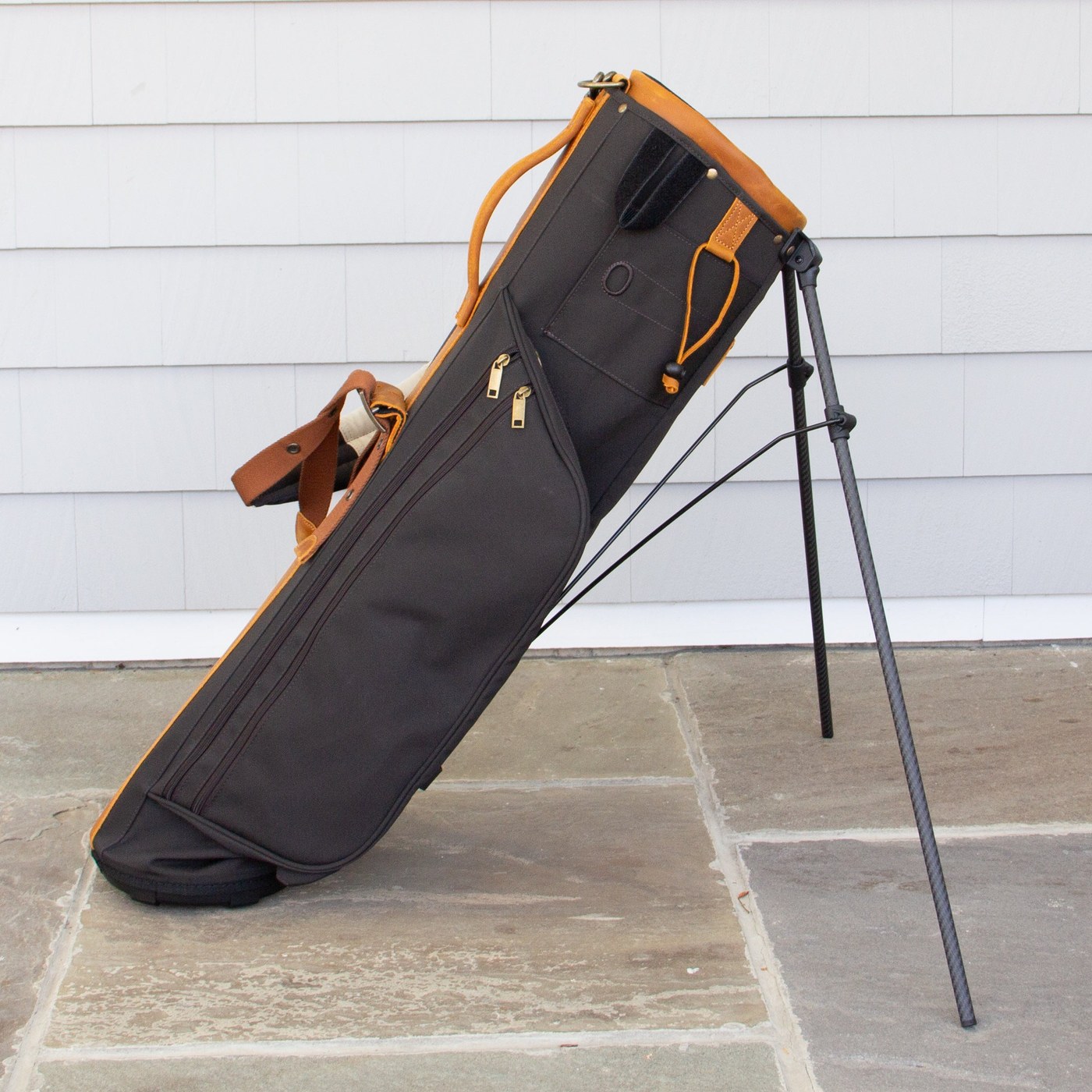
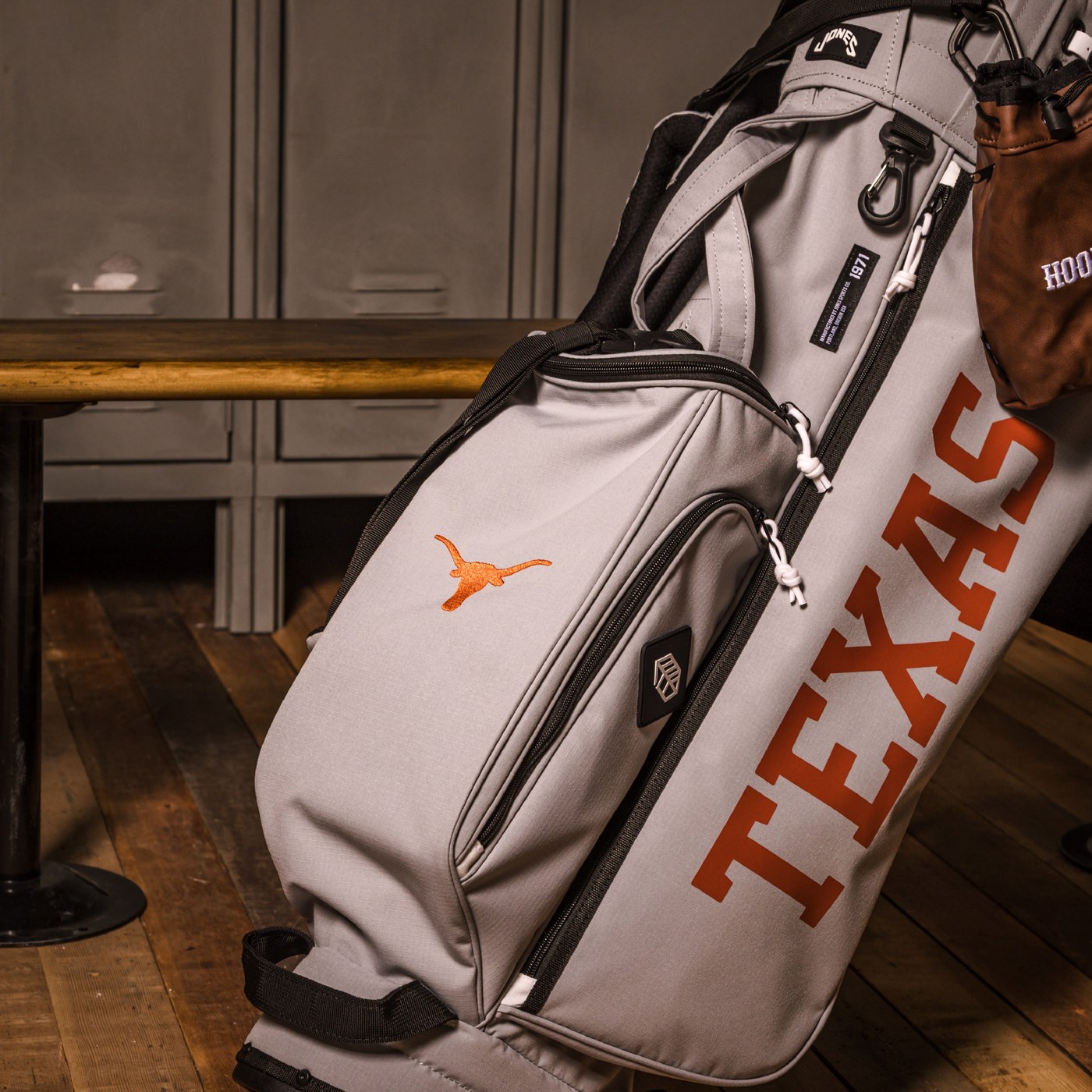
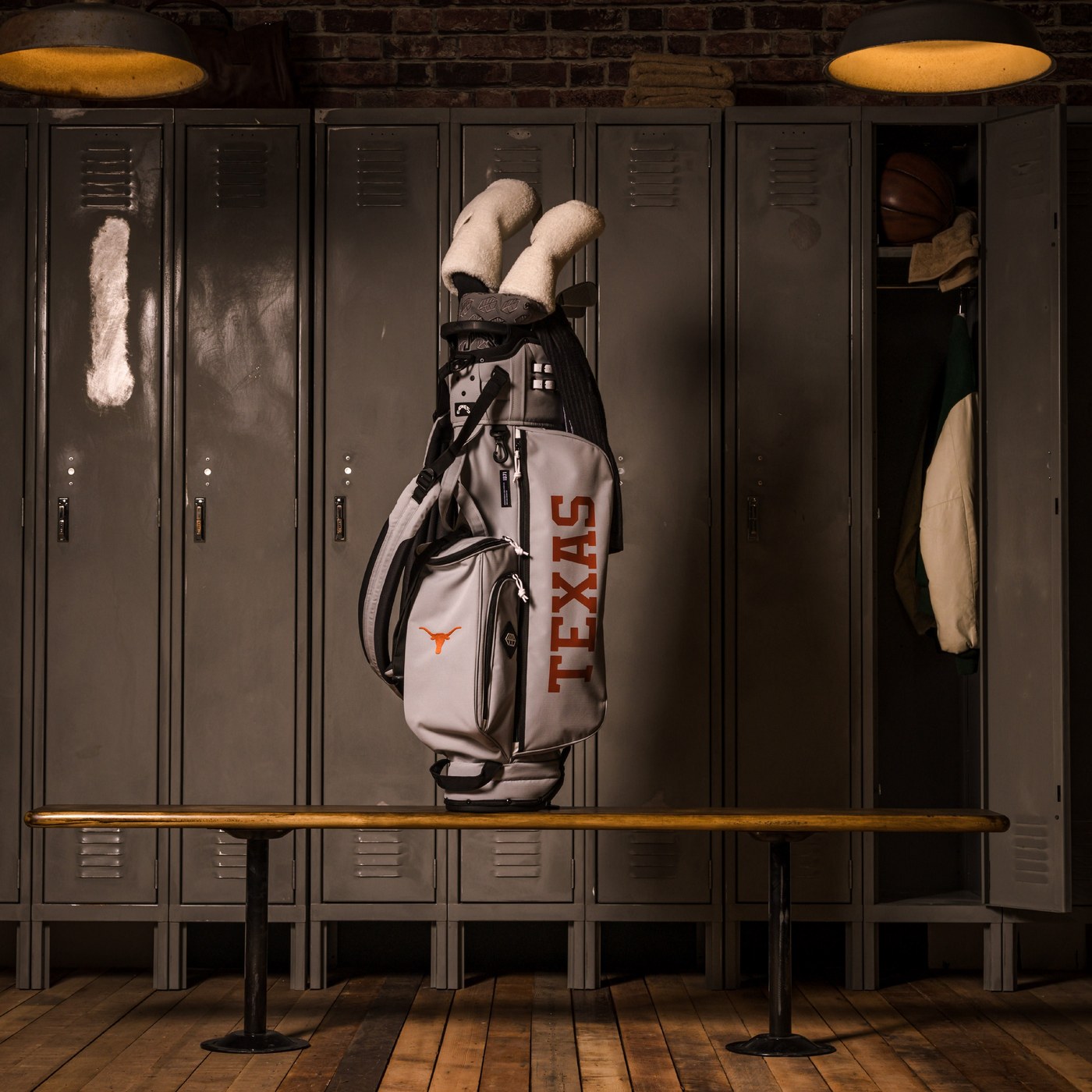
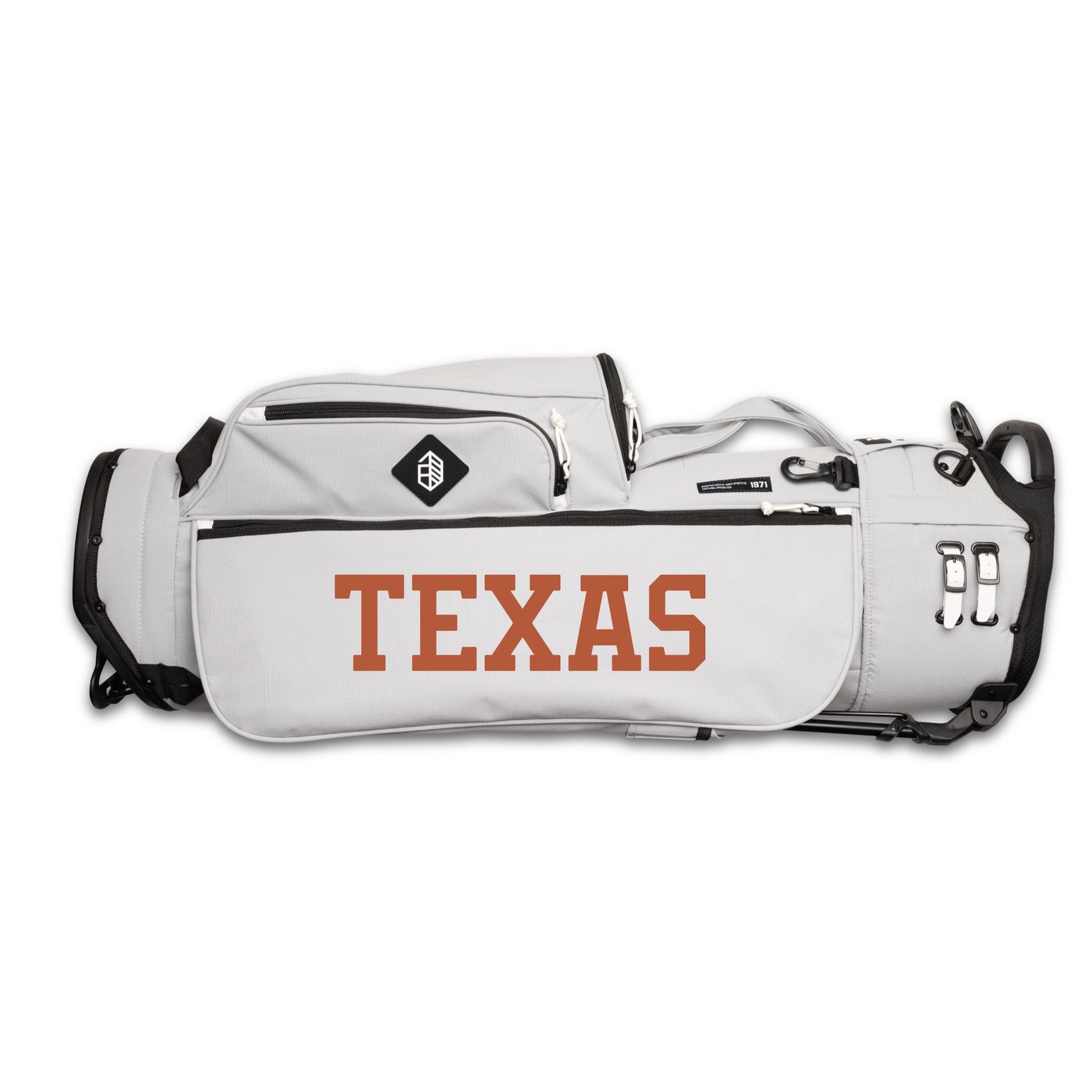
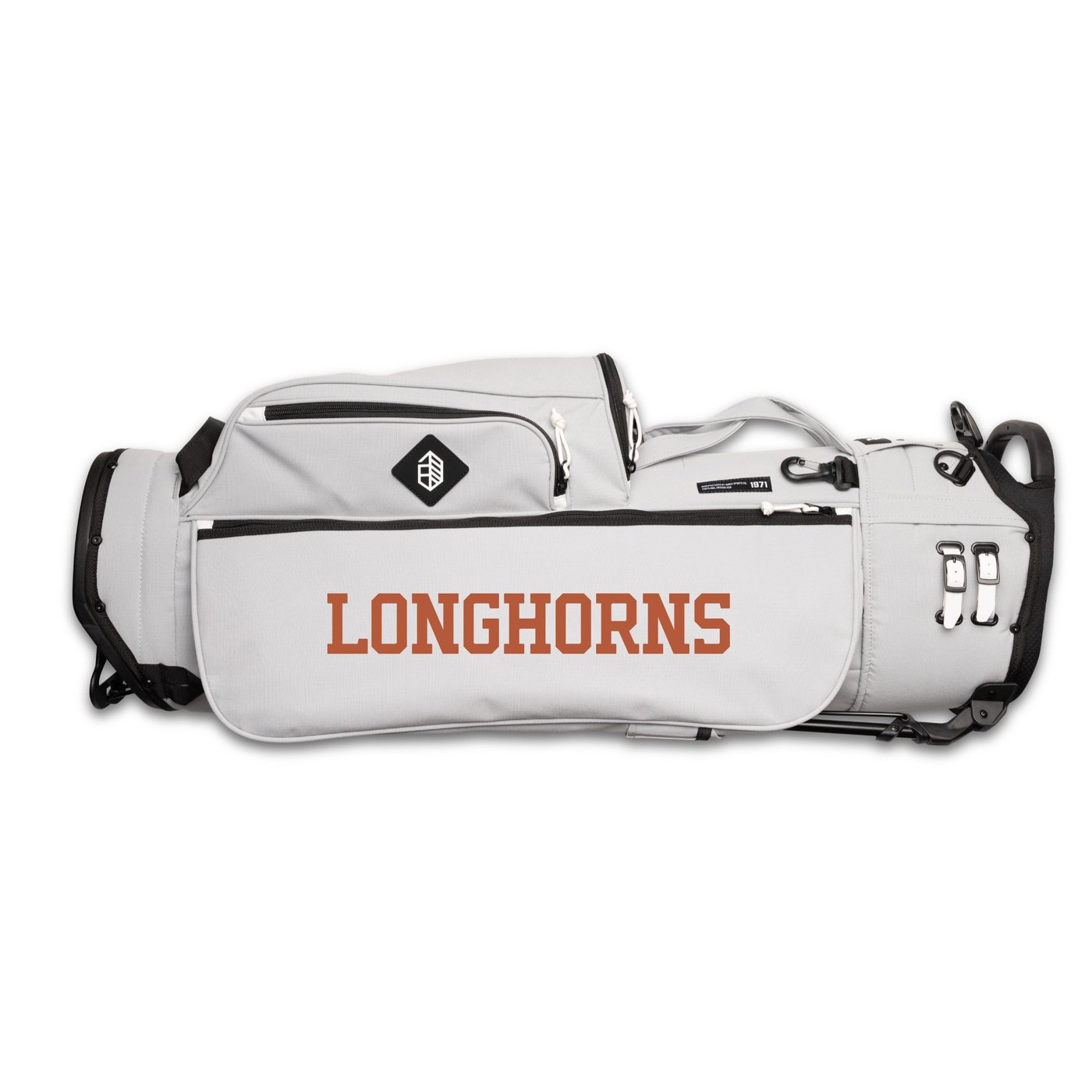
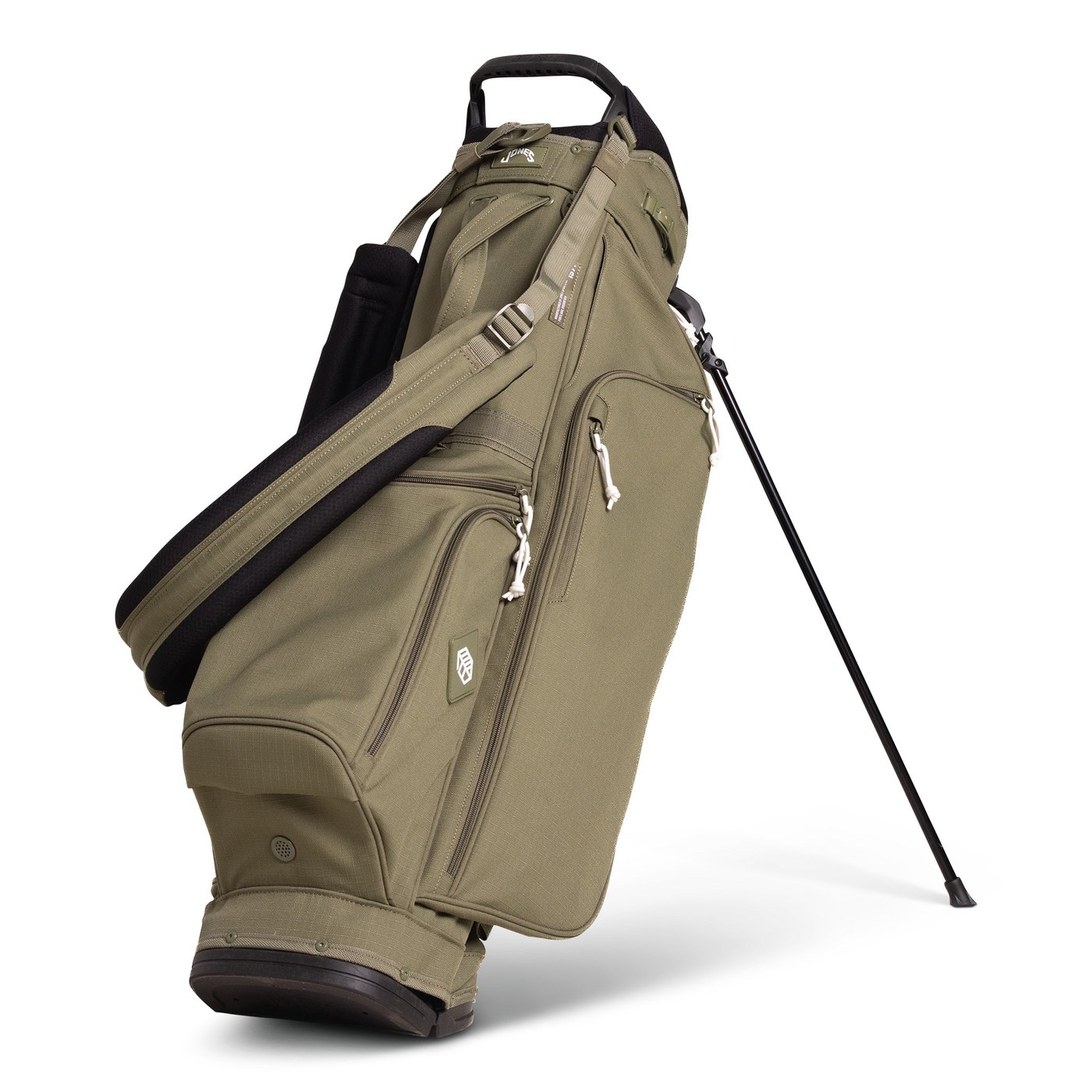
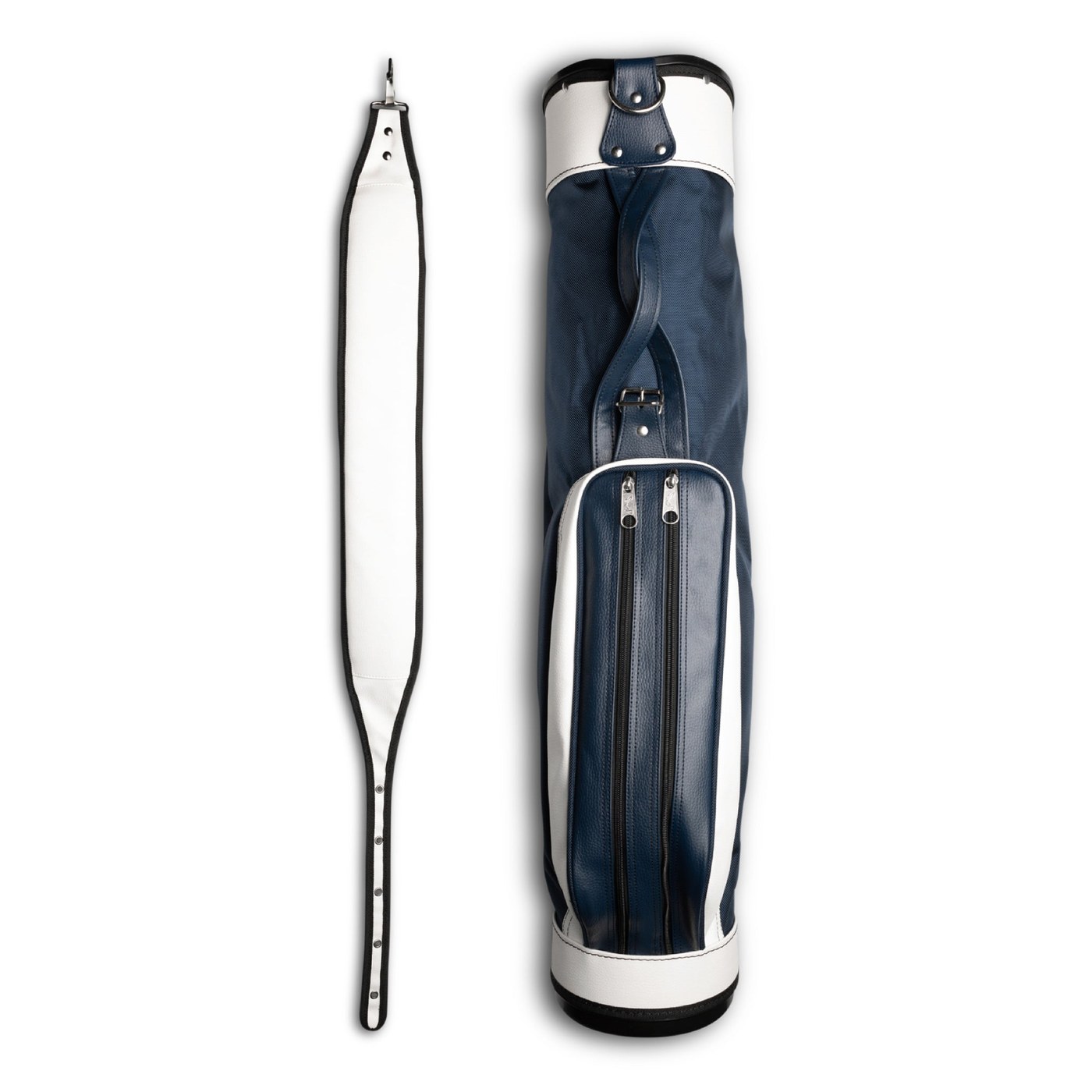
PORTLAND, SINCE 1971 · IN STOCKJones runs the oldest manufacturing operation of the three, and it is the only one here you can order from this afternoon. These three cover two hundred and twenty-five dollars of range.
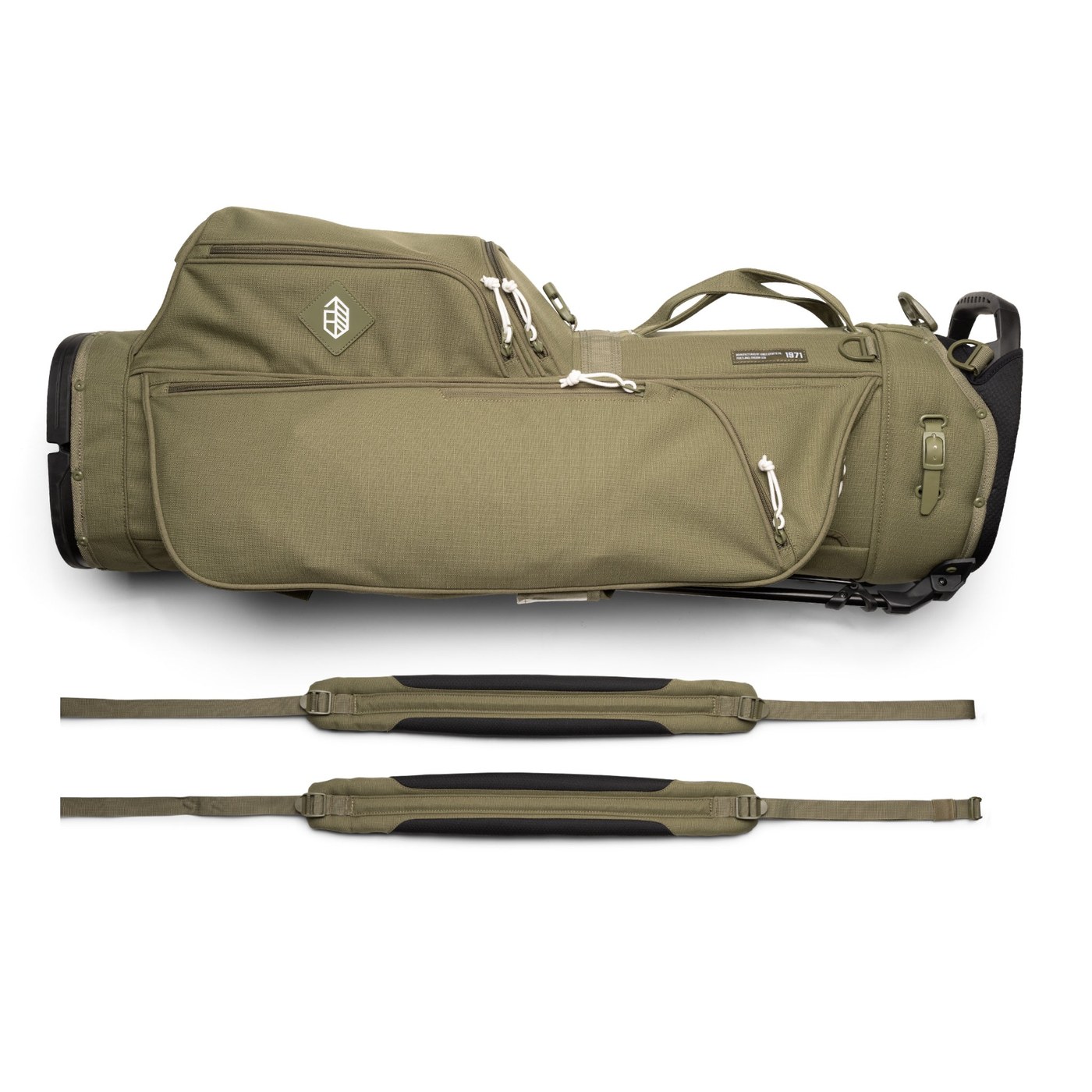
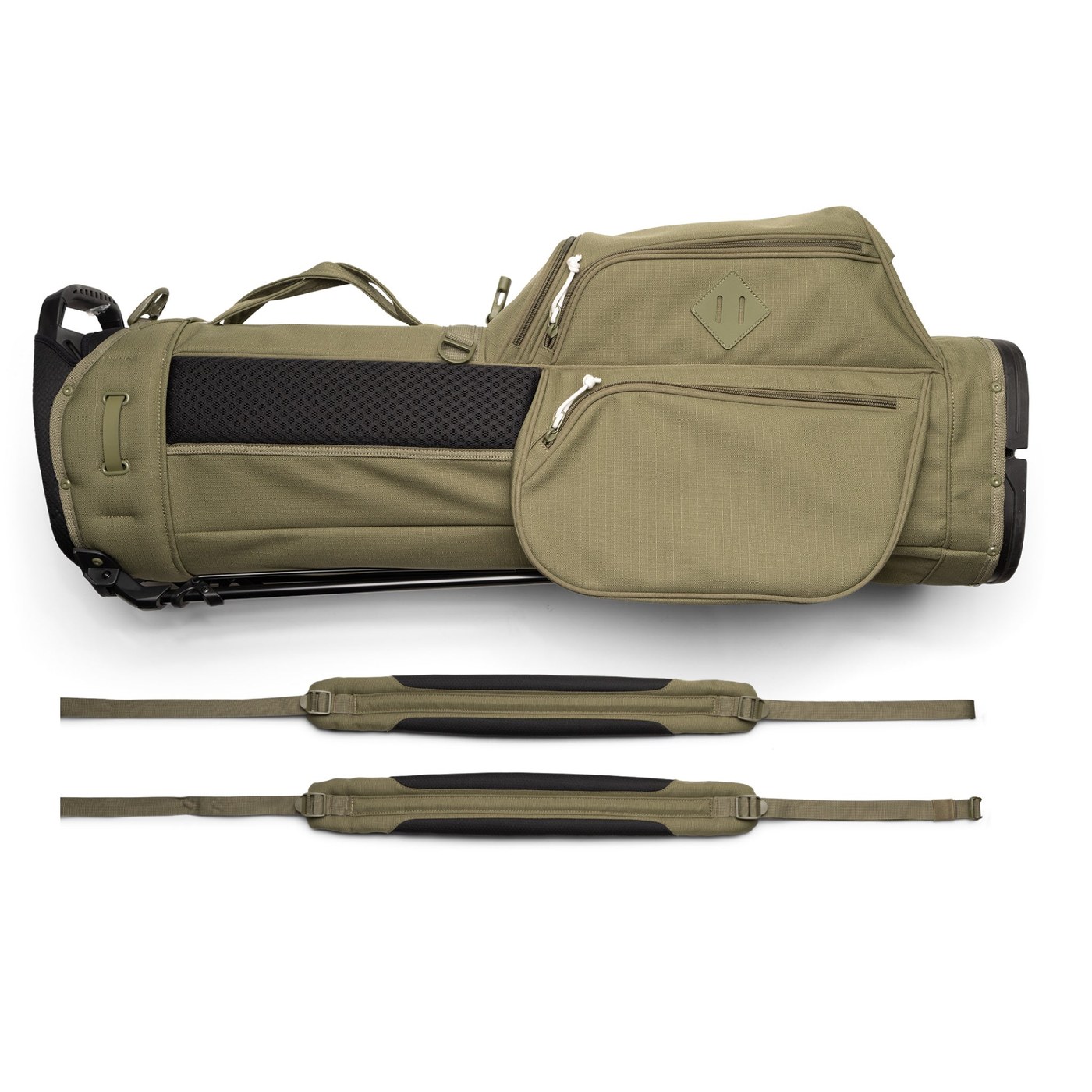
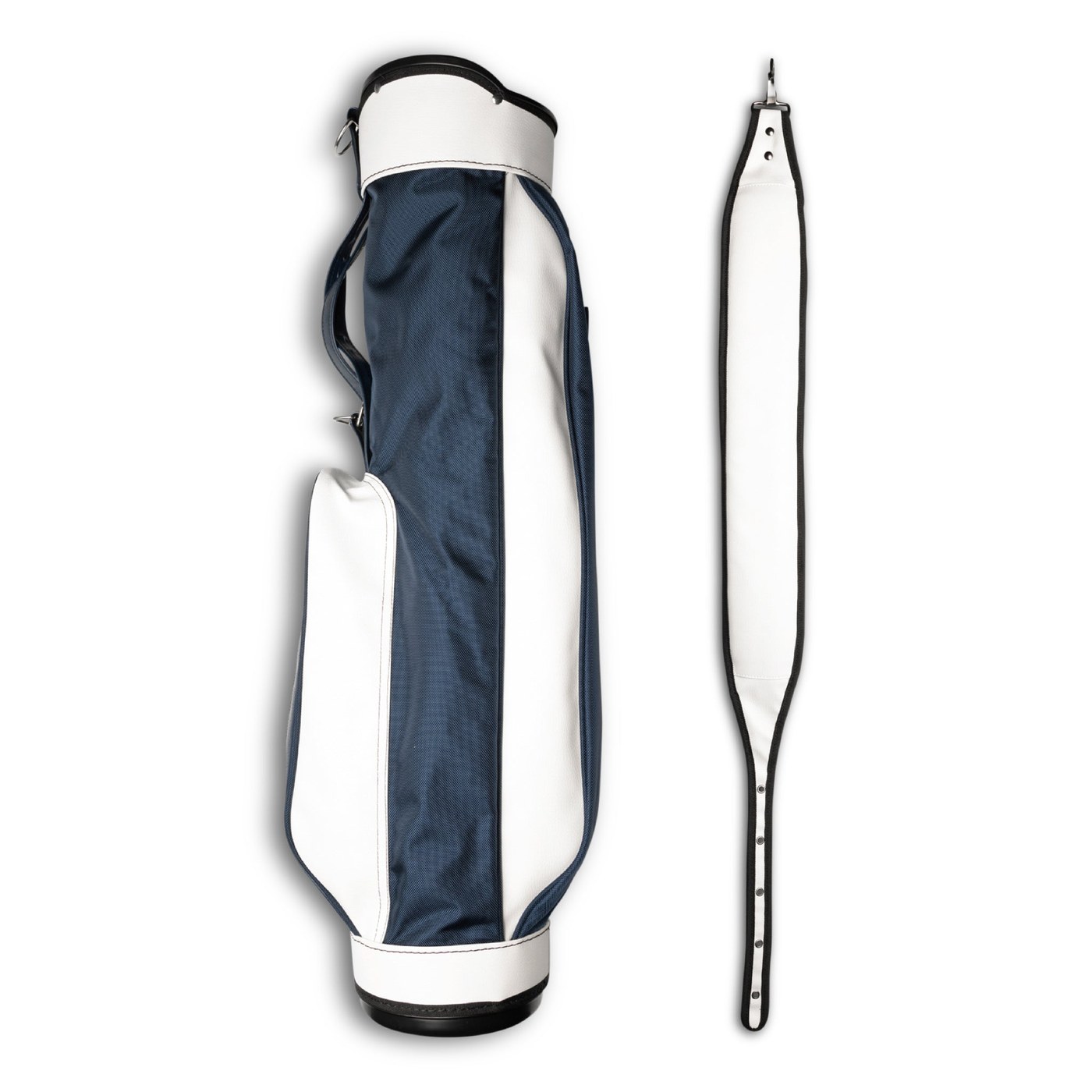
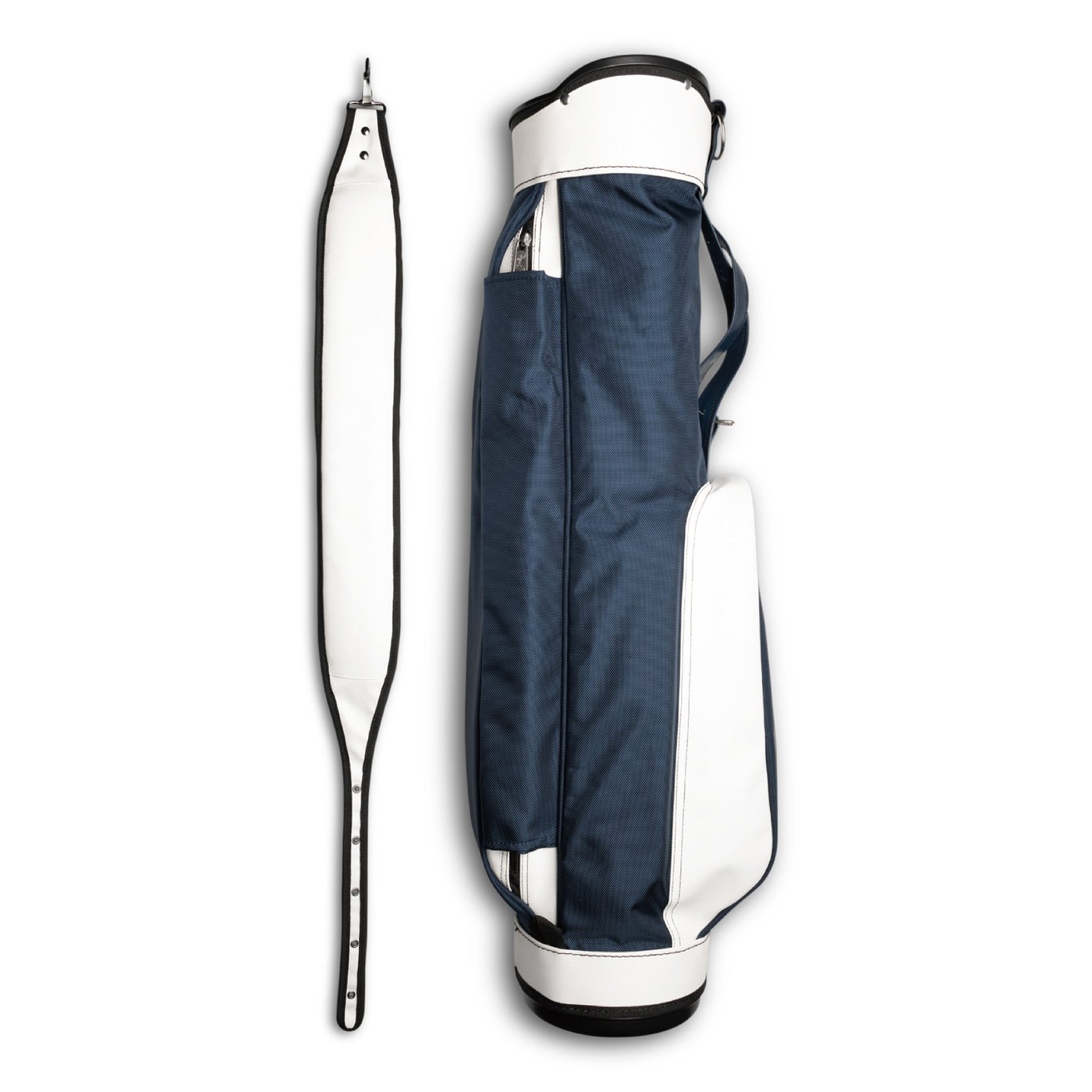
MATERIALThe gap between a two-hundred-dollar bag and a five-hundred-dollar one is not pockets. It is what the panels are made of and how the load is carried.
Mainstream stand bags are built from printed polyester over a moulded frame, with plastic hardware and a bonded strap. They are light, they are weatherproof, and they are finished. Nothing about them improves.
Canvas and leather go the other way. Shapland trims the Rye in top-grain leather and hangs it on antique brass, the two materials in a golf bag that look better after a season than they did in the box. Shoal’s canvas does the same thing more quietly. Both will mark, and the marks are the point.
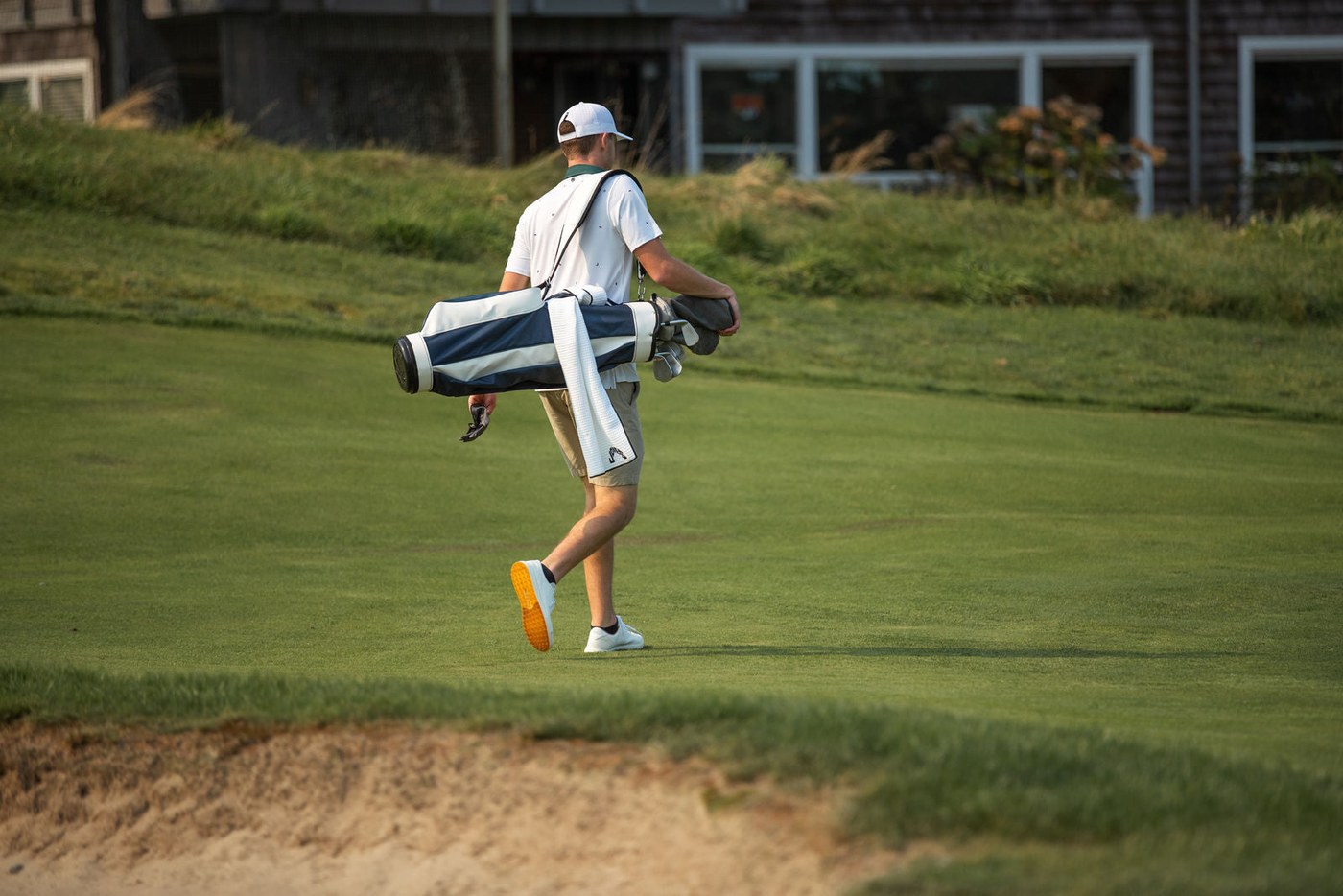
The second difference is the strap. Jones built its reputation on a single strap at a time when the industry had decided double straps were settled, and the Trouper still carries that geometry — the bag sits diagonally across the back and swings clear of the legs when you walk. Shapland engineers around the same problem from the other direction, with a double harness it describes as the most comfortable carry it can build. Neither is universally right. Both are a decision, which is more than most bags contain.
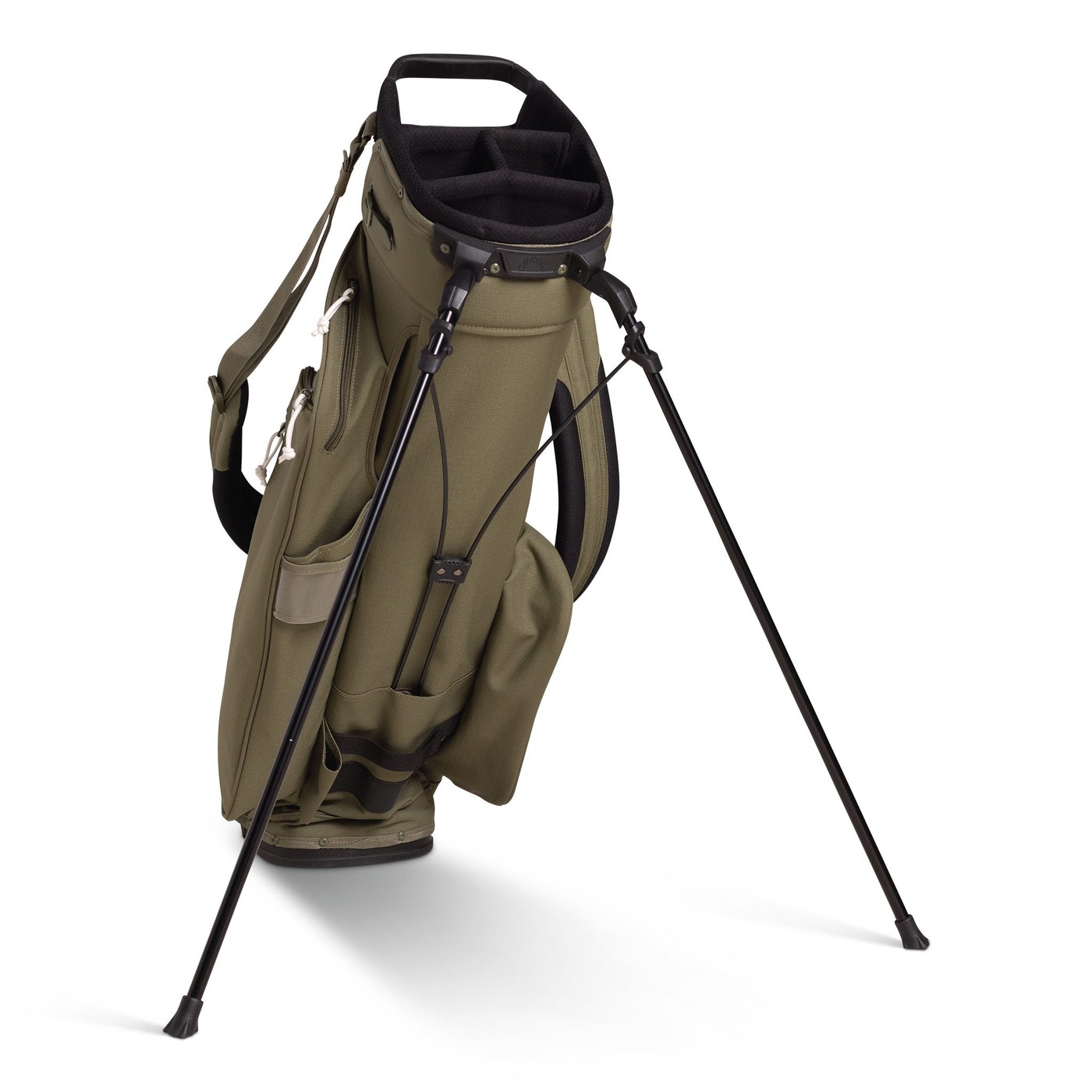
Then there is the frame. A carry bag lives or dies on its stand mechanism, and all three of these use metal legs with a serviceable pivot. Shapland sells replacement legs on its own site for twenty dollars in aluminium and thirty-five in carbon fibre, which tells you what it expects the bag to outlast.
The last thing the money buys is scarcity, and that cuts both ways. A brand making a few hundred bags a year can specify leather and brass because it is not costing a container load. It also means the bag you want is frequently not there. Shapland is sold out across its entire range as this goes up; Shoal sells in windows and tells you the ship date in advance. Only Jones, which has the oldest manufacturing operation of the three, behaves like a shop you can walk into.
None of that makes a mainstream stand bag a bad object. A $230 bag from a large manufacturer is lighter than all three of these, more weatherproof than two of them, and available in your size on a Tuesday. The case for spending more is narrower than the marketing on either side suggests: you are buying materials that age, a frame you can service, and a silhouette that will not look like 2026 in 2031.
AVAILABILITYTwo of the three are not a straightforward add-to-cart, and you should know that before you click.
Shapland is sold out, and that is the reason to read this now. Every bag, every colourway, all five models. But the restock dates are published and they are close. Kantle 3.1 and Sunday 3.1 are both scheduled to finish their next production run in late September — this week, as this goes up. Kantle returns in ten colours including Honey, Burgundy, Chocolate and Forest Green; Sunday in five. The Rye 4.0 is the longer wait: the batch released on 27 August sold out in under twenty-four hours, and the next one is due mid-November in the same colours. The email list on shaplandbags.com is where those go out.
Shoal is preorder. Sage and white are available from the August run, which is shipping now. The next window opens 1 November with bags scheduled to ship 15 December, which makes it a Christmas bag if you order in the autumn and a spring bag if you do not.
Jones is in stock. The Texas Trouper ships today at $410, and the core line sits below it — the Original Jones Bag at $185, the Players Series at $225, the Utility X at $355 and the standard Trouper at $395. If you want to spend four hundred dollars on a bag this afternoon, this is the one you can.
All prices were read from each brand’s own storefront on 22 September 2026 and are in US dollars.
Sooner than the sold-out banner suggests. Shapland has published dates for its next production runs: the Kantle 3.1 and the Sunday 3.1 are both scheduled to finish in late September 2026, and the Rye 4.0 is due mid-November 2026. The 27 August run of Rye bags sold out in under twenty-four hours, so the mailing list on shaplandbags.com is the practical way to catch the next one.
Shoal sells in preorder windows rather than holding stock. The August run is shipping now, with sage and white still available. The next window opens 1 November 2026 and those bags are scheduled to ship 15 December 2026.
Jones. The Texas Trouper is in stock at $410, and the rest of the line sits below it — the Original Jones Bag at $185, the Players Series at $225, the Utility X at $355 and the standard Trouper at $395.
Materials and run size. At this level the panels are canvas and the trim is top-grain leather over brass hardware rather than printed polyester and moulded plastic, and the makers build a few hundred units a year rather than a container load. Both choices cost money, and both are why the bags sell out.
Rye Golf Club on the south coast of England, the first course Henry Shapland Colt designed. The brand takes its name from Colt as well; he went on to influence Alister MacKenzie, Donald Ross and Charles Hugh Alison.