Photography courtesy of Wild Spring Dunes
Texas has more golf than almost anywhere in America and almost none of it is like this. The state’s best courses are, overwhelmingly, private: you get on through somebody, or you do not get on. What public golf Texas does well it does as municipal golf, which TGI loves and covers constantly, but nobody has ever flown into DFW for a muni. There has not been a reason to make the trip.
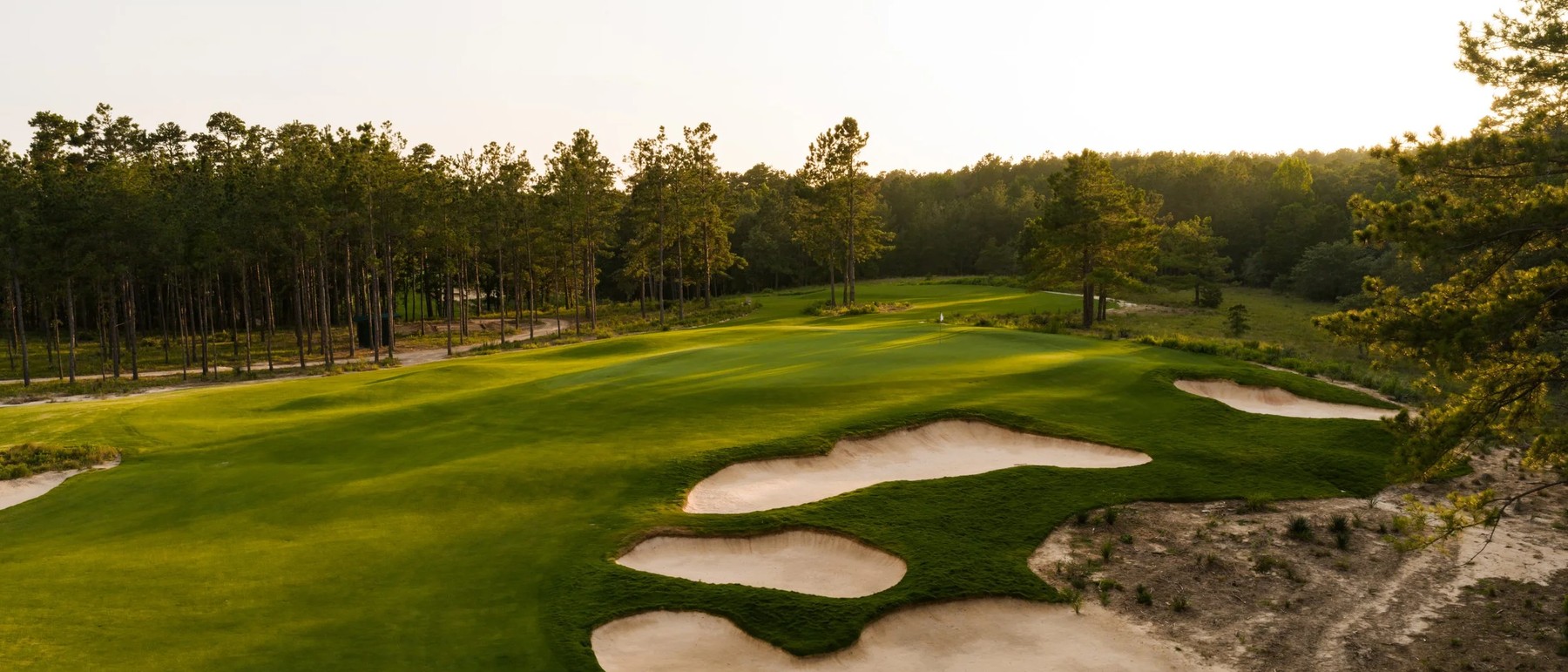
As of 8 September 2026 there is one. Wild Spring Dunes opened all eighteen holes for public play that day, on 2,400 acres of former timber land outside Mount Enterprise, deep in the East Texas Piney Woods. The architect is Tom Doak. The developer is Michael Keiser Jr., whose family built Bandon Dunes and Sand Valley. The green fee is $275 in peak season, it is walking-only, caddies are available, and you can book it right now on the internet without knowing a soul.
That last clause is the whole story. The architect, the sand, the developer, the ambition — every one of those elements already exists somewhere in Texas, and almost always behind a gate. What is new here is that the gate is a booking page.
“I did not expect to see in Texas what I found there. If you’ve got a really good site, you don’t have to try too hard. This is a really good site.”— Tom Doak, to D CEO
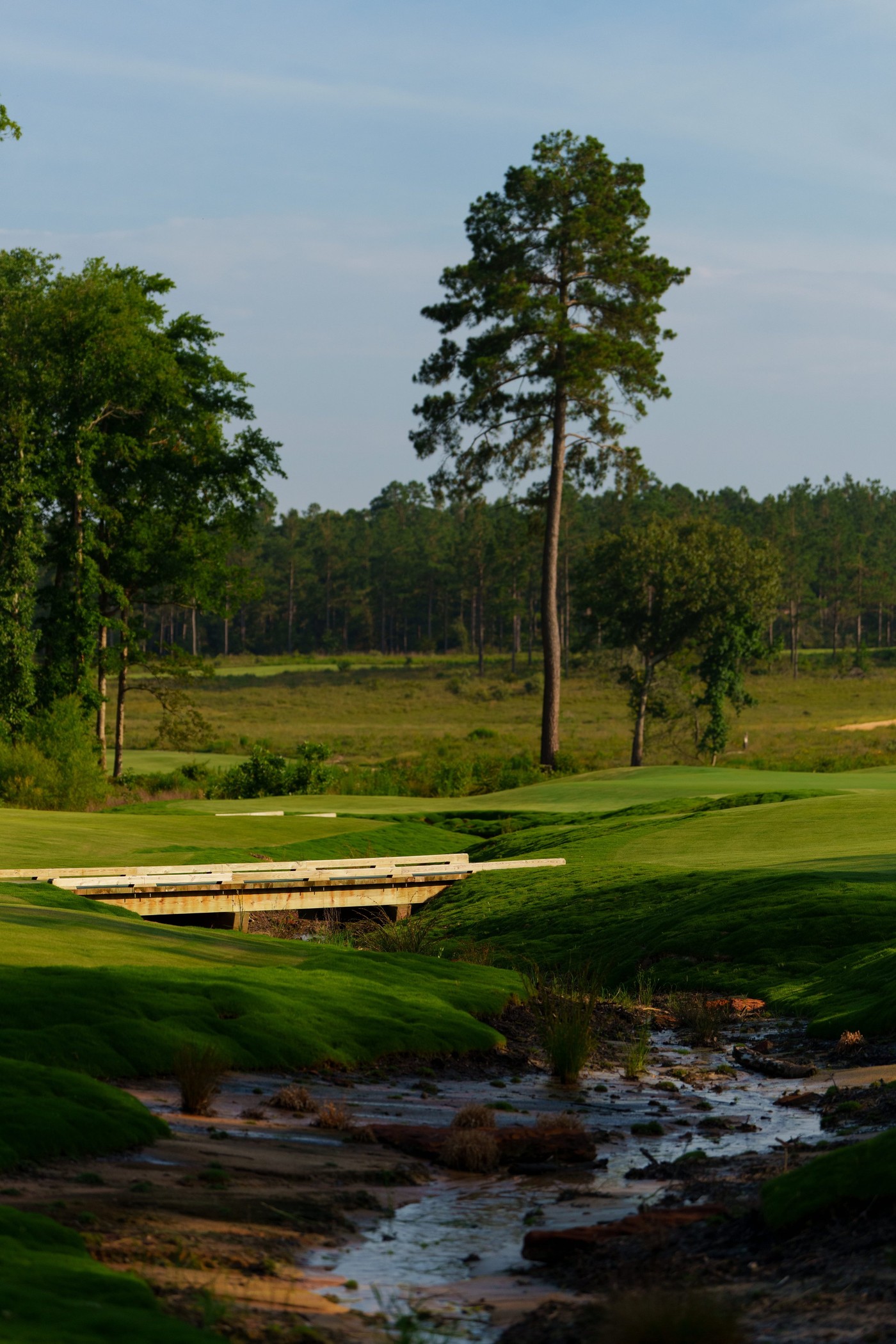
The land was found by a 35-year-old office worker who had no business finding it, and the reason it looks the way it does is that a logging company had already taken the trees off. What was underneath turned out to be the valuable part.
Brett Messerall worked in business development at OrderMyGear in Dallas. He had a mortgage, a pregnant wife and what he describes as an obsession: teaching himself to hunt for golf land the way prospectors hunted for gold, studying topo maps late into the night and combing through soil surveys. “I was basically living out of my car,” he told D CEO’s Ben Swanger.
In June 2021 he and a colleague, Hayden Martin, drove east to a tract near Mount Enterprise and found the road full of timber trucks. “I thought, Oh, no, they’re clear-cutting everything,” Messerall said. Then they got out and looked at the ground the trees had been hiding. Sand. Contours. Movement. “It stirred the soul,” he said.
The broker sized them up: “You guys don’t look like loggers.” Told they wanted to build a golf course, he pointed them at another section — “too sandy, too hilly. Not great for timber” — which is the single most useful sentence in this entire story. Martin had borrowed a drone from his brother-in-law the night before and barely knew how to fly it. “I’ll never forget standing on top of that hill, which is now the first tee, and looking at the drone footage,” Martin said. “It wasn’t hard to imagine the golf holes that are now there. But did we actually know what we were looking at, or were we imposters?” Driving back along I-20 they gave the property a code name: Camino Real–El Primo.
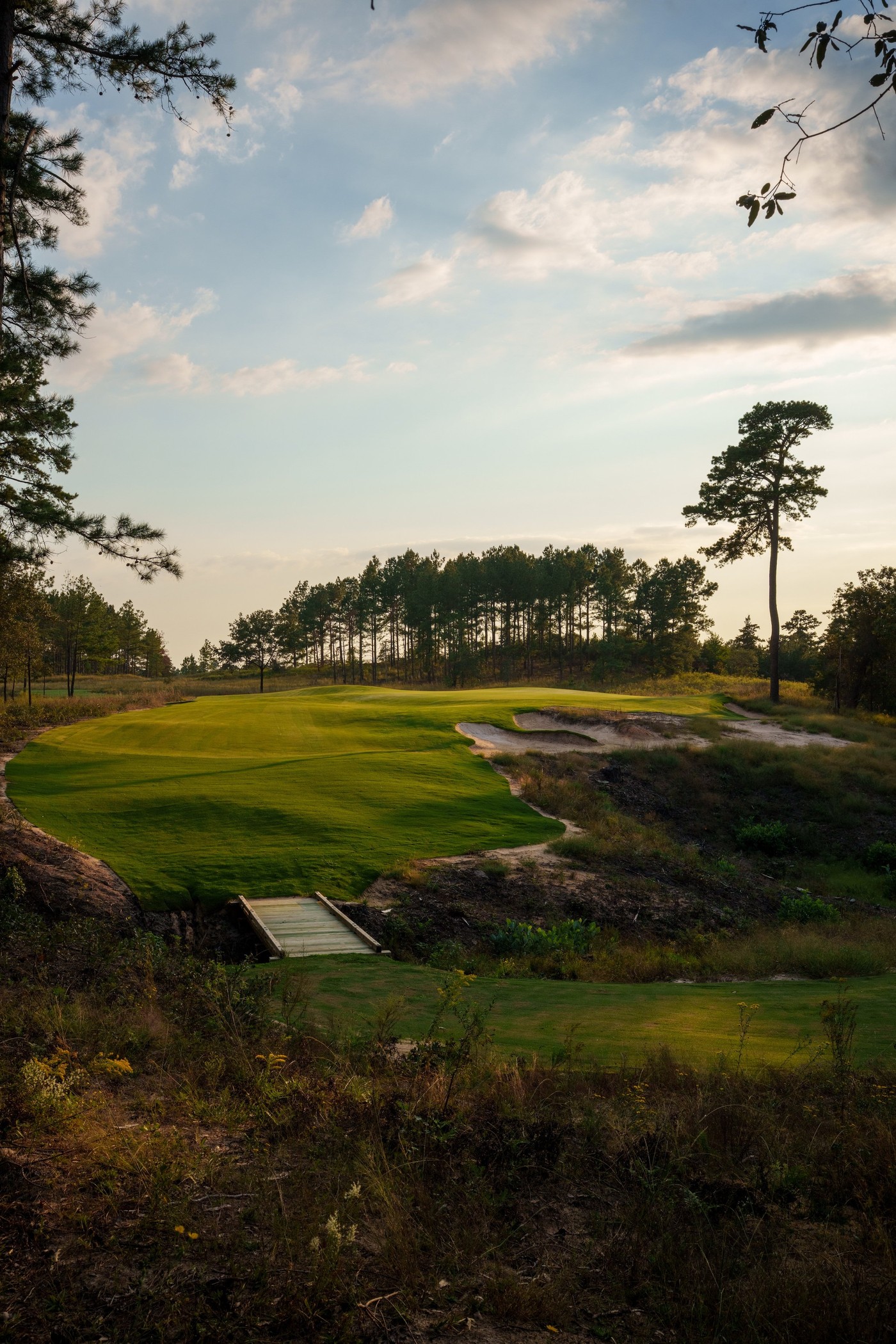
In July 2021, Messerall emailed Tom Doak. Cold. Doak — Pacific Dunes, Barnbougle, Streamsong Blue — wrote back, and happened to be restoring Dornick Hills in Oklahoma, so they drove north and spread topo maps in front of him. He studied them, said “Looks good,” then pointed farther out: “You probably want to get that parcel over there.” That parcel is where the third hole now sits.
By September he was walking it. “I did not expect to see in Texas what I found there,” Doak said. “If you’ve got a really good site, you don’t have to try too hard. This is a really good site.” A year earlier he had told GOLF’s Art Stricklin the same thing in blunter terms: “It’s unlike any property I’ve worked on in the last 10 years.”
Buying it was harder than finding it. The first offer, in November 2021, was so far under that the timber company did not bother countering. A six-month option followed in spring 2022, funded out of the partners’ own pockets — soil testing, hydrogeological studies, exploratory water drilling, legal work, mapping. Everything penciled. They still could not close.
Michael Keiser Jr. initially said no. “I didn’t even want to go see it. I had enough on my plate,” he said — he was already building Sand Valley out, plus Rodeo Dunes in Colorado and Old Shores in Florida. They wore him down over lunch in Madison. Once he walked the land he bought it. “The site was unique, with ravines, ridges, sand, and this subtle yet beautiful Pinehurst-like contour,” Keiser said. “But to me, it was so important that Brett had the same initial reaction to the land. It shouldn’t take an expert to react in awe to good golf land.” Public records put nearly fifty parcels in his name, assessed at a cumulative $23 million.
Messerall kept a small carried interest and a salary. He did not keep the project. He told D CEO he does not know the green fee off the top of his head. “Would I be lying if I said it’s hard at times not to have full control of something you can see so clearly?” he said. “Of course. That’s human nature.” He is 40 now, consulting on course number two, and still going: “I’ve got a lot of ideas. Some of those are just that — ideas. But I’m not stopping here.”
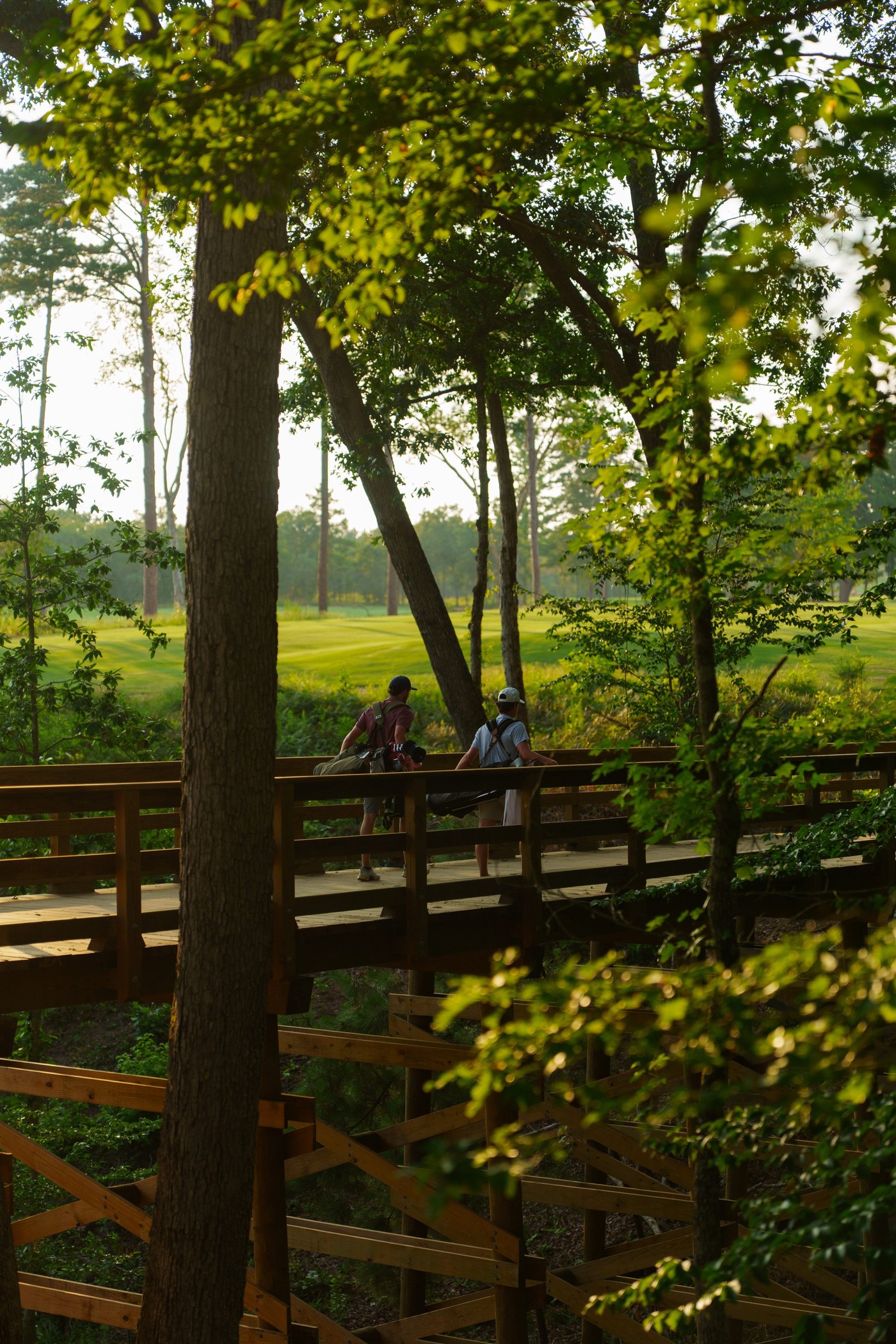
The Texas Golf Association has rated the course at 6,962 yards, 74.6/147, par 72 from the Pine tees, with three sets down to 5,212. GOLF reported a projected 7,120 before it was built; the rated card is the one to go by. Doak on the finished thing: “It’s a really dramatic site for golf. It’s a beautiful walk. It’s just got a lot of variety to it and a fair amount of elevation change, too.”
Tim Gavrich reviewed it for GolfPass a week after opening and described a routing that “unfolds in two counterclockwise lobes, with the first eight holes rambling over gentler hills and the par-4 ninth re-launching golfers off the starting hilltop into more heaving land and along deeper ravines before a mellow finish.” Fairways are zoysia. Greens, he wrote, carry “a measure more subtlety of contour than some of Doak’s more eccentric sets.” Miss into the scrub and you will usually find the ball; advancing it more than a hundred yards is, in his phrase, “somewhat left up to chance.”
Two holes get singled out. The tenth is a long par 3 past 240 yards from the tips to a green perched above bunkers and a ravine, with bailout short and right — D CEO calls it the hardest par 3 on the course and reckons a 180-yard carry gets you dancing. The seventeenth is a 331-yard par 4 across the same ravine in the opposite direction, into a “skinny, two-level green corseted by bunkers,” where, Gavrich writes, “the thinking golfer can create a significant edge over one with raw talent.” Eleven bridges tie the property together.
He is not uncritical, and the criticism is the most interesting thing anyone has written about the place: the setting “feels somewhat less geographically specific” than its Colorado sibling, and “at times the golfer feels like he could be in North Carolina or Wisconsin.” His question — “Could Doak & Co. have gotten away with messing with Texas a little more than they did?” — is the one to carry to the first tee. He still expects it to land among the top 30 to 50 public courses in America.
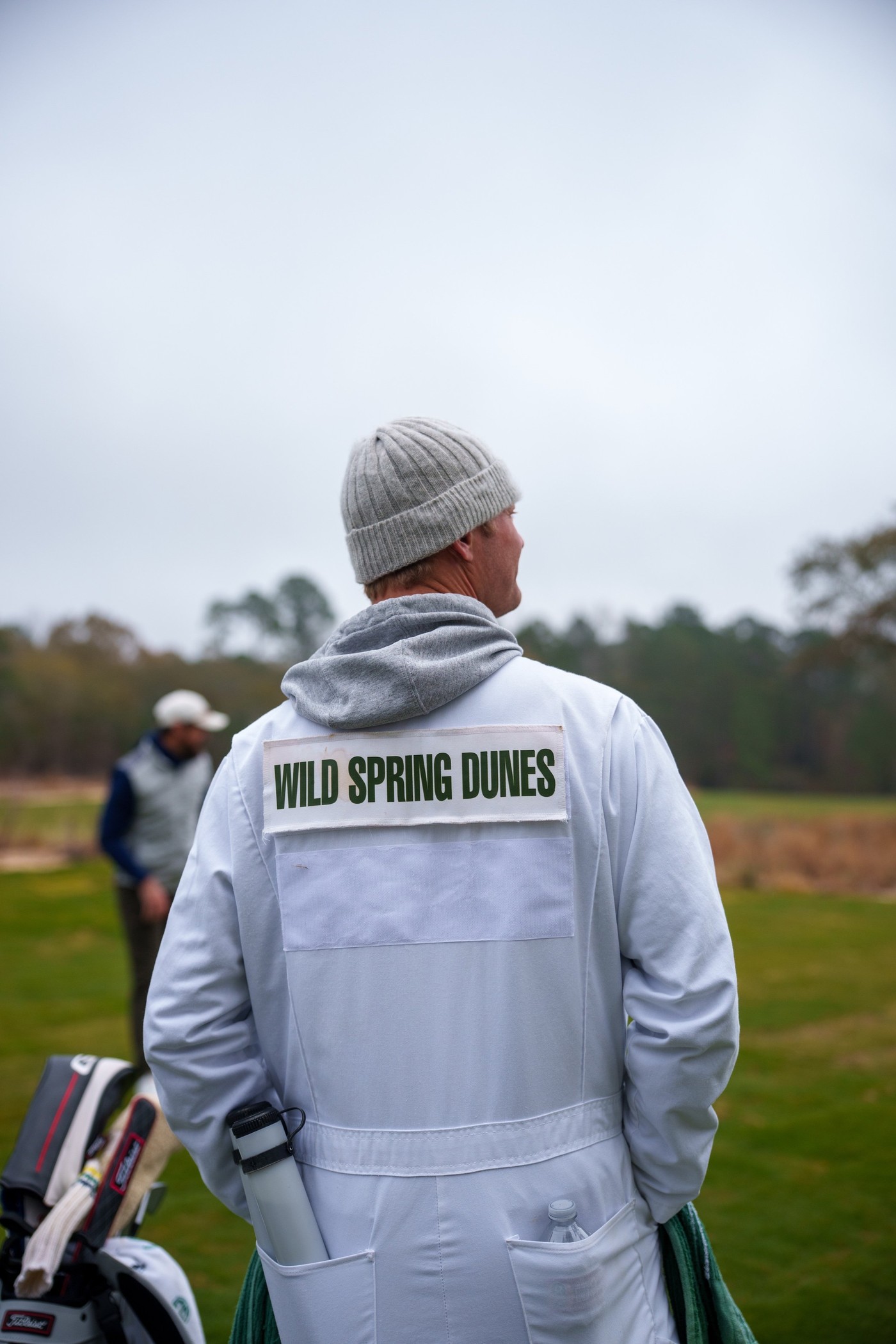
Here is what a golfer in Austin should actually take from this. Wild Spring Dunes is not a Hill Country course and it is not close. It is 262 miles and a bit over four hours from Austin, roughly two and a half from Dallas. Mount Enterprise is a town of a few hundred people north of Nacogdoches. There is no hotel yet. The clubhouse is a temporary one called The Hitching Post, which Keiser describes as the social hub and which carries, in D CEO’s phrase, a rough-around-the-edges charm. A permanent clubhouse, lodges, a hotel with what Keiser calls a “spa lite,” a barbecue joint and a steakhouse are all coming. When? “You really can’t rush these things,” he says.
What it gives Texas is a reason to drive. Mike Abbott, the general manager, who came from Bluejack National and TPC Las Colinas, put it plainly to GOLF: “With all due respect, I don’t think Texas has a really great golf resort. And I’ve been to most of them.” That is a GM selling his own property, and it is also true. The state has extraordinary private golf and a deep municipal tradition. It has not had the thing Bandon invented — remote, walkable, architecturally serious, open to anyone who books.
And it is not done. A Coore & Crenshaw course is already being cut through the trees. “We’re slowly peeling back the layers,” Keiser said. “You can’t undo anything with these old forests. This course doesn’t go through a pine plantation. It goes through an ancient grove.” He says the property could eventually hold as many as five eighteen-hole courses plus a twelve-holer, a par-3 and a putting course: “I want it to have a similar scale to Sand Valley.”
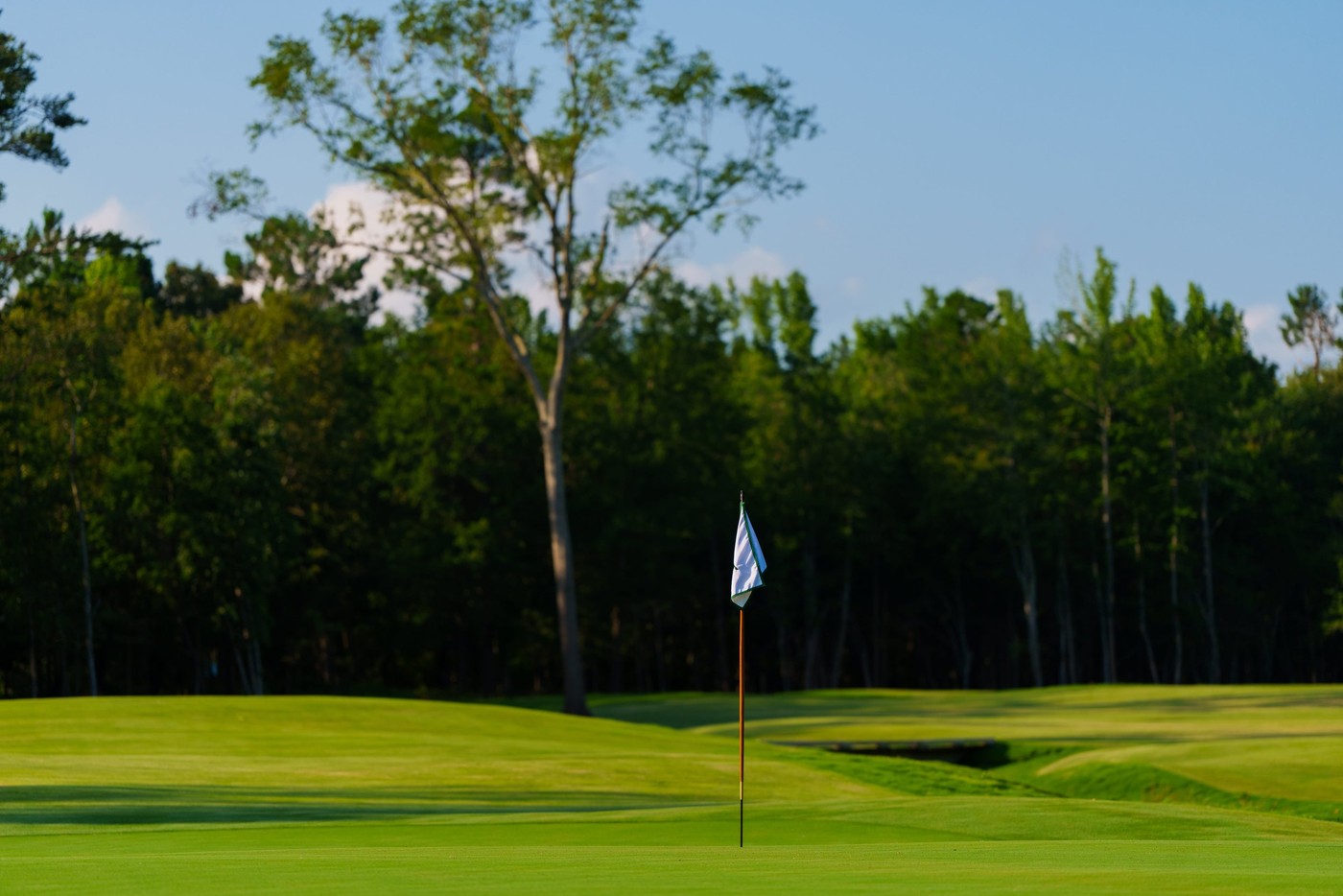
So: go, but go knowing what you are buying. You are buying the golf and the walk, not the resort, because the resort does not exist yet. Peak season through November is $275 with a $140 replay; December through February drops to $195 and $100, which is the value window and also when the Piney Woods are at their least punishing. March goes back to $260. It is walking-only — that policy tightened, since GOLF reported in 2025 that carts would be allowed for part of the year — so caddies or a push cart, and pack accordingly for a course that rates 147 slope from the tips.
Book early. D CEO reported 2026 tee times nearly sold out, and the course is taking bookings through the end of 2027.
One more thing, and it is the part we keep coming back to. The best new public course in Texas exists because a guy with a day job taught himself to read soil surveys and then drove out to look. Not a developer. Not an heir. An office worker with a drone he borrowed from his brother-in-law. Whatever else Wild Spring Dunes turns out to be, it is evidence that the gate is not locked from the inside.
Yes. All 18 holes opened for public play on 8 September 2026 and tee times are bookable online through the end of 2027. There is no membership requirement to play, though the resort also sells a Foundership.
Tom Doak, whose other work includes Pacific Dunes at Bandon, Barnbougle Dunes in Tasmania and Streamsong Blue. A second course by Bill Coore and Ben Crenshaw is under construction.
Rates read from the course on 20 September 2026: $275 in peak season (September to November 2026) with a $140 replay, $195 in December and again in January and February with a $100 replay, and $260 in March. Rates exclude tax and are subject to change.
No. The course states it is walking-only. Caddies are available. GOLF reported in August 2025 that carts would be permitted for part of the year, so this is a policy that tightened between the build and the opening.
About 262 miles and a little over four hours, mostly on TX-21. From Dallas it is roughly two and a half hours southeast. The course sits outside Mount Enterprise, north of Nacogdoches.
The Texas Golf Association has rated it at 6,962 yards, 74.6/147, par 72 from the Pine tees, with three shorter sets down to 5,212 yards. GOLF reported a projected 7,120 yards before construction finished; the rated card is the one to go by.
Not yet. A temporary clubhouse called The Hitching Post serves as the social hub. Michael Keiser Jr. has said lodges, a hotel with a spa, a full clubhouse, a barbecue spot and a steakhouse are planned, without committing to a date: “You really can’t rush these things.”
The Grassy Issue Social Club is small groups playing good courses in and around Austin. When we set the interest list up we asked two questions: how far you’ll drive, and whether you walk or ride. Wild Spring Dunes is four hours out and walking-only, so it sits right at the edge of both answers — which is precisely the kind of round the Social Club exists to organise. Tell us you’re in and we’ll build a group around it.
Join the Social Club interest list →